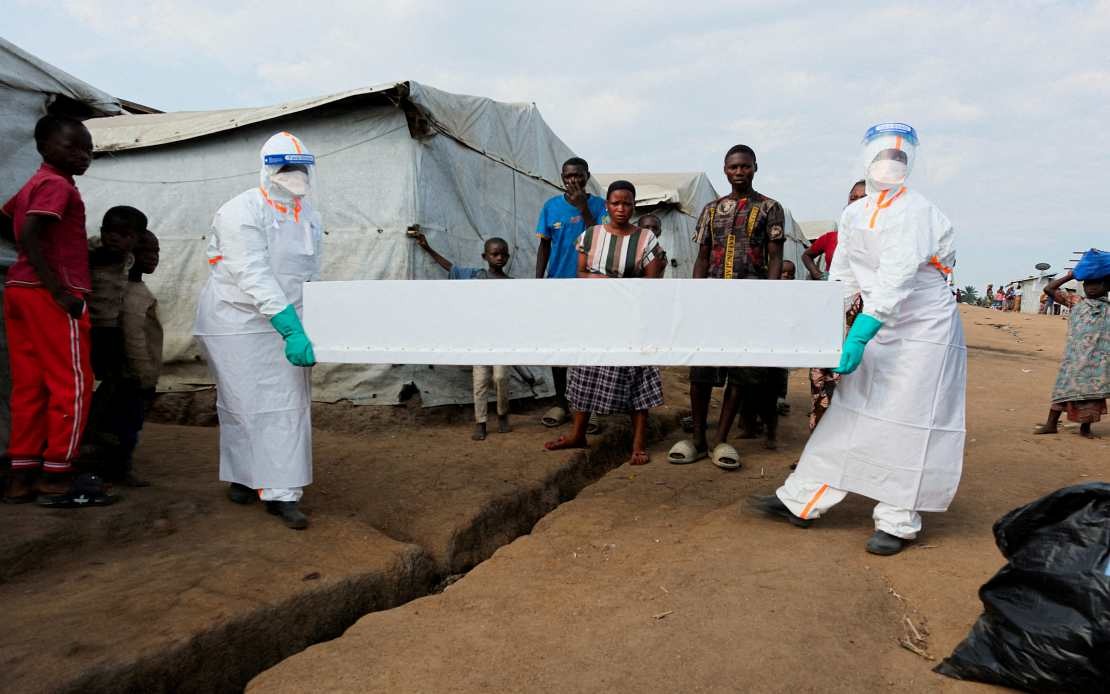
The Ebola outbreak ravaging the Democratic Republic of Congo has reached a sobering milestone, with confirmed cases now exceeding 1,000 as health authorities grapple with containing the hemorrhagic fever in multiple eastern provinces. The Health Ministry announced that confirmed cases had climbed to 1,003 by late June, accompanied by 254 deaths since the outbreak declaration on May 15—a mortality rate of 25.3 per cent that underscores the severity of this resurgence.
For Southeast Asian observers monitoring infectious disease developments, the DRC outbreak carries particular significance given global interconnectedness and the region's experience with rapid disease transmission. The Democratic Republic of Congo's vast geography and porous borders present formidable challenges for containment, especially when response capacity remains stretched across three provinces: Ituri, North Kivu, and South Kivu. These regions have witnessed sporadic conflict and limited healthcare infrastructure, complicating epidemiological investigation and case management efforts that are fundamental to halting viral spread.
The Africa Centres for Disease Control and Prevention issued a stark warning last week that captured international attention: without swift intervention to interrupt transmission chains, the current outbreak could eclipse the 2014-2016 West African Ebola epidemic that claimed over 11,000 lives across Guinea, Liberia, and Sierra Leone. That previous crisis exposed how regional health systems, even when supported by international assistance, struggle when facing exponential case growth and resource constraints. The comparison serves as a cautionary benchmark for policymakers across Africa and beyond.
Health Minister Roger Kamba acknowledged the mounting pressure on response mechanisms while highlighting modest progress in recovery rates. At least 100 patients have recovered, though 365 individuals remain hospitalized or under isolation, creating substantial demands on medical facilities and personnel. The minister noted that contact tracing efforts have declined, a troubling metric given that identifying and monitoring individuals exposed to confirmed cases remains one of epidemiology's most potent tools for breaking transmission chains. This deterioration suggests that field teams are becoming overwhelmed or that community cooperation has diminished.
A crucial scientific development emerged from joint investigations conducted by Uganda's Department of National Health Laboratory and Diagnostic Services and the Congo's Institute of National Biomedical Research. These laboratories identified the circulating strain as Ebola Bundibugyo, which appears to have originated from a fresh animal-to-human spillover event rather than persisting from a previous outbreak. This distinction matters significantly for understanding outbreak dynamics: a new zoonotic introduction implies that wildlife reservoirs remain a potential source of recurring transmission, suggesting this crisis may not be an isolated event but rather symptomatic of broader ecosystem changes facilitating virus emergence.
The identification of Bundibugyo rather than the more lethal Zaire subtype provides marginal reassurance, yet this particular strain remains highly pathogenic and unsuitable for complacency. The presence of active wildlife spillover mechanisms in the DRC highlights an uncomfortable reality: human encroachment into forested areas, wildlife trafficking networks, and bushmeat consumption practices create recurring opportunities for zoonotic pathogens to breach the human-animal boundary. Southeast Asian nations with similar ecological profiles and hunting traditions should recognize parallels in their own disease emergence vulnerabilities.
Response authorities have intensified community engagement and diagnostic capacity deployment as core strategies for epidemic containment. Health officials emphasize that case identification through laboratory confirmation and rapid clinical management remain among the most effective interventions available, particularly when therapeutic options remain limited. The ministry's continued focus on these fundamentals, despite mounting case numbers, suggests institutional discipline and adherence to evidence-based protocols even under duress.
The mortality rate of 25.3 per cent, while lower than some historical Ebola outbreaks, remains devastating from a public health perspective. Each percentage point represents hundreds of individuals who succumbed to a disease for which no specific curative treatment exists, only supportive care that can improve survival odds through maintaining fluid balance, oxygen saturation, and addressing secondary infections. The fact that over 100 individuals have recovered indicates that medical management protocols are functioning, yet the pace of new infections continues to outstrip recovery capacity.
Regional implications extend beyond the Democratic Republic of Congo's borders given Rwanda's geographical proximity and the significant cross-border population movements characteristic of the Great Lakes region. The selection of Kigali as the reporting venue underscores regional awareness of the outbreak's transnational significance. Rwanda and other neighboring nations have presumably heightened surveillance and trained border health personnel to identify potential cases, yet such measures remain challenging when viral incubation periods can reach 21 days and infected individuals may travel during early symptomatic stages when diagnosis remains uncertain.
Longer-term outbreak trajectory will depend substantially on whether transmission patterns shift in coming weeks. Early indicators suggest that the outbreak remains concentrated in healthcare settings and among close family contacts of confirmed cases, which paradoxically offers both challenges and opportunities. Healthcare-associated transmission is easier to interrupt through infection prevention measures, yet it concentrates cases among vulnerable populations including health workers and hospitalized patients. Should transmission patterns evolve toward community spread in crowded urban centers, containment would become exponentially more difficult.
International support mechanisms, including diagnostic equipment, personal protective equipment, and technical expertise from global health organizations, remain critical for sustaining response efforts. The Democratic Republic of Congo's health system, already burdened by competing demands from malaria, tuberculosis, and childhood infections, faces severe strain from this Ebola resurgence. Donor nations and multilateral institutions have mobilized resources, yet logistics challenges inherent in reaching remote provinces continue to hinder optimal deployment of assistance.

