Kuala Lumpur City Hall (DBKL) has unveiled a series of regulatory reforms aimed at reducing red tape and making it easier for traders to operate in Malaysia's capital. The three-pronged initiative addresses persistent grievances from the business community, particularly food and beverage operators, by lowering costs, streamlining approval workflows and expediting the reopening of temporarily closed premises. The changes mark a deliberate pivot towards creating what DBKL describes as a more supportive environment for enterprise while maintaining necessary safety and hygiene standards.
The most immediately tangible reform involves the standardised monthly permit fee for tables and chairs placed on five-foot ways—the public walkways common throughout Kuala Lumpur's older commercial districts. Traders will now pay RM30 per month per set, a figure arrived at following consultation with business associations representing coffee shop operators and restaurant owners. This represents a move towards transparency and predictability in licensing costs, eliminating the discretionary pricing that has historically frustrated small operators. The permit system applies uniformly to all applicants meeting prescribed criteria, irrespective of business type or proprietor background, according to DBKL's statement.
Applications for outdoor furniture permits flow through DBKL branch offices aligned with parliamentary constituencies, with decisions based on site suitability and walkway width. Critically, approvals remain conditional on ensuring that pedestrian thoroughfares, wheelchair accessibility and emergency vehicle routes are not compromised. This balance between commercial flexibility and public access reflects an attempt to reconcile competing interests in densely populated urban areas where street-level commerce and urban mobility intersect.
The second reform targets what DBKL characterises as low-risk minor works—such as tile replacement or ceiling work that involves no structural modifications to buildings. Under the new arrangement, applicants complete a straightforward form and notify DBKL rather than navigating a lengthier approval process. Individual branch offices can now issue permits directly, eliminating unnecessary bureaucratic layers. This streamlined pathway is particularly significant for small proprietors undertaking routine maintenance, as expedited approval reduces downtime and associated business costs whilst ostensibly maintaining compliance safeguards.
The third measure addresses a recurring pain point identified during discussions with the Selangor and Kuala Lumpur Chinese Coffee Shop and Tea Shops Owners' Association and the Malaysian Muslim Restaurant Owners' Association (PRESMA). Premises ordered shuttered for hygiene violations may now seek reopening within 24 hours of completing prescribed cleaning procedures. However, reopening remains conditional rather than automatic—DBKL must conduct inspection and verify that all food safety and hygiene standards have been restored before allowing operations to resume. This approach balances the need for swift business recovery with non-negotiable public health requirements.
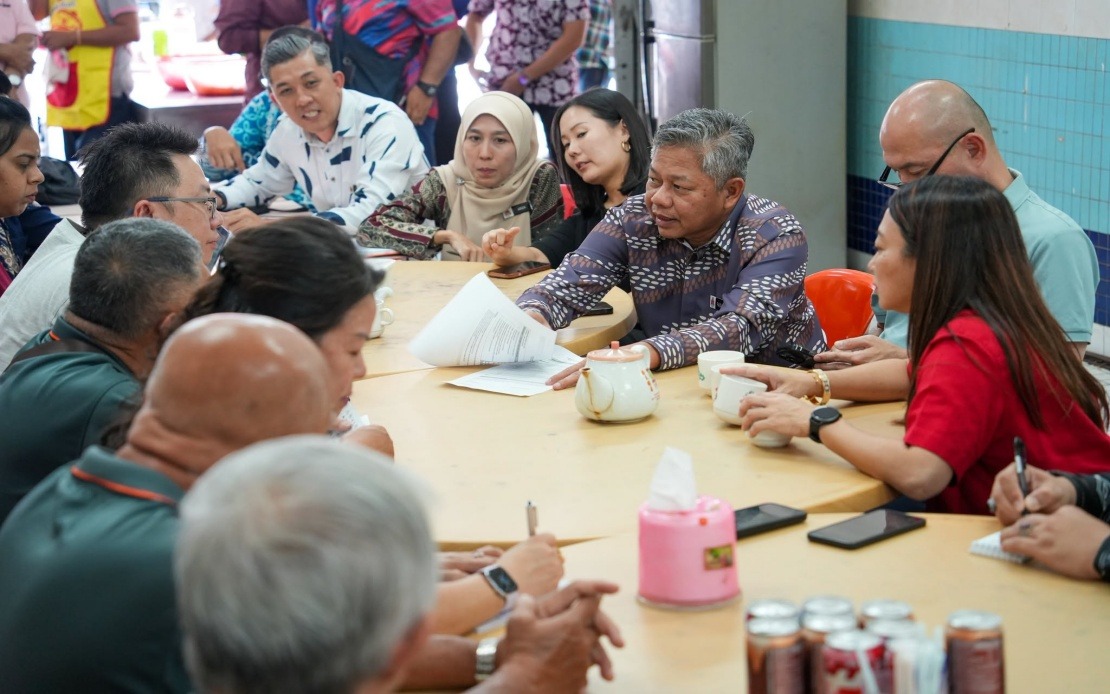
These procedural changes emerged directly from engagement sessions between stakeholders and Hannah Yeoh, the Minister in the Prime Minister's Department (Federal Territories), alongside Kuala Lumpur mayor Datuk Seri Fadlun Mak Ujud. The involvement of federal-level political leadership signals that simplifying Kuala Lumpur's regulatory environment has acquired prominence in government priority-setting. Earlier consultation with PRESMA last April had identified the reopening process as a critical issue, with the new 24-hour framework representing a tangible policy response.
DBKL's emphasis on standardised processes across branch offices points to a broader administrative concern. Inconsistent interpretation and application of regulations across different constituencies has historically created confusion and perceived inequities. By establishing clear, unified procedures, DBKL aims to provide traders with predictability whilst reducing scope for officer discretion that might otherwise invite accusations of favouritism or inconsistency. This represents a shift towards bureaucratic transparency as a governance objective.
For the broader Malaysian business ecosystem, particularly the small-and-medium enterprise sector concentrated in food and beverage operations, these changes carry practical significance. Kuala Lumpur hosts the country's densest concentration of retail and hospitality businesses, making regulatory burden in the capital a bellwether for business confidence. Any reduction in compliance costs and processing delays potentially cascades through supply chains and labour markets dependent on these sectors.
The initiative also reflects awareness among policymakers that regulatory friction, even when well-intentioned, imposes cumulative costs on operators already navigating razor-thin margins. By reducing permit fees, accelerating approvals and establishing clearer reopening pathways, DBKL is signalling that government can facilitate commerce without sacrificing safety or public interest. However, implementation will ultimately determine whether these changes deliver substantive relief or remain symbolic gestures.
Regional observers may note that simplified permitting regimes feature prominently in business environment rankings such as those produced by the World Bank's Ease of Doing Business initiative. Although Malaysia has previously ranked respectably in such measures, maintaining competitiveness as a regional business hub requires continuous operational refinement. Kuala Lumpur's willingness to recalibrate regulatory frameworks demonstrates responsiveness to enterprise sector feedback, a prerequisite for sustaining investment flows and employment growth.
The reforms also carry implicit messaging about the government's orientation towards informal and semi-formal commerce. Coffee shops and small restaurants operating from shophouses represent quintessentially Malaysian commercial infrastructure, historically operating in regulatory grey zones. By bringing these activities into formalised, transparent frameworks whilst reducing associated costs, DBKL acknowledges the economic and social value of this sector rather than treating it as a compliance problem requiring suppression.
Moving forward, success will hinge on consistent application across all 60 DBKL branch offices. Training and monitoring mechanisms must ensure that frontline staff implement new procedures uniformly, lest inconsistency undermine the standardisation objective. Additionally, feedback mechanisms allowing traders to report implementation gaps will be essential for identifying and correcting persistent problems. The three reforms represent meaningful steps toward a more business-enabling regulatory environment, but their ultimate impact depends on execution excellence across Kuala Lumpur's sprawling municipal apparatus.

