Kuala Lumpur City Hall (DBKL) is moving swiftly to overhaul its governance structures and administrative practices, unveiling 16 reform initiatives implemented over the past six months in response to a damaging corruption ranking that exposed significant weaknesses in its operations. The institution received only 0.08 per cent out of a possible 5 per cent allocation in the Public Service Corruption Ranking under the 2025 Local Authority Star Rating System, a result that triggered an urgent institutional reckoning and catalysed the rapid rollout of remedial measures across multiple operational domains.
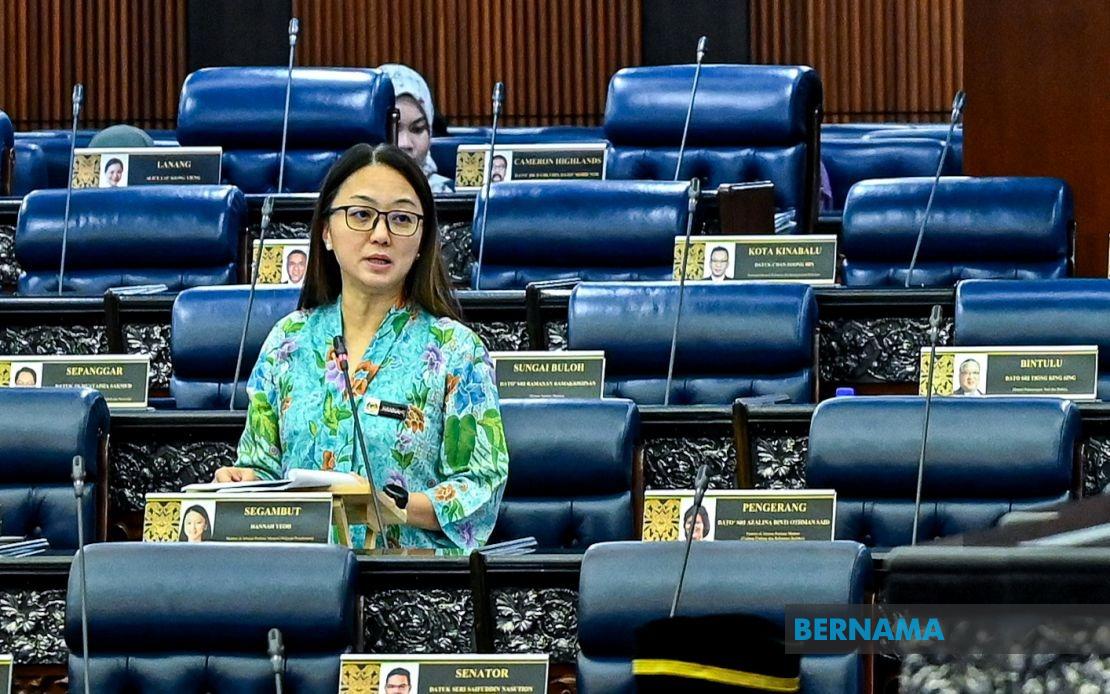
Federal Territories Minister Hannah Yeoh, who announced the programme in Parliament, characterised the poor performance as a wake-up call that compelled DBKL to confront systemic vulnerabilities in how it manages contracts, allocates resources, and makes decisions. The severity of the score underscored the necessity for fundamental change, moving beyond incremental adjustments to embrace a comprehensive restructuring of internal processes and decision-making architecture. For Malaysian residents and businesses engaging with the city's municipal authority, these developments carry significant implications regarding service quality, transparency, and the integrity of licensing and development approval processes.
The genesis of DBKL's reform agenda traces to a collaborative study by the International Islamic University Malaysia (IIUM) conducted following discussions with Federal Territory MPs on March 2. That engagement identified four critical recommendation areas addressing administration, governance, integrity, and service delivery—each subsequently translated into concrete operational changes. The Malaysian Anti-Corruption Commission (MACC) had pinpointed five procedural weaknesses that became the initial focus of remedial action, revealing concerning gaps in how DBKL manages sensitive functions ranging from broadcast projects to housing rental collection.
The five procedural vulnerabilities identified by MACC spanned diverse operational areas, suggesting systemic rather than isolated deficiencies. These encompassed inadequate oversight of radio studio production contracts, problematic allocation procedures for Ramadan Bazaar sites, insufficient monitoring of business licensing service contracts, governance lapses in managing sports championships administered through statutory bodies, and irregular practices surrounding rental collection for DBKL-administered residential housing schemes. Each represented a potential avenue for improper decision-making or financial irregularity, collectively painting a picture of an institution operating without adequate checks and balances.
A significant structural reform involved abolishing the Special One Stop Centre (OSC) Committee, a move designed to enforce clearer separation of powers and eliminate opportunities for political interference in development decisions. Simultaneously, DBKL granted full access to the OSC 3.0 Plus Portal to all Federal Territory MPs, fundamentally altering the transparency calculus by enabling legislators to review development applications and formally submit representations to the mayor before approvals proceed. This recalibration directly addresses public concerns about opacity in planning decisions affecting residential neighbourhoods and commercial development across the capital.
Financial controls have been tightened substantially through a new cap on mayoral authority to approve contributions, limiting such decisions to RM3,000 with amounts exceeding that threshold now requiring approval from DBKL's Top Management Committee. This distributed authority model deliberately constrains individual decision-making capacity, replacing what Yeoh characterised as person-centric governance with systems founded on collective oversight and institutional integrity. The establishment of new oversight structures—including a dedicated Audit Committee no longer chaired by the mayor, a Governance and Integrity Committee, and a Mayor's Contributions Committee—institutionalises checks designed to prevent conflicts of interest and concentrate power excessively in any individual.
The cultural transformation envisioned by these reforms extends beyond structural rearrangement to fundamentally reshape how DBKL personnel approach administrative decisions. Yeoh framed the initiative as a deliberate pivot away from personalised decision-making towards a governance model centred on institutional processes, collective deliberation, and demonstrated integrity. Additional safeguards include mandatory job rotation for officers in sensitive positions—a practice designed to disrupt entrenched informal networks and prevent the accumulation of discretionary influence by long-serving personnel. Beginning in the fourth quarter of this year, DBKL will introduce body-worn cameras for frontline staff, a visible mechanism intended to encourage professional conduct during public interactions and provide documentation of potential misconduct.
Digitalisation forms the cornerstone of DBKL's modernisation strategy, treating technology as both a service improvement mechanism and an anti-corruption tool that reduces human discretion and creates audit trails. As of July, DBKL had introduced 170 online application services, with targets to reach 180 end-to-end online services by year's end and achieve complete online processing of all applications by 2030. The integration of the e-Lesen licensing system with the Departmental Enforcement System (SPJ) eliminates the historical practice of relying on external intermediaries—commonly known as runners—whose role in the licensing process created opportunities for unauthorised payments and informal arrangements.
The newly implemented three-year validity period for business licences, effective from July 1, reflects an efficiency calculation that extends licensees' peace of mind whilst simultaneously reducing DBKL's administrative burden and interaction points vulnerable to improper conduct. For businesses operating in Kuala Lumpur, these changes promise streamlined renewal processes and reduced exposure to discretionary delays or informal demands. The cumulative effect of digitalisation measures aims to render DBKL's service delivery more transparent, verifiable, and resistant to the informal facilitation networks that have historically characterised municipal administration throughout the region.
The reform agenda signals a broader shift in how Malaysia's federal authorities approach municipal governance accountability. DBKL's transformation represents an implicit acknowledgement that low corruption rankings impose reputational costs and create public scepticism about institutional capacity. The comprehensiveness of the response—touching everything from committee structures to technological implementation—suggests that federal oversight bodies take accountability assessments seriously and translate poor scores into institutional pressure for remediation. For other local authorities facing scrutiny under the Star Rating System, DBKL's experience provides both a cautionary tale about governance weakness and a template for systematic institutional reform.
The success of these initiatives will ultimately depend on consistent implementation, sustained political commitment to institutional oversight, and genuine cultural shifts within DBKL's workforce regarding acceptable practice standards. While structural reforms and technological solutions address systemic vulnerabilities, embedding integrity as a valued institutional norm requires sustained leadership attention and accountability for personnel who resist the transition from informal to transparent decision-making processes. Malaysian residents and businesses will likely scrutinise DBKL's performance in coming quarters to determine whether the ambitious reform programme translates into genuinely improved service delivery, demonstrable integrity, and restored public confidence in municipal administration.

