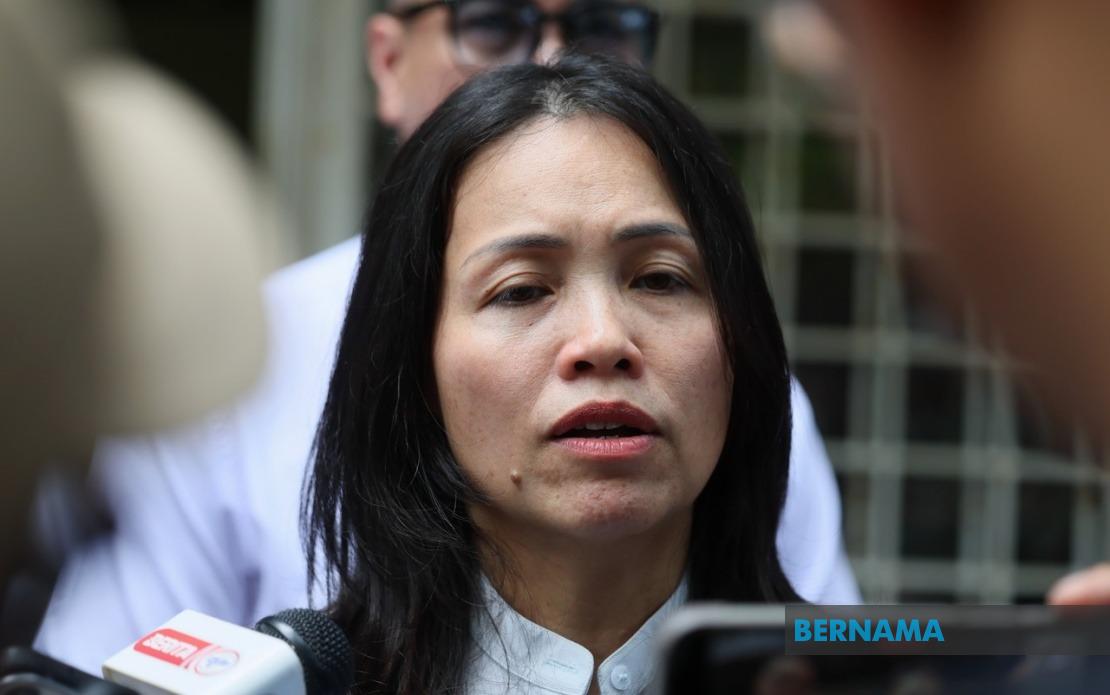
The Johor state election campaign is already being shadowed by allegations of dirty tactics, with Democratic Action Party leaders accusing opponents of doctoring campaign materials in a bid to sow discord among voters. Johor DAP chairman Teo Nie Ching has publicly warned the electorate to resist what she characterises as disinformation and smear campaigns, particularly those involving falsified images of potential party candidates.
At the heart of the controversy are allegations that certain groups have deliberately altered DAP campaign posters to misrepresent candidates, specifically portraying them as Muslim women wearing headscarves in ways the party considers inappropriate and misleading. This manipulation appears calculated to provoke anxiety within the non-Malay voting bloc, most notably among Chinese voters who form a substantial portion of the DAP's traditional support base. The tactic, according to Teo's analysis, is designed to discourage these communities from backing Pakatan Harapan in what is shaping up to be a highly contested state-level contest.
The controversy touches on deeper sensitivities within Malaysia's religiously and ethnically diverse political landscape. Teo emphasised that the DAP respects religious diversity and holds that the Islamic headscarf, as a component of Muslim women's religious observance, merits dignity and should never be weaponised for political gain. She characterised the poster alteration campaign as objectionable conduct that the voting public ought to unequivocally reject at the ballot box. The party's position reflects broader concerns within opposition circles about how religious symbolism and identity are increasingly being deployed as vectors for electoral manipulation.
The controversy also extends to questions of gender representation in politics. Teo, who holds the position of Wanita DAP chief in addition to her role as Johor party chairman and Deputy Communications Minister, framed the allegations as demonstrating contempt not merely toward the DAP but toward women in politics more broadly. Her intervention underscores how campaign tactics that rely on distorting women's images or identities carry implications beyond immediate electoral calculations, potentially contributing to a political environment where women candidates face heightened risks of character assassination and misrepresentation.
The DAP has long positioned itself as a champion of pluralistic values and inclusive governance, professing commitment to safeguarding the rights and dignity of all Malaysians irrespective of ethnicity, religious faith, regional origin, or gender identity. Teo's statement reaffirmed this positioning, framing the party's response to the poster controversy as consistent with its broader ideological foundations. This messaging matters particularly in a state like Johor, where demographic complexity and historical communal sensitivities require political actors to navigate carefully between competing community interests.
The timing of these allegations is significant given the electoral calendar. The Election Commission has designated June 27 as the date for nomination submissions and July 11 as polling day, following the dissolution of the Johor State Legislative Assembly on June 1. This compressed campaign window means that controversies surrounding campaign conduct take on outsized importance, as voters have limited time to process information and form judgments. In this environment, allegations of manipulation and disinformation can rapidly shape electoral momentum and voter sentiment.
Johor's electoral arithmetic adds weight to the stakes. The state assembly comprises 56 seats, with the previously dissolved assembly having apportioned them as follows: Barisan Nasional held the dominant position with 40 seats, while Pakatan Harapan controlled 12, Perikatan Nasional held three, and MUDA claimed one. The significant BN advantage underscores the challenge facing opposition coalitions in this strategically important state, which borders Singapore and carries economic and demographic weight within the Malaysian federation. In such a context, every vote and every voter perception becomes consequential.
The poster controversy also illuminates broader patterns in Malaysian electoral competition. Smear campaigns, disinformation, and the manipulation of identity-related imagery have become recurring features of high-stakes elections, particularly when contests are expected to be competitive. The deployment of religious symbolism and women's representation as campaign weapons reflects how identity politics continues to dominate electoral discourse in Malaysia, sometimes at the expense of policy-focused deliberation. Voters' ability to distinguish authentic campaign messaging from fabricated content remains a critical challenge for electoral integrity.
Teo's public appeal to voters of all communities to reject divisive tactics and choose instead unity, harmony, and peace represents a characteristic opposition framing that contrasts their preferred electoral vision with what they characterise as negative, fear-based alternatives. Whether such appeals prove persuasive depends substantially on whether voters perceive them as credible responses to genuine threats or as rhetorical gestures disconnected from political realities. The test will come when Johor voters head to the polls on July 11, at which point they will render judgement on both the substantive policy platforms of competing parties and the character of campaigns through which those platforms have been conveyed.