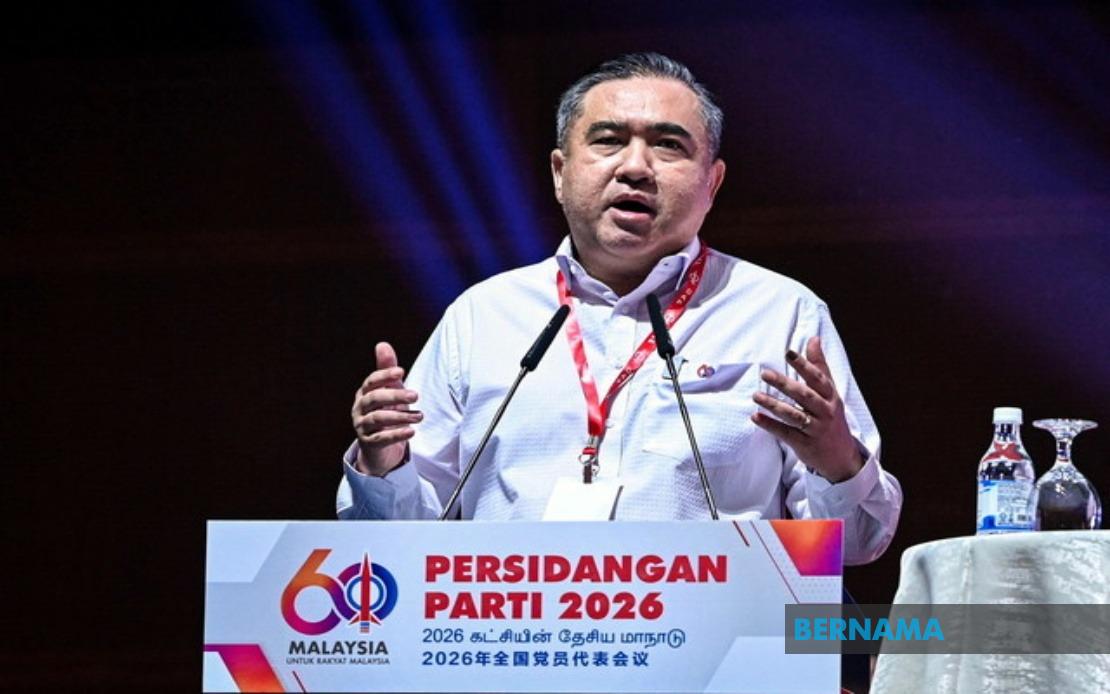
The Democratic Action Party has declared unequivocal backing for the administration's initiative to dismantle the Universities and University Colleges Act of 1971, according to party secretary-general Anthony Loke, who framed the position as part of DAP's broader mission to catalyse national transformation beyond mere political incumbency. Speaking at the DAP 2026 National Conference held at the Putrajaya International Convention Centre, Loke articulated that the party's participation in government extends beyond occupying ministerial positions, emphasising instead a commitment to tangible policy achievements that materialise the party's longstanding electoral commitments to the Malaysian electorate.
Prime Minister Datuk Seri Anwar Ibrahim had announced the repeal proposal during the PKR 2026 National Congress, positioning the decision as a response to sustained calls from student leaders advocating for comprehensive legislative transformation. The Cabinet is scheduled to deliberate on the formal proposal next Wednesday, marking a potential watershed moment for student activism and democratic freedoms on university campuses nationwide. Anwar's framing of the repeal centres on expanding democratic space and granting greater autonomy to the student movement, a constituency whose grievances regarding institutional restrictions have accumulated across multiple administrations.
DAP's enthusiasm for the repeal reflects the party's historical opposition to the AUKU legislation dating back decades, positioning the announcement as vindication of its persistent parliamentary advocacy. However, Loke's statement at the conference extended beyond mere endorsement of the government's initiative. The DAP secretary-general simultaneously pivoted to demand that the administration channel equivalent reformist momentum into additional higher education policy changes, specifically highlighting the need to guarantee equitable access to tertiary education across all demographic groups regardless of ethnicity. This dual positioning—celebrating an achieved objective while immediately leveraging that momentum for further reform—demonstrates political tactics designed to maintain DAP's profile as the reform-minded coalition partner.
The AUKU legislation, enacted in 1971 during a different political era, has undergone seven amendments since its introduction, reflecting the tension between institutional governance requirements and evolving democratic expectations. The most recent modification in 2024 transferred disciplinary authority from vice-chancellors to Student Disciplinary Committees, a structural change intended to introduce procedural fairness and reduce perceived administrative arbitrariness. That same amendment loosened financial restrictions on student representative bodies, permitting them to solicit and accept funds through diverse channels subject to applicable regulatory frameworks. These incremental changes indicate that even within the AUKU framework, there has been movement toward expanding student organisational autonomy and limiting executive administrative power.
The 2012 amendment permitting off-campus political party participation represented a turning point in the legislation's evolution, though critics contend that the AUKU framework itself remains fundamentally constraining regardless of specific amendments. Repeal advocates argue that the statutory architecture, regardless of modifications, continues to restrict campus-based political activity and expression in ways incompatible with contemporary democratic norms and international standards. The student movement, which has mobilised significantly in recent years around issues spanning healthcare, environmental policy, and democratic freedoms, views AUKU repeal as foundational to their organisational capacity and political voice within institutional settings.
For Malaysian higher education more broadly, the potential repeal carries implications extending beyond student activism frameworks. Universities function as crucibles for intellectual development, research output, and the formation of professional networks that influence national trajectory across sectors. Restrictions on campus political activity, proponents argue, have inhibited the free exchange of ideas and the development of student leadership capacity in areas including public policy deliberation, civil society engagement, and democratic participation. International comparative analysis suggests that universities operating under highly restrictive legislative frameworks experience diminished research productivity and graduate employment outcomes compared to institutions with greater autonomy.
The Malaysian context also reflects concerns regarding educational equity, a dimension that Loke specifically invoked in his conference remarks. Affirmative action policies in higher education access have generated ongoing debate about whether existing frameworks adequately serve all citizen cohorts or whether they perpetuate structural disparities through alternative mechanisms. DAP's emphasis on race-neutral higher education access represents a distinct policy position within the coalition government, one that potentially conflicts with other coalition partners' priorities. By coupling AUKU repeal endorsement with demands for equitable education access, Loke positioned DAP as advancing a comprehensive progressive education agenda rather than merely responding to government announcements.
The timing of the announcement during the dual party conferences of DAP and PKR merits consideration within broader coalition dynamics. Coalition governments in Malaysia have historically demonstrated fragility when policy divergences crystallise into public disputes. By securing government commitment to AUKU repeal—an objective DAP had championed—the party demonstrates tangible returns to its voter base while simultaneously using the platform to articulate additional demands. This positioning allows DAP to represent itself as simultaneously collaborative with the broader government agenda and assertively independent in advancing party-specific objectives.
Student organisations and campus civil society networks have emerged as pivotal constituencies within contemporary Malaysian politics, particularly among younger demographics whose participation in electoral processes directly affects coalition viability. The AUKU repeal, if realised, would fundamentally alter campus political ecosystems by permitting student representative bodies to engage in explicit party political mobilisation and alliance-building on campus grounds. Universities would transition from politically restricted zones to contested political spaces where student groups openly campaign and recruit, potentially reshaping the relationship between campus communities and national political parties.
The pathway from announced intention to legislative repealing remains undefined, with the Cabinet deliberation next Wednesday representing the immediate procedural hurdle. Parliamentary passage would presumably follow if cabinet consensus materialises. However, historical patterns suggest that significant education legislation can encounter resistance from institutional constituencies—university administrations, academic councils, and regulatory bodies—who perceive threats to their operational authority or institutional autonomy. The 2024 amendments occurred through incremental modification rather than comprehensive legislative redrafting, suggesting that pathways toward gradual change may encounter less institutional resistance than wholesale repeal.
From a Southeast Asian perspective, Malaysia's higher education regulatory environment has attracted regional attention, particularly from student movements in neighbouring democracies evaluating their own institutional constraints. A Malaysian repeal would potentially catalyse similar advocacy efforts across the region, as comparative legislative analysis becomes standard practice within transnational student networks. Conversely, implementation challenges or unforeseen consequences following repeal could provide cautionary examples to regional policymakers sceptical of rapid institutional transformation.
Looking forward, the substantive content of post-AUKU regulatory frameworks remains unaddressed. Repeal alone does not establish affirmative governance structures; rather, it eliminates existing constraints. The government will need to articulate whether repeal represents a return to pre-1971 institutional autonomy, a transition to entirely new statutory frameworks, or some hybrid approach. These implementation details will substantially determine whether the reform achieves the democratic expansion that student advocates envision or whether alternative regulatory mechanisms reconstitute existing restrictions through different instruments.

