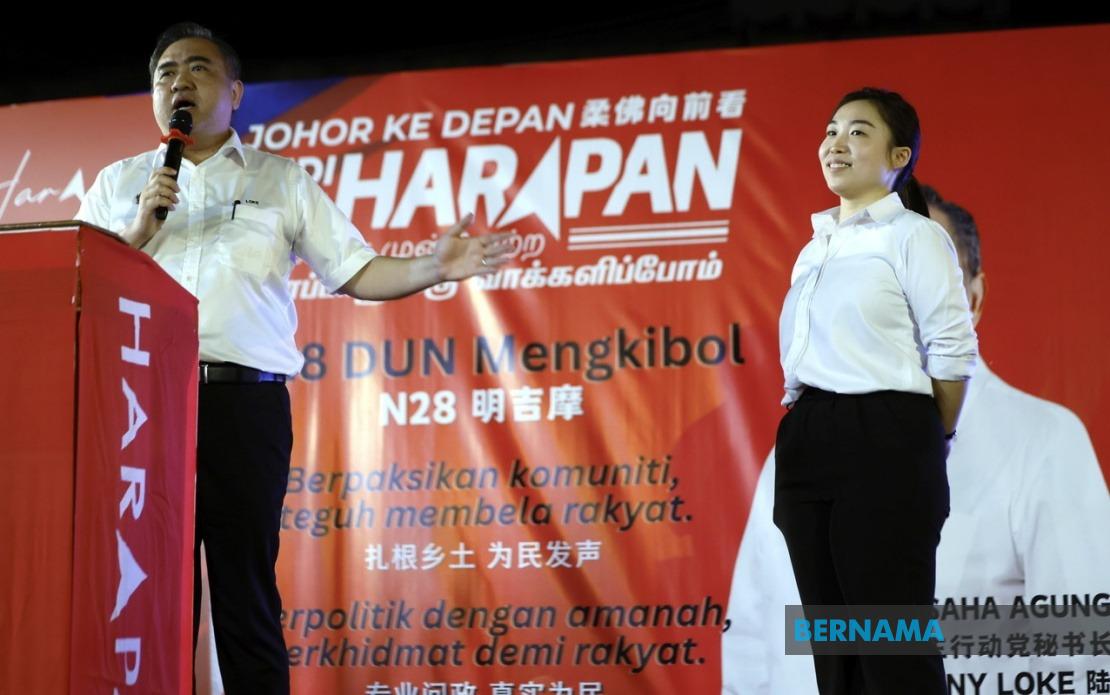
The Democratic Action Party has made its first candidate announcement for the forthcoming Johor state election, selecting 33-year-old lawyer Chu Poh Yee to contest the Mengkibol seat. The selection was unveiled at a ceremony in Kluang on the evening of June 18, marking the party's move to refresh its representation in the constituency with a new generation of political talent. The decision came as the current assemblyman prepares to transition to higher office, reflecting broader patterns within Malaysian opposition politics where state representatives increasingly seek advancement to federal parliamentary roles.
Chew Chong Sin, the incumbent assemblyman who has represented Mengkibol for two consecutive terms, will vacate the state seat to pursue the Labis parliamentary constituency in the next General Election. This realignment became possible after the sitting member of parliament for Labis, Pang Hok Liong, indicated his intention to retire from electoral politics. The shifting of Chew from state to federal representation allows the DAP to introduce a fresh candidate while maintaining continuity in the broader Pakatan Harapan coalition's presence across Johor.
According to DAP secretary-general Anthony Loke, the party leadership reached unanimous agreement on Chu's nomination, signalling strong internal consensus behind her candidacy. Loke emphasised that Chu brings practical legal expertise directly relevant to constituency work, having developed an extensive background in assisting elected representatives with legal aid matters. This professional specialisation positions her to address a common constituent concern across Malaysian constituencies, where access to affordable legal assistance remains a significant challenge for ordinary residents navigating the complexities of Malaysia's legal system.
The party highlighted several attributes that informed the selection decision. Chu possesses strong academic credentials and demonstrates proficiency across multiple languages, capabilities the DAP views as essential for effective representation in Johor's diverse communities. Beyond technical qualifications, the party stressed her deep-rooted connections to Mengkibol itself, suggesting she understands local dynamics and resident concerns through long-term community engagement rather than parachuting into the constituency as an outsider. Such local anchoring has become increasingly important for opposition parties seeking to build credibility against accusations of central control or imposed candidacies.
The nomination reflects the DAP's stated commitment to expanding opportunities for women in electoral politics, a declared objective that translates into practical representation. Female candidates have historically constituted a minority in Malaysian state assemblies, and their selection for winnable seats rather than symbolic contests signals genuine prioritisation of gender representation. Loke's framing of Chu's candidacy explicitly within this broader gender equity agenda suggests the party recognises both the principled argument for women's political participation and the electoral advantages of presenting diverse candidates to constituencies containing significant female electorates.
The DAP's Johor campaign structure involves contesting 17 of the state's 56 seats, a significant subset reflecting the opposition's traditional stronghold areas in the southern state. This portfolio comprises ten seats currently held by DAP incumbents, four constituencies previously lost that the party seeks to reclaim, and three additional seats where the opposition believes it can make gains. The strategic composition suggests the party is balancing defence of existing strongholds with calculated offensive moves into territory vacated by other opposition parties or where voter sentiment has shifted.
Further candidate announcements will follow in staged fashion over subsequent days. Loke confirmed that four additional names will be revealed at the weekend for the Tiram, Johor Jaya, Senai and Bukit Permai constituencies, continuing the controlled rollout of the party's full slate. This sequential disclosure strategy manages media attention, allows the party to emphasise each candidate individually, and prevents overwhelming public and press response with too many simultaneous announcements.
The broader Pakatan Harapan coalition's complete Johor candidate list will be announced collectively, with the Prime Minister leading the announcement. This timing and prominence underscores the importance Pakatan Harapan attaches to the Johor election, where the coalition's performance will significantly influence perceptions of its viability as a federal alternative to the ruling coalition. Johor's status as Malaysia's second-most-populous state and as a traditional stronghold for government-aligned parties makes strong opposition performance there particularly consequential for national political calculations.
For Chu specifically, the nomination represents both opportunity and substantial challenge. Mengkibol will likely remain a competitive seat given her relative newness to electoral politics despite her legal credentials and community ties. She must rapidly build grassroots networks, demonstrate political communication skills distinct from legal expertise, and navigate factional dynamics within Johor's DAP structure. Her success or failure will influence perceptions of whether the party's women candidate strategy produces genuine political gains or merely symbolic representation.
The Johor state election carries implications extending well beyond that state's borders. As a major southeastern economic hub adjacent to Singapore and strategically vital within Malaysia's peninsular geography, Johor's political complexion influences investor confidence, regional stability, and federal political dynamics. Opposition performance here feeds into broader narratives about democratic competition and will shape coalition positioning heading toward the next General Election, whether held in 2023 or early 2024. Chu Poh Yee's candidacy thus represents not merely a local Mengkibol contest but rather a data point in Malaysia's larger political reconfiguration.

