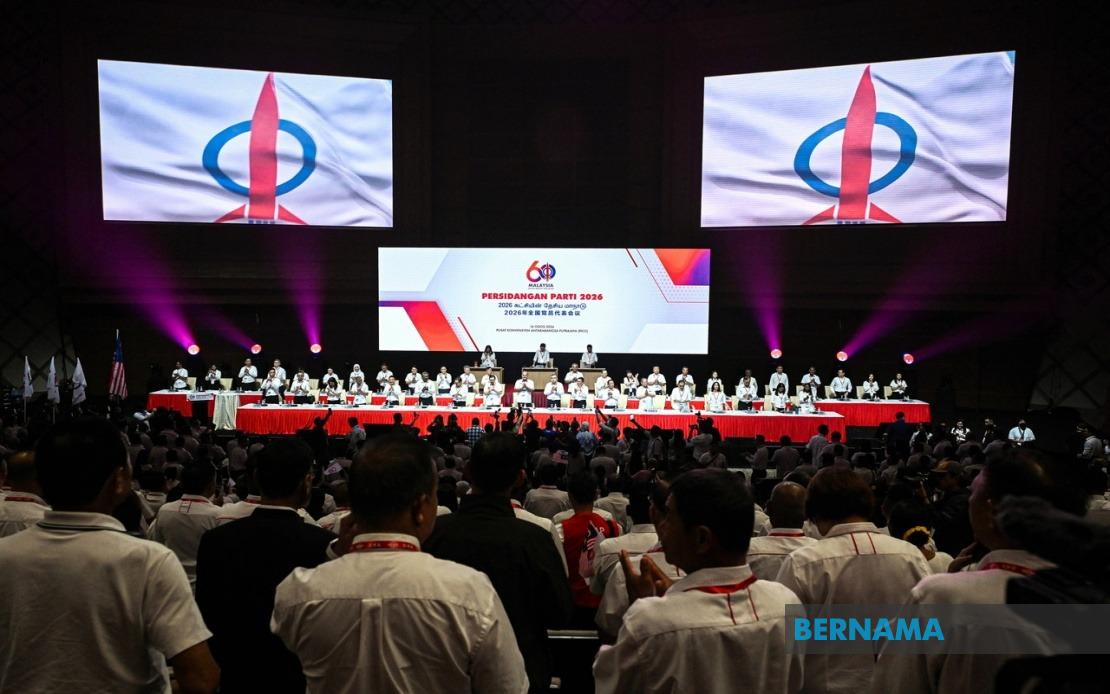
The Democratic Action Party (DAP) has received clear backing from its state delegates to remain within the federal coalition government through the end of the current parliamentary term. This decision emerged during deliberations at the party's 2026 National Conference held at the Putrajaya International Convention Centre on August 16, with 14 state representatives expressing their support for DAP maintaining its ministerial positions under Prime Minister Datuk Seri Anwar Ibrahim's administration.
The delegates presented a range of substantive arguments for continued participation in the Unity Government. Their collective reasoning revolved around several interconnected themes: the necessity of seeing through promised institutional reforms, the importance of sustained efforts against corruption, addressing the rising cost of living affecting ordinary Malaysians, and safeguarding the rights of the country's diverse communities. Beyond these policy considerations, speakers also emphasised the value of maintaining governmental stability and reducing the likelihood of an early dissolution of parliament that could trigger an unscheduled general election.
Delegate Jason Ng Thien Yong from Perak articulated a pragmatic perspective on the party's recent electoral setbacks in state contests. Rather than interpreting these losses as grounds for abandoning federal power, he contended that DAP must strategically remain in government while implementing effective reform initiatives to rebuild electoral confidence. His position acknowledged the imperfections within the Unity Government coalition whilst maintaining that meaningful change is best pursued from within the governing structure rather than from the opposition benches.
Veteran politician Leong Ngah Ngah from Pahang reinforced this logic by pointing to tangible achievements of the current administration over the preceding three years. He implored delegates to approach the question with political maturity, recognising that the Prime Minister's government had demonstrated capacity for reform implementation. The intervention suggests that DAP's leadership views the party's continued role as instrumental to advancing its substantive agenda rather than as a matter of mere political expediency.
Selangor delegate Muhammad Shakir Amerr Mohideen brought a forward-looking dimension to the discussion, emphasising that DAP's demonstrated governance competence and administrative performance could serve as a mechanism for recovering electoral support in constituencies previously lost. This argument pivots the debate away from abstract principles toward concrete evidence of administrative capability. The delegate essentially contended that maintaining DAP's governmental role provides the platform through which the party can demonstrate renewed competence to sceptical voters.
Melaka's Jason Tze-Xi Nathan approached the question from a communicative angle, suggesting that remaining in government would spare the party from having to justify an exit to constituents who elected them. This perspective recognises the political vulnerability associated with withdrawal, arguing that explaining such a decision to voters would damage DAP's credibility more substantially than continuing to engage with the inevitable compromises of coalition governance.
Sabah delegate Yap Wui Lip introduced an additional layer by emphasising that DAP's continued participation need not require acquiescence on all issues. He specifically highlighted the party's capacity to maintain vocal advocacy for reforms addressing Malaysia Agreement 1963 (MA63) rights, a particularly sensitive issue for Sabah's political dynamics. This position articulates a model of coalition participation that preserves the party's ability to champion regional interests and constitutional concerns.
Party secretary-general Anthony Loke, during his concluding remarks on the debate, framed acceptance of the motion as something far short of unconditional endorsement. He explicitly cautioned that remaining in government would not constitute a "blank cheque" to either the party's central decision-making body or to the Prime Minister. Instead, Loke positioned continued participation as conditional upon the government's demonstrated commitment to institutional reform, renewal, and recovery of public confidence. This framing attempts to satisfy those concerned that DAP's presence would constitute passive accommodation of ministerial positions without active pursuit of the party's stated reform objectives.
The formal decision-making process drew participation from 4,264 delegates representing 1,704 eligible party branches, who were scheduled to cast secret ballots following the debate session. This scale of participation underscores the significance of the question within DAP's internal politics, as the vote would determine the party's governmental strategy through the remainder of the 16th parliamentary term. The procedural emphasis on secret balloting reflected the sensitivity of the matter within party ranks.
The timing of this conference carried symbolic weight, coinciding with the party's 60th anniversary celebrations and occurring at a juncture when Pakatan Harapan's broader coalition governance faced questions about sustainability and direction. DAP's position as one of three principal component parties within Pakatan Harapan—alongside PKR and Amanah—means the party's decision would carry implications beyond its own organisational interests. The outcome would signal the coalition's likely trajectory toward the anticipated general election.
For Malaysian observers, the delegate deliberations reflected broader tensions within modern coalition governance in Southeast Asia. The decision between pursuing ideological purity from opposition and accepting the messy compromises inherent in power-sharing arrangements touches fundamental questions about political strategy and democratic accountability. DAP's delegates, by substantial margins, appeared to privilege continuity and leverage over protest and principle—a calculation that will substantially shape Malaysian politics through the remainder of this parliamentary cycle and into the next electoral contest.

