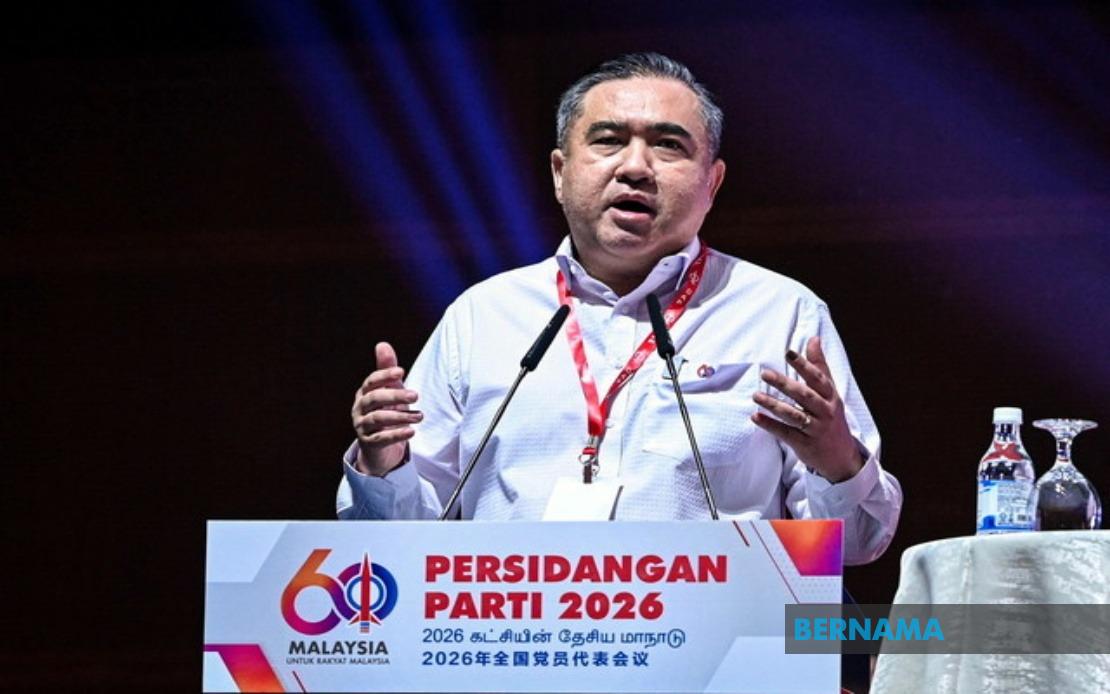
The Democratic Action Party has formally committed to maintaining its participation in Malaysia's ruling coalition until the current parliamentary term concludes. The decision emerged from a special vote held during DAP's 2026 party conference in Putrajaya on August 16, with transport minister Anthony Loke presenting the motion that secured overwhelming delegate support. The result represents a significant reaffirmation of the party's alignment with the federal government structure, signalling continuity in Kuala Lumpur's political arrangements heading toward the end of the 15th Parliament's mandate.
The conference witnessed an unusually decisive outcome, with 1,857 delegates voting to remain in government compared to just 242 voting for withdrawal. Seven ballots were spoilt from the 2,106 papers distributed, meaning supporters of continuing represented nearly 88 per cent of those present. Conference Speaker Cha Kee Chin announced the results following a secret ballot process rather than the traditional voice vote method, an approach designed to enhance transparency and prevent perceived pressure on delegates voting in sensitive political matters.
DAP's parliamentary representation in the cabinet currently extends across five ministerial portfolios. Beyond Loke's transport role, the party holds the Entrepreneur and Cooperatives Development ministry under Steven Sim, the Digital portfolio managed by Gobind Singh Deo, the Housing and Local Government ministry led by Nga Kor Ming, and a Prime Minister's Department position under Hannah Yeoh. This distribution demonstrates DAP's integration into major government functions, particularly in areas governing economic development and infrastructure governance.
The party's influence within government structures extends deeper through seven deputy ministerial appointments. Teo Nie Ching oversees Communications, while Datuk Chan Foong Hin manages Agricultural and Food Security functions. Wong Kah Woh directs Education policy, and Liew Chin Tong holds the Finance deputy position. M. Kulasegaran manages constitutional and institutional reform matters under the Prime Minister's Department, while Lim Hui Ying directs Women, Family and Community Development initiatives, and Mordi Bimol oversees Youth and Sports portfolios. This spread across multiple government tiers indicates DAP's stake in steering policy across diverse sectors affecting Malaysian citizens daily.
The conference drew participation from what organizers characterized as a substantial cross-section of DAP's grassroots membership. Approximately 4,264 delegates representing 1,704 branches throughout Malaysia were expected to attend and cast ballots, indicating a nationwide mobilization of the party structure for this binding decision. The geographic distribution suggests that party leadership consulted its membership base across urban and suburban constituencies, though precise turnout figures relative to eligible membership were not disclosed in formal announcements.
For Malaysian political observers, DAP's continued commitment carries implications extending beyond the party itself. The Democratic Action Party functions as a significant block within the broader unity government coalition, and its decision to remain provides predictability regarding the stability of the current federal administration. Coalition governments frequently face internal pressures regarding resource allocation and ministerial portfolios, and explicit reaffirmation of commitment from major partners demonstrates deliberate choice rather than provisional arrangement.
The timing of this decision at mid-term through the parliamentary cycle suggests DAP leadership believed consolidating party consensus essential before entering the final phase of government. Parliamentary terms typically see intensifying manoeuvring around budgetary priorities and succession planning, with coalition partners occasionally leveraging their position to extract concessions. By securing formal delegate endorsement now, DAP management strengthened its negotiating position regarding any outstanding policy objectives or resource demands through the remainder of the term.
From a Southeast Asian perspective, Malaysia's unity government model continues attracting attention as an alternative to two-party political competition prevalent in some regional democracies. DAP's decision underscores how consensus-building across ideologically diverse partners can sustain governance arrangements even when individual components hold differing longer-term strategic objectives. The party's conscious choice to remain alongside potentially uncomfortable partners speaks to pragmatic prioritization of policy influence over electoral positioning.
The secret ballot mechanism deployed for this decision warrants particular note in Malaysian political culture. Open voting on sensitive matters often produces outcomes reflecting factional pressures rather than genuine member sentiment, and DAP's adoption of confidential balloting demonstrates institutional maturation regarding democratic processes within party structures. This approach sets precedent potentially influencing how other Malaysian political organizations conduct internal votes on consequential strategic decisions.
Looking forward, DAP's commitment through the parliamentary term's conclusion establishes a stable timeframe for government planning and policy implementation. Malaysian citizens dependent on consistent policy from housing, digital infrastructure, and transportation sectors can expect continuity in departmental leadership through this government's mandate. The delegate vote essentially commits DAP's organizational resources to supporting coalition governance objectives rather than preparing alternative political strategies.
The overwhelming margin of support suggests limited internal dissent regarding this government participation, though the 242 opposing votes indicate some delegate segment harbours reservations about continued coalition involvement. Future analyst attention will likely focus on whether these minority voices represent localized grievances regarding representation or broader ideological objections to specific government policies. Such dynamics often resurface during subsequent party congresses or if government popularity declines significantly.
DAP's decision ultimately reflects calculated assessment that remaining within government offers superior influence over Malaysian policy development compared to opposition status. The party's ministerial and deputy ministerial positions provide direct leverage over decisions affecting education, commerce, transportation, and administrative functions that shape daily experience for ordinary Malaysians. Committing this influence through the parliamentary term's conclusion represents strategic prioritization of tangible governance impact over theoretical electoral advantages opposition positioning might eventually provide.

