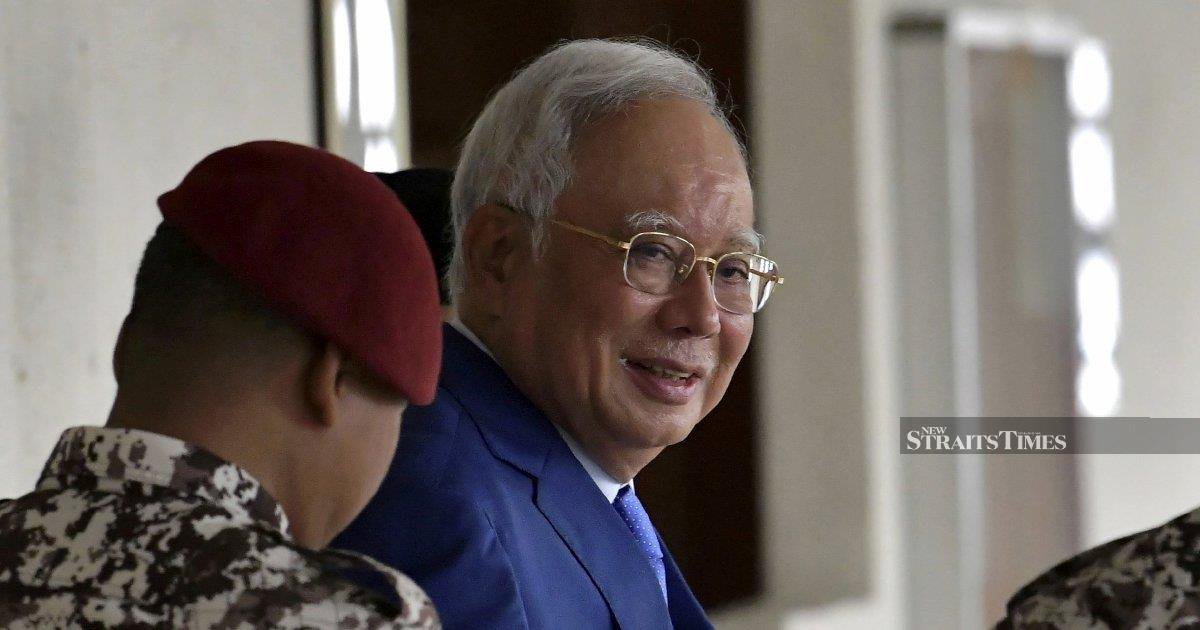
JOHOR BARU: The political credibility of the Democratic Action Party came under scrutiny this week when former Skudai state assemblywoman Marina Ibrahim publicly alleged that party leadership had considered supporting alternative sentencing arrangements for former Prime Minister Datuk Seri Najib Razak. According to Ibrahim, a senior DAP representative expressed openness to the notion of securing a royal pardon for Najib while allowing him to serve his remaining sentence through house arrest rather than continuing imprisonment at the Sungai Buloh prison.
The allegation, raised in Johor Baru, strikes at the heart of DAP's political positioning. The party has consistently cast itself as an uncompromising opponent of corruption and abuse of power—principles that formed the bedrock of the Reformasi movement during Malaysia's tumultuous political transitions. For a party that built electoral support partly on the promise of holding elites accountable, any indication that senior members would entertain preferential treatment for a convicted former leader represents a significant brand contradiction. Such inconsistency could undermine DAP's authority to criticize other parties on governance and rule of law matters.
Najib's legal position remains one of Malaysia's most sensitive political issues. The former Prime Minister was convicted in 2023 of abuse of power relating to funds from the state-owned investment fund 1MDB and sentenced to 12 years in prison. His case symbolizes the broader reckoning with decades of executive malfeasance that Malaysian society underwent following the 2018 general election. That Najib remains politically consequential—with his party, the United Malays National Organisation, attempting rehabilitation in the current political landscape—means any discussion about his potential release carries implications beyond his individual circumstances.
The timing of Ibrahim's disclosure deserves scrutiny. As a former assemblywoman who represented Skudai, a constituency in one of Malaysia's most politically competitive states, Ibrahim maintains relevance in Johor's fractious political environment. The Johor state assembly remains a pivotal battleground where DAP competes directly with UMNO, Perikatan Nasional, and other formations. By raising questions about DAP's principled stance toward executive accountability, Ibrahim has effectively challenged the party on terrain where it claims moral authority. Whether this statement represents a genuine policy disagreement or serves tactical political purposes within Johor's intensely competitive dynamics remains unclear.
DAP's response to these allegations will be carefully watched by reform-minded voters across Southeast Asia's most advanced democracy. The party's parliamentary strength, particularly following its strong showing in the 2022 general election, depends partly on urban and middle-class constituencies that prioritize institutional integrity and transparent governance. Any perception that DAP leadership entertains flexibility on holding former leaders accountable—regardless of party affiliation—could erode that crucial support base. Conversely, the party must navigate the political complexities of Malaysia's coalition government, where pragmatic compromises sometimes override ideological purity.
The allegation also reflects deeper tensions within Malaysia's political settlement regarding how the nation should address the substantial legacy of the Najib administration. Conservative approaches emphasize reconciliation and moving forward, while reform-oriented constituencies demand accountability and systemic change. The 1MDB scandal, which exposed networks of international financial corruption and domestic misappropriation of state funds, remains a defining moment for many Malaysians who supported electoral change. Suggestions that political actors might be willing to truncate Najib's sentence through either executive clemency or alternative incarceration methods would signal retreat from that transformative moment.
From a Southeast Asian perspective, the incident highlights challenges that plague democratic transitions across the region. Countries attempting to establish stronger rule of law and accountability frameworks often struggle when former power-holders retain political influence and when contemporary coalitions create incentives for actors to compromise their stated principles. Malaysia's experience—where anti-corruption messaging coexists uneasily with the practical necessities of coalition-building—offers instructive lessons for other democracies in the region grappling with similar tensions between idealism and pragmatism.
The matter also underscores the evolving nature of Malaysian politics, where established parties must continually justify their policy positions before increasingly sophisticated urban electorates. DAP, which has cultivated an image as the progressive, anti-corruption standard-bearer, now faces questions about whether that reputation can withstand the compromises inherent in governing coalitions. The party's formal response to Ibrahim's allegations—whether through direct refutation, clarification, or silence—will communicate its willingness to maintain consistency between its stated values and operational decisions.

