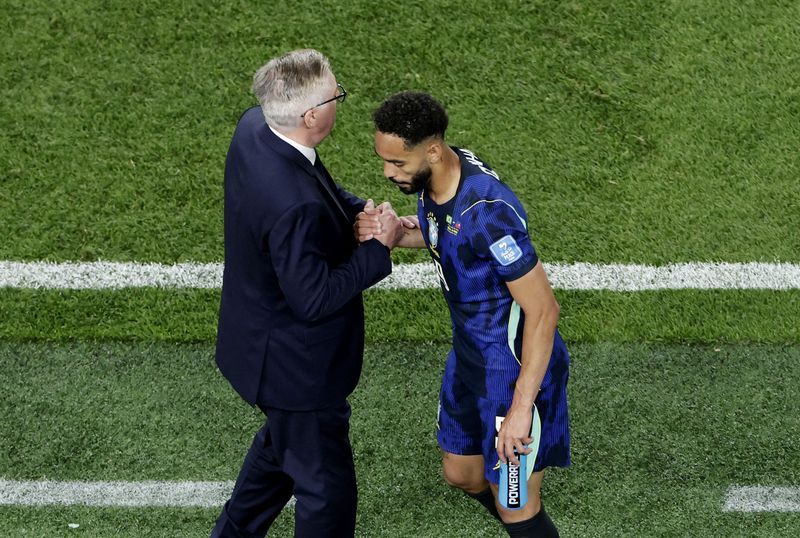
Brazil emerged from their Copa América clash against Haiti with a measure of clarity about their tactical direction, though Carlo Ancelotti's wholesale redesign of the team's structure remains a work in progress. The 3-0 victory at Philadelphia offered genuine encouragement after the disappointment of a 1-1 draw with Morocco in the group stage opener, signalling that the world's most successful football nation may yet find their rhythm in what has proven a challenging tournament campaign.
Haiti provided limited resistance, often committing bodies forward with scant regard for the defensive vulnerabilities they exposed, creating conditions ideally suited to a Brazil side seeking greater cohesion and precision in possession. Yet the significance of this result lay less in the margin of victory and more in how Brazil achieved it. By making two critical adjustments to his starting eleven, Ancelotti granted observers a tangible vision of how this team might function when all components align, particularly through the introduction of Matheus Cunha into the attacking trio.
The substitution of Cunha for Igor Thiago represented far more than a simple like-for-like swap. Cunha's movement throughout the match brought an equilibrium that had been conspicuously absent from Brazil's previous outings. Operating from an advanced midfield position within Ancelotti's diamond framework, the Atletico Madrid forward created a fluid connective tissue between midfield and the final third, transforming the geometry of Brazil's attack. This tactical innovation immediately solved one of the most vexing problems that had plagued Brazil since Neymar's long-term injury: the absence of a dynamic, intelligent intermediary who could drift infield while simultaneously supporting the wide players.
With Cunha's positioning established, Lucas Paqueta flourished on the left flank in a way that had eluded him during the Morocco encounter, when he faced considerable criticism for his passive contributions. Suddenly released from the constraints of a formation that had left him isolated and vulnerable, Paqueta combined with renewed vitality, providing meaningful support to Vinicius Junior and weaving intricate combinations with Cunha. The understanding between these three players produced Brazil's most dangerous attacking moments, with all three goals unsurprisingly flowing from movements originating on the left side of the pitch. Vinicius, long starved of adequate midfield support at international level, finally possessed the type of coordinated assistance that allows his mercurial talents to flourish within a structured system.
Yet if the left flank blossomed, the right side presented a study in contrasts and mounting concern. Raphinha, operating in a wide position markedly different from his club responsibilities at Barcelona where he functions with greater freedom, struggled for a second successive match. The winger, battling blister-related discomfort sustained during the week and appearing visibly short of match sharpness, produced a disjointed performance marked by imprecise passing and poor technical execution. Whether attributable to his physical condition or the tactical constraints of his positioning, Raphinha's usual incisiveness vanished, eventually necessitating his removal from the pitch.
The substitution of Rayan offered little improvement, suggesting that Brazil may need to explore alternative solutions should Raphinha remain unavailable for forthcoming fixtures against Scotland and beyond. Luiz Henrique emerged as a potential candidate to fill this critical berth, though Ancelotti faces a genuine strategic quandary in how to manufacture attacking width on the right without compromising the team's defensive balance. The asymmetry became increasingly apparent as the match progressed, with Brazil's attacking thrust overwhelmingly concentrated on one flank whilst the right side operated in isolation.
Defensive resilience also demands urgent attention, particularly regarding the role of Casemiro in midfield. At 34 years of age and operating in a double-pivot system, the Manchester United midfielder may prove vulnerable against opponents of greater pedigree and athleticism than Haiti provided. Bruno Guimaraes, who operated effectively as the right-sided midfielder against Haiti, could potentially drop deeper to reinforce defensive stability and facilitate progression from the back. This redeployment would require Ancelotti to recalibrate his midfield balance and potentially sacrifice some of the attacking verve glimpsed against Haiti.
Although Brazil's performance scarcely constituted a dominant, emphatic statement of intent, the tactical framework Ancelotti unveiled suggested a trajectory toward greater cohesion. The diamond midfield, when functioning as designed, can provide superior ball retention, defensive compactness, and creative opportunities through intelligent repositioning. Cunha's ability to drift and create space whilst maintaining structural integrity proved particularly valuable, restoring a missing element that had handicapped Brazil's attacking play throughout their recent disappointing campaign.
For Malaysian and Southeast Asian observers following Brazil's tournament, these developments carry significance beyond mere sporting curiosity. The manner in which major football powers adapt to personnel losses and evolving competition demonstrates how elite teams leverage tactical innovation to overcome adversity. Ancelotti's willingness to fundamentally restructure Brazil's approach, rather than persisting with failing systems, reflects the pragmatism demanded at the highest levels of international football. Should Brazil successfully synthesise their left-flank creativity with improved right-side contributions and defensive solidity, they possess sufficient individual talent to compete for tournament honours. Conversely, persistent imbalances and vulnerability to stronger opponents could derail their campaign entirely, leaving Ancelotti scrambling for solutions with limited matches remaining.

