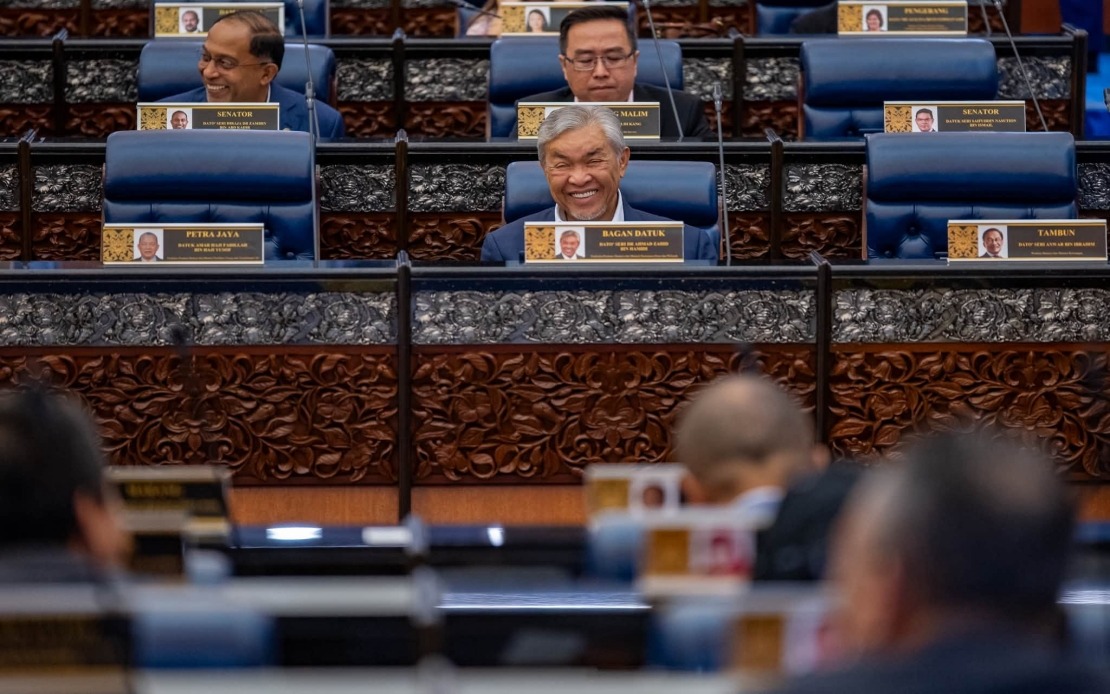
Deputy Prime Minister Datuk Seri Dr Ahmad Zahid Hamidi has underscored the necessity of pairing criticism levelled at Lembaga Tabung Haji with demonstrable, responsible measures to address identified shortcomings. His remarks come as Parliament held a special sitting to scrutinise the Royal Commission of Inquiry report into the Islamic financial institution, a development that reflects broader public concern about governance standards at major statutory bodies managing Malaysians' savings.
The requirement to move beyond dialogue to implementation represents a critical distinction in how accountability mechanisms function within the government apparatus. Ahmad Zahid, who serves concurrently as Rural and Regional Development Minister, emphasised that the institution must preserve its credibility and resilience while avoiding becoming trapped in protracted public disputes that could undermine confidence among its 10 million members and stakeholders throughout the country.
The parliamentary forum provided legislators with a designated platform to interrogate, seek clarification, and deliberate comprehensively on the RCI's findings and recommendations. This structured approach reflects an attempt to channel concerns through established democratic institutions rather than allowing discontent to fester through unregulated public discourse or social media campaigns that often lack nuance and factual grounding.
Zahid expressed an expectation that following this parliamentary examination, stakeholders would refrain from making unsubstantiated claims or fostering misleading narratives about the institution. His statement carries an implicit warning against the proliferation of misinformation, which remains a persistent challenge in Malaysian public discourse particularly around financial and religious institutions where public trust is paramount.
The RCI report, made available to the public on July 29, had previously been restricted to governmental review. The decision to release it and facilitate parliamentary debate represented a transparency measure aimed at addressing long-standing questions about governance lapses and financial management at Tabung Haji during the 2014-2020 period, a span that encompasses significant economic and political transitions within Malaysia.
The inquiry identified numerous operational and administrative deficiencies within the organisation and formulated 25 specific recommendations designed to strengthen institutional practices and controls. Notably, as of July 30, Tabung Haji had already begun implementing three-quarters of these recommendations, indicating a receptiveness to reform that extends beyond mere defensive posturing or token gestures toward substantive remediation.
The significance of this development extends beyond the immediate institutional context. Tabung Haji operates as a cornerstone of Malaysia's Islamic financial ecosystem and occupies a unique position as both a commercial entity and a religious trust managing funds designated for pilgrimage to Mecca. Any sustained crisis of confidence in its stewardship would reverberate through the broader Islamic banking sector and potentially affect Malaysia's reputation as a centre for Islamic finance in a region where such credentials carry economic weight.
Zahid's appeal for collective wisdom and sincerity in addressing the matter framed the resolution of Tabung Haji's challenges as a matter transcending partisan political interest and institutional pride. His invocation of serving the "ummah" and the nation suggested that remedying governance failings should be perceived as a communal responsibility rather than an adversarial undertaking between government and opposition or between different stakeholder factions.
The pathway forward appears to hinge on the quality of execution in implementing the RCI recommendations. Parliamentary scrutiny can expose gaps and generate political pressure for compliance, but sustained institutional reform requires dedicated resources, competent personnel, and genuine commitment from leadership. The coming months will reveal whether the organisation's demonstrated willingness to implement recommendations translates into durable improvements in financial controls, decision-making transparency, and operational accountability.
For Malaysian savers and prospective pilgrims, the resolution of Tabung Haji's governance issues carries direct material consequences. Restoring institutional credibility is not merely a matter of preserving the reputation of a cultural institution; it fundamentally affects the security and returns on savings vehicles that millions of Malaysians depend upon for their religious obligations and financial futures. The special parliamentary sitting thus represented more than ceremonial governance—it embodied a critical juncture in determining whether systemic weaknesses would be genuinely addressed or allowed to persist beneath layers of public reassurance.

