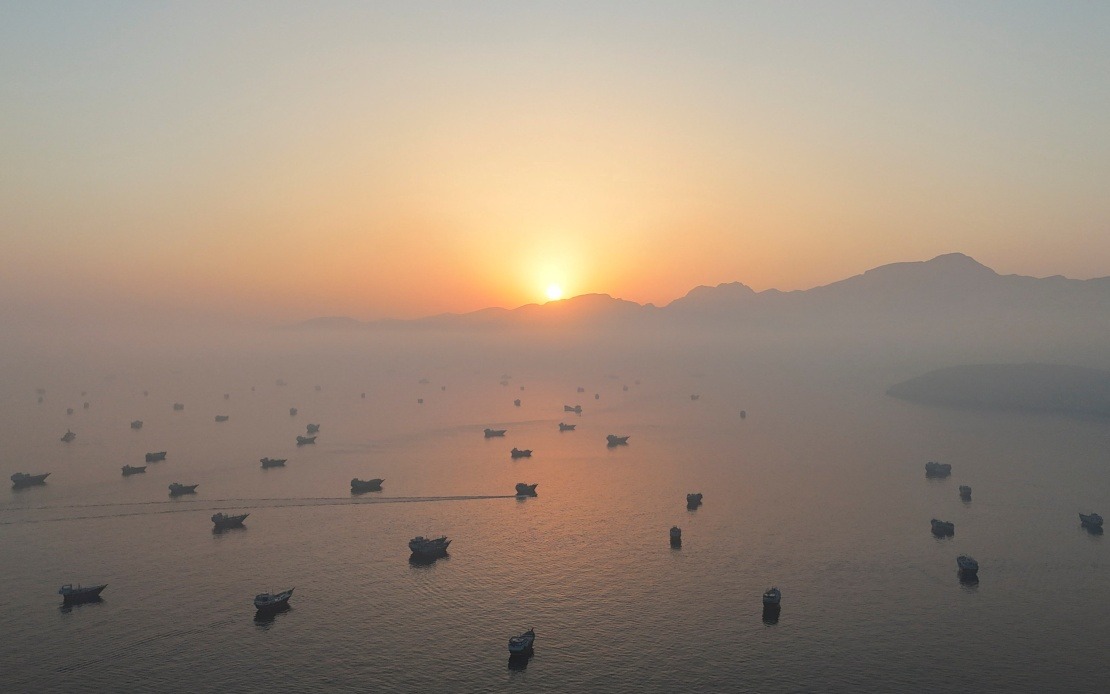
The Comprehensive and Progressive Agreement for Trans-Pacific Partnership has thrown its support behind the recent diplomatic accord between Washington and Tehran, signalling the trade bloc's determination to shield itself from further disruptions to global commerce. At a virtual meeting held on Friday, the 12 member nations issued a joint statement recognising the significance of the US-Iran agreement and the accompanying moves towards normalising operations through the Strait of Hormuz, a waterway whose closure would devastate the world's energy markets.
The geopolitical thawing comes at a critical moment when supply chain fragility has become a defining feature of the global economy. For the CPTPP members—Australia, Brunei, Canada, Chile, Japan, Malaysia, Mexico, New Zealand, Peru, Singapore, the United Kingdom and Vietnam—the restoration of reliable shipping corridors is not merely a matter of economic efficiency but existential necessity. The statement particularly emphasised the vulnerability of energy-dependent sectors, cataloguing the breadth of commodities at risk: crude oil, diesel and refined petroleum products, natural gas, petrochemical compounds, and essential fertilisers that underpin food security across developing regions.
The bloc's emphasis on the Strait of Hormuz reflects an uncomfortable reality facing its members. Approximately one-third of the world's maritime-traded oil transits through this narrow passage, making it one of the most critical chokepoints in global commerce. Any sustained disruption—whether from geopolitical tension, military action, or deliberate blockade—creates cascading consequences across manufacturing, agriculture, and energy sectors. For nations like Malaysia and Vietnam, which depend heavily on stable energy imports and whose exporters rely on predictable shipping costs, the symbolic reassurance embedded in Friday's statement carries practical weight.
Central to the CPTPP's position is an explicit commitment to upholding the United Nations Convention on the Law of the Sea, the foundational international framework governing maritime operations. By anchoring their support for Hormuz reopening to UNCLOS principles, the member nations are signalling that freedom of navigation must prevail over unilateral assertions of control. This legalist approach resonates particularly with smaller trading nations in Southeast Asia that benefit from rules-based systems and fear the precedent of powerful states weaponising strategic geography.
The statement's language around trade-restrictive measures carries subtle but significant implications. Ministers explicitly committed to refraining from unjustified protectionist actions and called upon other nations—an apparent reference to non-member powers—to abandon similar practices. This plea reflects anxiety that geopolitical tensions might prompt trading partners to erect tariff barriers or supply controls under the guise of national security. For Malaysia's manufacturing and export sectors, which depend on uninterrupted access to global markets and intermediate inputs, such assurances matter considerably.
The bloc also acknowledged emerging regional frameworks aimed at fortifying energy resilience. The Partnership On Wide Energy and Resources Resilience Asia, referenced in the statement, represents an attempt by producer and consumer nations to build redundancy into supply chains through diversified sourcing and improved coordination. This initiative proves particularly relevant for island states across the Pacific and Southeast Asia, which face inherent vulnerabilities due to geographic isolation and limited domestic energy resources. By endorsing POWERR Asia, the CPTPP implicitly recognises that energy security in the post-pandemic era demands active cooperation rather than passive reliance on traditional suppliers.
The virtual format of Friday's meeting itself merits consideration. Convening across multiple continents and time zones reflects both the logistical maturity of contemporary multilateralism and the urgency perceived by participating nations. Trade ministers did not delay addressing the Hormuz situation through slower diplomatic channels; instead, they mobilised quickly to articulate a unified position. This responsiveness suggests genuine concern about the trajectory of global supply chain disruptions and recognition that swift diplomatic coordination can help prevent further deterioration.
For Malaysia specifically, the CPTPP's collective stance carries multilayered significance. As a nation straddling the Strait of Malacca—another critical maritime chokepoint—Malaysia has vested interest in upholding open sea lane principles globally. When the CPTPP reinforces norms around freedom of navigation and unimpeded transit, it establishes precedent that buttresses Malaysia's own strategic interests. Furthermore, as both an energy importer and a trading hub through which commodities flow, Malaysia benefits from the bloc's commitment to minimising disruptions to energy commerce.
The statement's acknowledgment of small-island developing states' particular vulnerabilities introduces an equity dimension often absent from trade discussions. Nations like Brunei and Pacific island members face disproportionate exposure to energy price volatility and shipping disruptions due to their limited domestic resources and geographic remoteness. By explicitly recognising these vulnerabilities and supporting trade diversification strategies, the CPTPP positioning itself not merely as a commercial alliance but as a framework concerned with inclusive prosperity across member economies.
The broader context surrounding this ministerial coordination involves persistent global uncertainty. Beyond the Middle East, supply chains continue recovering from pandemic-related shocks, semiconductor shortages remain episodic, and inflationary pressures constrain purchasing power. Against this backdrop, the CPTPP's defence of rules-based trade and open markets represents more than rhetorical commitment. It signals that member nations—despite their distinct economic structures and geopolitical alignments—share fundamental interests in stability and predictability.
The US-Iran agreement itself, while bilateral in origin, carries multilateral repercussions that the CPTPP statement seeks to amplify. By voicing collective support for the accord's aims regarding Hormuz transit security, the trade bloc lends diplomatic weight to implementation and creates peer pressure on all stakeholders to respect the agreement's spirit. This approach differs markedly from confrontational unilateralism; instead, it harnesses the collective voice of major trading nations to reinforce constructive outcomes.
Moving forward, the CPTPP's position on energy trade security and maritime freedom will likely shape how its members coordinate responses to future supply chain shocks. The explicit reaffirmation of commitment to collective action, especially during crisis periods, suggests that member nations view the bloc as an increasingly vital platform for managing shared vulnerabilities. For Malaysian policymakers and businesses, this development underscores the importance of maintaining engaged participation in multilateral trading arrangements and leveraging such platforms to advocate for rules-based approaches that protect smaller economies from coercive commerce practices.

