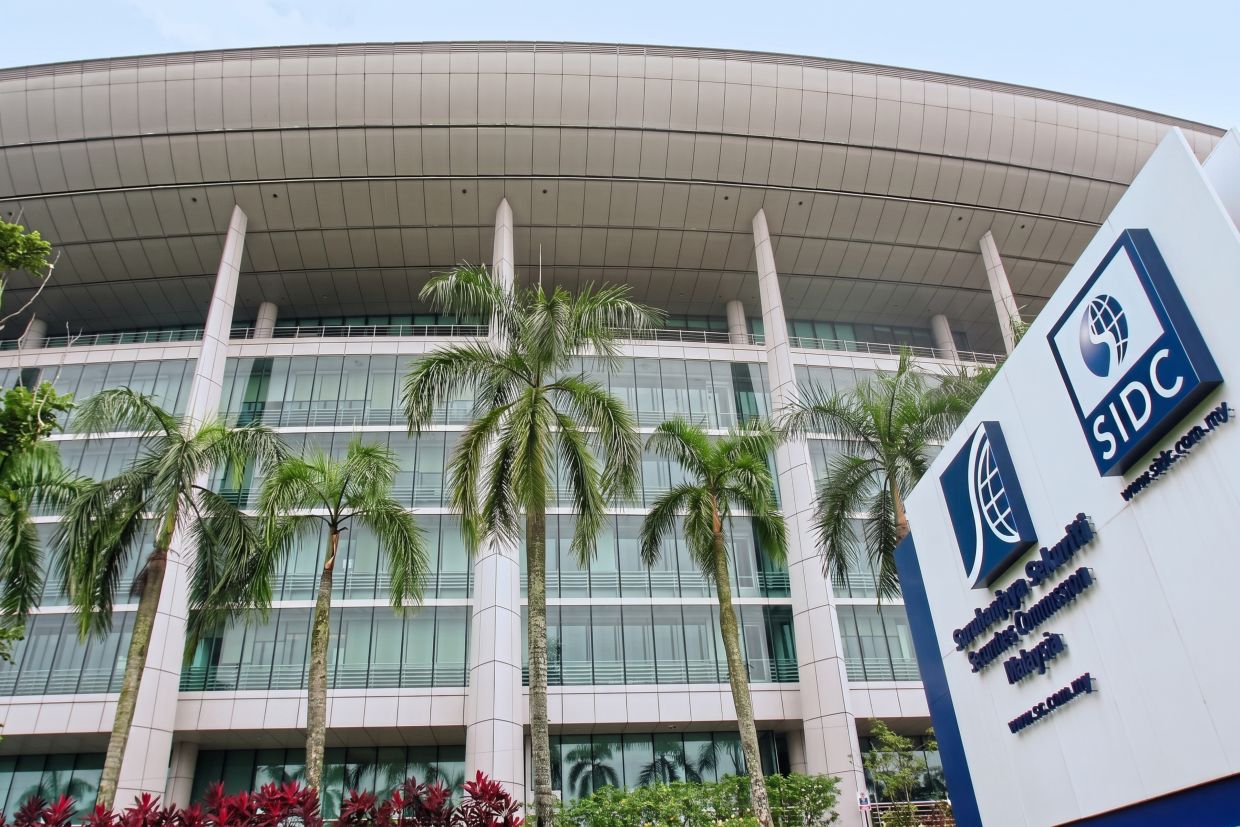
The Court of Appeal has delivered a decisive ruling that reinforces the Securities Commission Malaysia's commitment to combating insider trading in the nation's capital market. The appellate court unanimously upheld the High Court's 2022 judgment against former WCT Bhd deputy managing director Goh Chin Liong and Ara Holdings Sdn Bhd director Leong Ah Chai, finding no grounds to overturn the conviction on appeal. The decision represents a significant victory for Malaysia's financial watchdog and underscores the judiciary's resolve in prosecuting those who exploit privileged market information for personal gain.
The Court of Appeal dismissed both appellants' challenges entirely, with the court determining that neither defendant had presented any arguable error worthy of appellate intervention. Both Goh and Leong were ordered to pay the SC RM100,000 each in costs, amplifying the financial consequences of their protracted legal battle. The appellate bench's unanimous decision leaves no room for doubt regarding the integrity of the original judgment, effectively closing a chapter in one of Malaysia's significant insider trading prosecutions that has spanned more than a decade.
The financial penalties imposed remain substantial and unchanged from the 2022 ruling. Each defendant must pay RM2.5 million in disgorgement—compensation representing the financial gains they obtained or losses they avoided through their unlawful conduct. Additionally, each faces a RM300,000 civil penalty, bringing their individual financial liability to RM2.8 million before legal costs. Together, the SC's total recovery from both defendants amounts to RM5.83 million, a figure that reflects the seriousness with which Malaysian courts view breaches of securities law.
The original misconduct at the heart of this case involved a deliberate communication of sensitive, non-public information that should have remained confidential within WCT's boardroom. Goh, by virtue of his position as deputy managing director, possessed advance knowledge that WCT intended to cancel a significant construction contract. This contract, originally awarded to a joint venture between WCT and Arabtec Construction LLC, concerned development of a racecourse facility in Dubai, United Arab Emirates. Rather than allowing market mechanisms to incorporate this information naturally, Goh conveyed these material details to Leong, who then acted on the privileged intelligence.
Leong's subsequent trading activity crystallised the breach. Between January 2 and 5, 2009, Ara Holdings' trading account executed a disposal of 1.64 million WCT shares, representing a significant reduction in the company's shareholding. The timing of these transactions—initiated immediately following receipt of the non-public information about contract cancellation—demonstrated a clear causal relationship between the insider information and the trading decision. This pattern of conduct provided compelling evidence that Leong had traded on material information unavailable to other market participants, directly violating sections 188(2) and 188(3) of the Capital Markets and Services Act 2007.
The SC's enforcement action commenced in 2015, eight years after the actual trading breach occurred. This extended timeline reflects the complexity of investigating and prosecuting insider trading cases, which typically require detailed forensic analysis of communications, share transactions, and market timing. The High Court's original judgment, delivered following a full trial where evidence was thoroughly examined and tested, found both defendants liable on all counts. That initial judicial endorsement has now been reinforced through the appellate process, eliminating any lingering uncertainty about the defendants' culpability.
A procedural milestone achieved in May 2026 strengthened the SC's enforcement position considerably. The High Court reinstated garnishee orders against both Goh and Leong, mechanisms that allow the SC to recover the judgment sum directly from their assets and funds. This development transformed the Court of Appeal's affirmation from a symbolic victory into a practical tool for enforcing financial restitution. Garnishee orders effectively give the SC priority over other creditors in accessing the defendants' resources to satisfy the judgment debt.
The SC's statement accompanying the Court of Appeal decision emphasised the regulatory philosophy underlying this prosecution. Malaysian authorities regard insider trading not as a technical violation affecting only individual participants but as a systemic threat to capital market integrity. When corporate insiders trade on confidential information, they fundamentally distort the level playing field that investors depend upon. Public shareholders and ordinary market participants operate at an informational disadvantage, unable to compete fairly against those armed with privileged knowledge. This asymmetry erodes confidence that markets operate justly and transparently.
Investor confidence in Malaysia's capital market represents a precious asset for national economic development. When insider trading goes unpunished or insufficiently deterred, retail and institutional investors increasingly withdraw capital, directing their funds toward markets perceived as more rigorously policed. The financial consequences extend beyond individual defendants to the broader economy, affecting the cost of capital for Malaysian companies and the competitiveness of Bursa Malaysia. By visibly prosecuting and penalising insider trading, authorities send signals that Malaysia maintains serious commitment to regulatory standards.
The Court of Appeal's decision carries implications beyond the specific case of Goh and Leong. It establishes definitive precedent that appellate courts will not lightly overturn insider trading convictions supported by evidence and logical reasoning. Defence counsel cannot succeed by merely raising procedural quibbles or technical objections; they must demonstrate genuine substantive errors in the judicial process. This high threshold for appeal encourages more conservative settlement negotiations and reinforces that the SC's enforcement actions, when brought to trial, enjoy strong appellate backing.
Moving forward, the SC has signalled its intention to pursue remaining enforcement steps to actually collect the RM5.83 million judgment sum. The garnishee orders provide the mechanism, but collection requires patience and persistence as the SC's officers work through legal processes to identify and secure the defendants' assets. This practical enforcement phase often receives less public attention than trials and appeals, yet it ultimately determines whether legal victories translate into real financial consequences that deter future misconduct.
The Commission's statement reinforced its broader commitment to pursuing market misconduct through all available enforcement tools. Insider trading cases represent merely one category of securities law violation. The SC continues investigating and prosecuting market manipulation, false disclosures, unlicensed trading, and other breaches that undermine market efficiency and fairness. By dedicating resources to cases like the WCT prosecution and seeing them through to appellate conclusion, the SC demonstrates that enforcement commitments survive leadership changes and budgetary pressures.
For Malaysian investors and market participants, the Court of Appeal's decision offers reassurance that the capital markets maintain serious regulatory oversight. The system's capacity to identify insider trading years after the fact, pursue civil actions to completion, and enforce judgments through appellate processes demonstrates institutional maturity. However, even robust enforcement mechanisms require continued vigilance and adequate resourcing to function effectively in an increasingly sophisticated financial landscape where insider trading schemes grow more complex and harder to detect.

