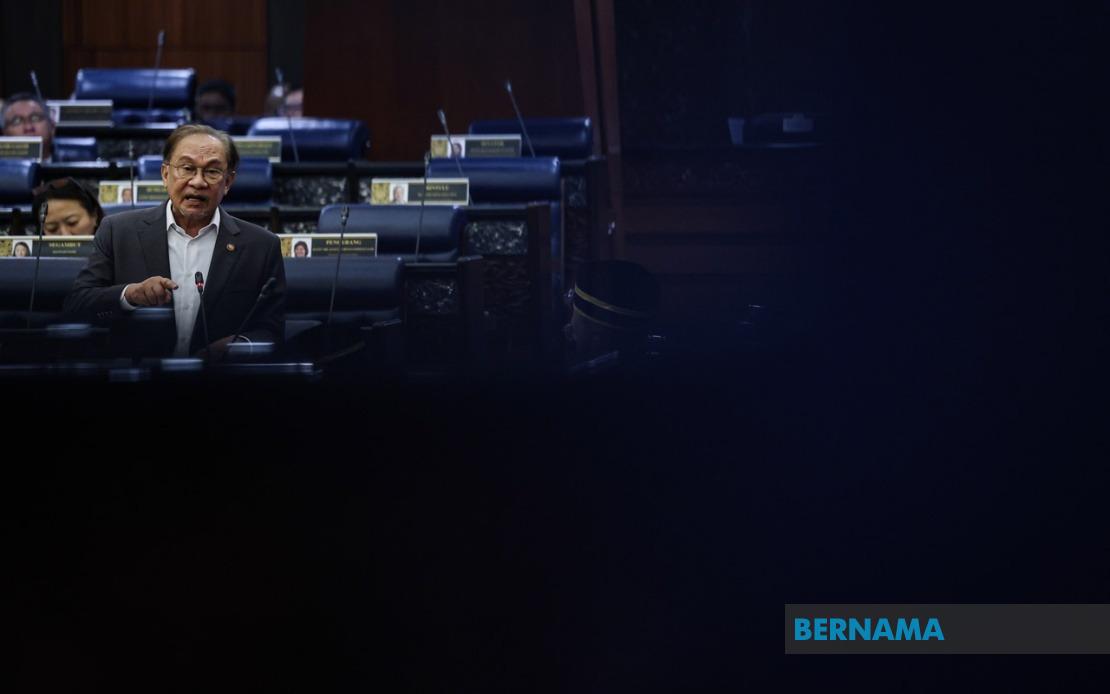
Prime Minister Datuk Seri Anwar Ibrahim has announced a significant shift in how the government handles complaints against journalists, establishing a new procedural safeguard that mandates complaints be channelled through the Malaysian Media Council (MMM) rather than triggering automatic investigations or enforcement measures. The policy represents an attempt to create institutional distance between executive pressure and prosecutorial action, with the MMM functioning as an intermediary body responsible for conducting preliminary assessments before the state machinery engages with media practitioners.
The mechanism is framed as part of broader governance reform intended to protect editorial independence whilst maintaining accountability standards. By inserting the MMM as a mandatory first checkpoint, the government signalled recognition that blanket vulnerability to investigation had created a chilling effect on legitimate journalistic enquiry. The Prime Minister's articulation of the policy during parliamentary question time indicated this was not merely procedural housekeeping but a conscious recalibration of the relationship between state authority and press freedom.
Anwar emphasised that journalists should not face automatic jeopardy simply because a grievance has been filed against them, a principle that addresses widespread concern that frivolous or politically motivated complaints could trigger protracted legal proceedings regardless of merit. The distinction between filing a complaint and triggering official investigation represents meaningful substantive protection, acknowledging that the mere threat of prosecution can function as self-censorship even when cases ultimately collapse. The MMM's interposition creates space for professional judgment to supersede bureaucratic reflex.
The Malaysian Media Council is positioned to function as the arbiter of whether complaints warrant escalation to formal investigative channels. This places media industry professionals and representatives at the threshold of prosecutorial decision-making rather than leaving such determinations entirely to government bodies. The peer-review element embedded in this structure reflects international best practice, where self-regulatory mechanisms screen out spurious allegations before public resources are committed to legal action. Malaysia joins other Commonwealth jurisdictions in recognising that professional bodies can effectively discharge gatekeeping functions.
The Prime Minister's acknowledgment that no jurisdiction grants absolute press freedom demonstrates sophisticated understanding of the tension between democratic media pluralism and legal accountability. His framing suggests the innovation attempts to navigate between pole positions—neither abandoning the state's legitimate interest in enforcing media standards nor permitting that interest to overwhelm journalistic function. By accepting that journalists, like all citizens, remain bound by law, whilst simultaneously restricting how readily legal machinery can be activated against them, the government attempted to articulate a middle position.
Context for this announcement lies partly in Malaysia's continued status under laws like the Sedition Act 1948 and the Official Secrets Act 1972, which international press freedom advocates have long contended create disproportionate vulnerability for journalists. These statutes grant authorities broad discretion to initiate prosecutions on grounds that can be interpreted expansively, and historically have been deployed in ways that journalists' groups characterised as suppressive of legitimate reporting on government activities. The MMM screening mechanism does not repeal these underlying laws but introduces procedural friction that raises the threshold for their deployment.
The announcement also reflects broader governance signals from the Anwar administration regarding institutional reform and separation of enforcement power. The establishment of intermediate bodies between executive complaint and prosecutorial action aligns with other initiatives the Prime Minister has championed, suggesting a deliberate administrative philosophy emphasising layered review and reduced unilateral discretion. For newsrooms, this signals improved predictability—they can now anticipate that complaints will undergo professional assessment rather than immediate official action.
Regionally, Malaysia's move carries implications for how other Southeast Asian democracies manage press-state relations. Thailand, the Philippines, and Indonesia have all grappled with questions about balancing government authority to address genuine media misconduct against risks of persecution disguised as regulation. Malaysia's institutional innovation—anchoring initial review to a professional council rather than keeping decisions entirely within government—offers a potential model for other states seeking to enhance press credibility whilst maintaining public oversight mechanisms.
The practical impact will depend significantly on how the MMM functions in practice. If the council operates with genuine independence and develops transparent criteria for determining which complaints merit escalation, the mechanism could genuinely protect journalists from harassment whilst still ensuring legitimate misconduct receives attention. Conversely, if the MMM becomes an ineffectual rubber-stamp body or if officials circumvent it by initiating prosecutions regardless, the announced policy would become merely cosmetic. Media observers will likely monitor early test cases closely.
Anwar's parliamentary statement represented a public commitment to this approach, raising political costs to deviation from the announced protocol. By articulating the policy in the legislature and explicitly stating that automatic investigations would no longer occur, the Prime Minister created accountability for implementation. Opposition parliamentarians and civil society organisations will undoubtedly hold the government to the principle that the MMM review requirement is genuinely binding rather than advisory or easily bypassed.
The relationship between these procedural changes and the underlying legal framework remains complex. The Sedition Act and Official Secrets Act statutes themselves remain on the books, and their provisions have not been narrowed or repealed. The MMM mechanism constrains how readily these laws are deployed rather than modifying their substantive scope. Future governments could theoretically reverse this arrangement, although doing so would invite accusations of abandoning journalist protections. The policy therefore represents a form of limited but meaningful constraint on prosecutorial discretion.
For journalists working in Malaysia, the practical significance lies in reduced exposure to sudden investigation and extended legal jeopardy triggered by routine complaints. The knowledge that complaints will first undergo professional assessment by peers provides some measure of protection against weaponised prosecutions. Whether this translates into measurably expanded reporting freedom depends on whether the MMM is resourced adequately and whether its decisions are genuinely respected by enforcement authorities. The announcement establishes a framework; implementation will determine whether that framework provides real safeguards or merely creates the appearance of constraint.

