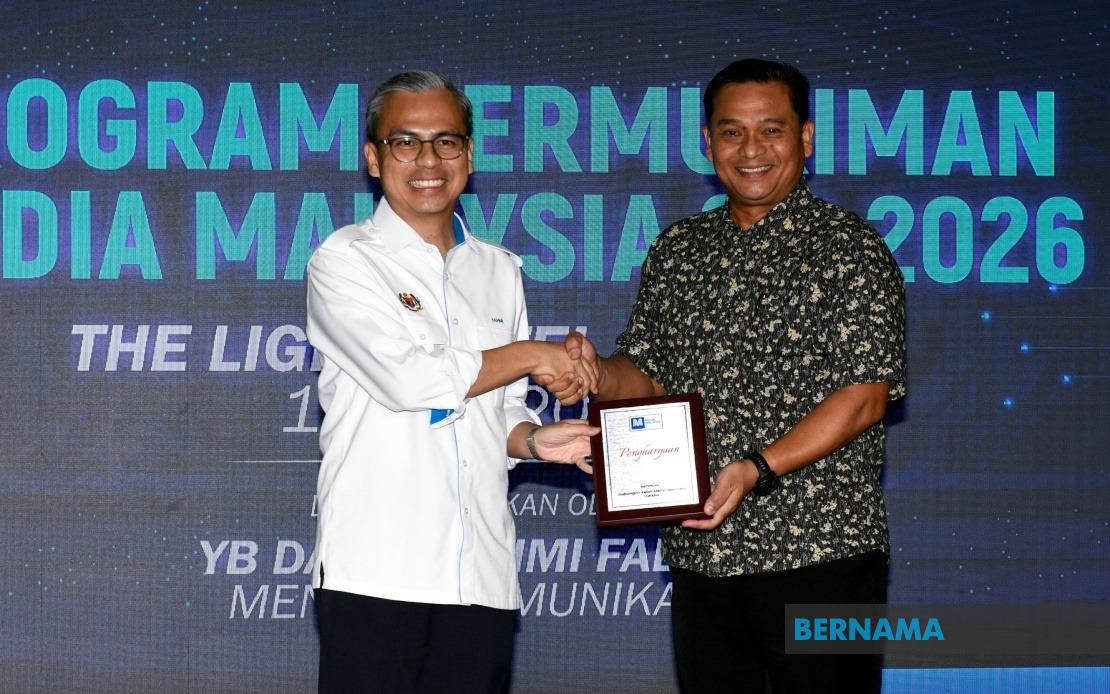
The Ministry of Communications will channel RM10,000 to each state media club that holds membership in the Malaysian Media Clubs Association (GKMM), with an additional RM30,000 directed to the association's central operations this year. Communications Minister Datuk Fahmi Fadzil made the announcement at the Malaysia Media Retreat Programme 2.0 in Butterworth on June 19, emphasising that these funds should be deployed strategically to maximise benefits for media practitioners across the country.
Fahmi articulated a clear vision for how these contributions should be utilised, urging the clubs and association to channel resources into activities and programmes that directly address journalist welfare concerns. He positioned GKMM as a vital conduit between the government and media practitioners, noting that the association serves as an essential platform for articulating professional grievances, advocating for better working conditions, and articulating industry perspectives on the future trajectory of Malaysian journalism.
The minister's remarks underscore the government's recognition of journalists' irreplaceable role in the information ecosystem. Fahmi emphasised that practitioners serve as essential witnesses to national events, gathering raw information from primary sources and transforming it into comprehensive news coverage through their discipline, accumulated experience, and refined professional skills. This function, he stressed, cannot be automated or substituted by artificial intelligence systems, regardless of technological advances.
Fahmi's commitment to preserving journalism as a viable profession reflects broader policy considerations within the Communications Ministry. He framed job preservation for journalists as a core government objective, arguing that without active practitioners in the field, the nation loses its capacity to generate credible news. This positioning places media employment security at the intersection of national information needs and economic support for a critical professional sector.
While GKMM operates outside the formal structure of labour unions or workers' organisations, Fahmi acknowledged its legitimate advocacy function. The association can effectively communicate grievances and challenges faced by individual practitioners, creating a structured mechanism through which the government can evaluate and respond with appropriate assistance programmes. This recognition validates GKMM's role as a representative body despite its non-unionised status.
The government has signalled its intention to continue consulting media practitioners during policy development processes. Fahmi cited the drafting of the Malaysian Media Council Act as a precedent, noting that this legislation was substantially shaped by suggestions and input from the media industry itself. This collaborative approach reflects an apparent commitment to incorporating practitioner perspectives into regulatory frameworks that affect their profession.
The announcement comes at a moment when newsrooms across Southeast Asia face mounting pressures, including revenue challenges, staffing reductions, and the technological disruption of traditional business models. Malaysia's decision to allocate targeted funding to media club infrastructure and programming acknowledges these systemic pressures while attempting to provide institutional support at the grassroots level. State media clubs, distributed across the country's 13 federal and state territories, serve as professional networks and mutual aid societies for journalists working outside major metropolitan centres.
The RM30,000 allocation to GKMM itself signals recognition that the national association requires resources to perform its advocacy, professional development, and welfare coordination functions effectively. Such funding can support training programmes, workshops, networking events, and documentation of industry-wide concerns that might otherwise remain unaddressed due to resource constraints.
For Malaysian journalists, these allocations represent tangible governmental acknowledgement that their profession faces distinct challenges requiring institutional and financial support. The funds can be deployed toward mental health initiatives, professional development opportunities, emergency assistance for practitioners facing hardship, and advocacy campaigns around professional standards and working conditions. The specific structure of distributing funds both to state-level clubs and the national association reflects a federal approach to supporting a geographically dispersed professional community.
The timing and framing of this announcement also reflect broader regional trends in Southeast Asia, where several governments have recognised the need to support local journalism as an antidote to misinformation and to maintain domestic news production capacity. By investing in institutional infrastructure supporting journalists, Malaysia positions itself alongside regional peers attempting to sustain local media ecosystems against structural headwinds.
Fahmi's emphasis on journalists' irreplaceability suggests the ministry views media sustainability as a public good worthy of government investment, rather than treating journalism purely as a market-driven commercial activity. This philosophical stance has implications for how Malaysia conceptualises the relationship between government, media, and public information infrastructure in the digital era.

