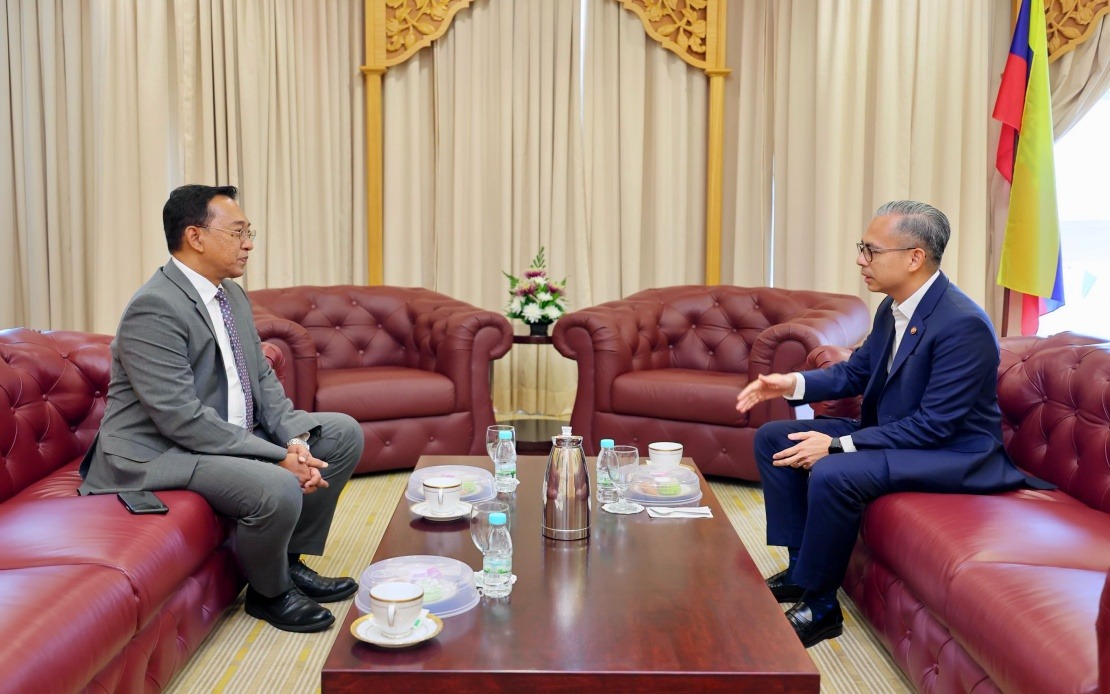
Malaysia's Communications Minister Datuk Fahmi Fadzil hosted a courtesy meeting with the nation's freshly appointed Ambassador to Lebanon, Anwar Udzir, signalling the government's commitment to maintaining robust diplomatic channels across the Middle East and beyond. The visit underscored the importance of high-level engagement between key ministries and the diplomatic corps as Malaysia navigates an increasingly complex international landscape.
Anwar Udzir received his formal letter of appointment as Malaysia's Ambassador to Lebanon directly from His Majesty Sultan Ibrahim, King of Malaysia, on May 18, 2026, marking an official transition into the diplomatic post. The timing of this courtesy call shortly after his appointment reflects standard protocol whereby newly assigned ambassadors engage with relevant government departments to align on priorities and establish collaborative frameworks.
During their discussion, Fahmi emphasised the importance of strengthening institutional working relationships between the Communications Ministry and the Lebanese mission. Such bilateral engagement at the ministerial level serves as a foundation for coordinated policy implementation and ensures that diplomatic efforts align with broader national objectives across different sectors of government.
The two officials utilised the meeting to exchange perspectives on current international developments that carry direct implications for Malaysian interests. This exchange of views is crucial in an era where telecommunications, media governance, and information policy increasingly intersect with diplomatic objectives and international relations. Malaysia's role in regional and global forums often requires coordinated messaging and policy positions that benefit from input across multiple government agencies.
Fahmi's public acknowledgement of the meeting through a Facebook post reflects contemporary diplomatic practice, where ministers routinely communicate government activities to the public through social media platforms. This transparency helps citizens understand the scope of government engagement and the prioritisation of specific diplomatic relationships.
The minister also highlighted his prior working relationship with Anwar, having first met the diplomat during efforts to organise the Asia-Pacific Telecommunity Ministerial Meeting in Tokyo, Japan, last year. This existing familiarity and demonstrated track record of successful collaboration provided a strong foundation for the courtesy call, as both officials already understood each other's working styles and shared commitment to advancing Malaysia's regional telecommunications agenda.
The Asia-Pacific Telecommunity, an international organisation focused on advancing telecommunications development in the Asia-Pacific region, remains a key platform through which Malaysia engages with neighbouring countries on critical infrastructure and digital policy matters. Anwar's successful contributions to hosting a ministerial meeting for this body demonstrated his capability to manage complex international engagements, a skillset directly applicable to his new role in Beirut.
Lebanon's geostrategic position in the Middle East makes the Malaysian ambassador's role particularly significant. The country serves as a bridge between the Arab world and international community, and Malaysia's diplomatic presence there helps protect national interests, facilitate trade relationships, and maintain channels of communication on matters ranging from counterterrorism to regional development initiatives.
Fahmi's expression of confidence in Anwar's ability to represent Malaysia effectively in Lebanon carries weight given his ministerial portfolio. The Communications Ministry's portfolio encompasses media, information management, and digital affairs—all areas where diplomatic skill and international awareness prove invaluable. An ambassador who understands these dimensions can more effectively advocate for Malaysian positions on global stages such as the United Nations, regional broadcasting councils, and international telecommunications forums.
The courtesy call also reflects Malaysia's broader approach to diplomatic staffing at senior levels, where experience in international forums and proven project management capabilities inform appointment decisions. By ensuring that newly appointed ambassadors meet with relevant ministers shortly after taking office, the government establishes clear expectations and enables ambassadors to understand how their missions contribute to wider national policy objectives.
Moving forward, the relationship established during this meeting will likely facilitate smoother communication channels between Kuala Lumpur and the Malaysian Embassy in Beirut on matters affecting bilateral relations, regional security, economic engagement, and Malaysia's participation in international bodies where Lebanon also holds membership. The ambassador's success in building these institutional relationships early in his tenure often determines the effectiveness of the entire diplomatic mission.
For Malaysian stakeholders with interests in Lebanon—whether in business, education, or cultural exchange—this high-level engagement signals governmental commitment to supporting these connections. The visible support from the Communications Ministry helps ensure that practical arrangements for facilitating Malaysian interests receive adequate institutional backing from Kuala Lumpur.

