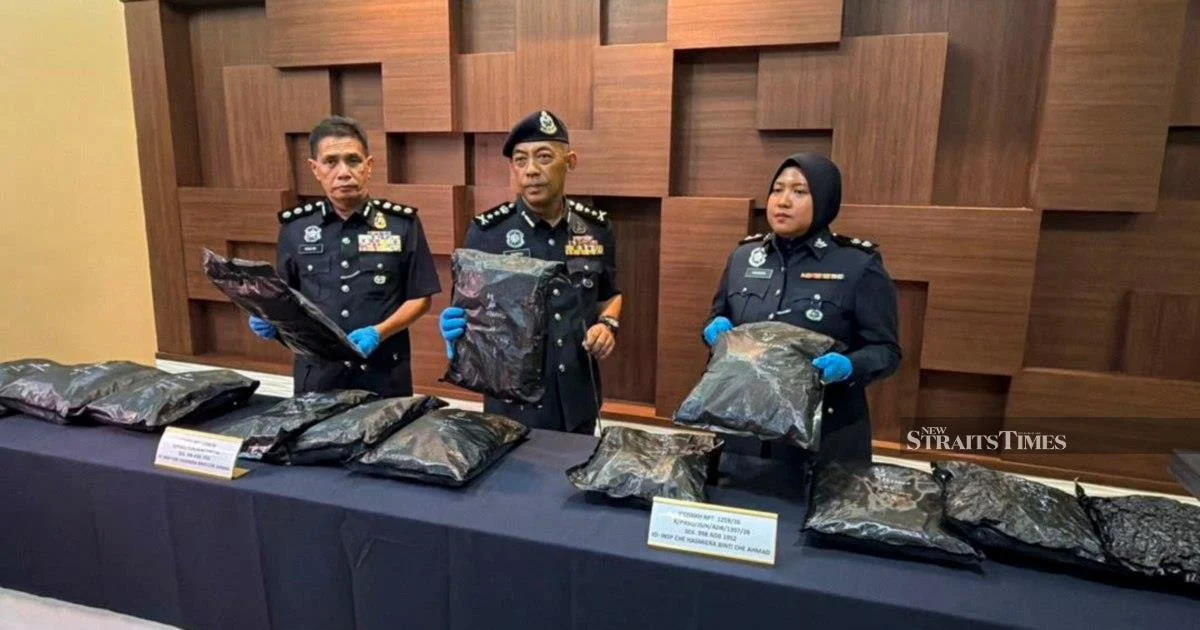
A student enrolled at a private higher education institution in Malaysia was apprehended on Monday at Bukit Kayu Hitam whilst attempting to transport cannabis buds with a street value of RM1.17 million across the border. The seizure, which involved 14.63 kilograms of the controlled substance, represents a significant narcotics intercept at one of the country's busiest land crossing points and highlights the persistent threat posed by organised trafficking operations utilising courier networks of young people.
The arrest underscores an alarming trend in Malaysia's border security landscape, where students and other individuals are increasingly recruited by larger syndicates to move contraband across entry points. Bukit Kayu Hitam, situated in Kedah at the northernmost entry into Malaysia from Thailand, remains a critical vulnerability in the nation's supply chains. The porous nature of this frontier, combined with the relative ease of access for Malaysian citizens crossing to Thailand and returning, creates opportunities for smugglers to exploit transportation routes that would otherwise attract less scrutiny.
Law enforcement authorities have long documented the use of courier networks composed of younger or seemingly innocuous individuals, particularly students, to transport narcotics. The economics of trafficking make such recruitment inevitable: syndicates face minimal exposure if the transporter is apprehended, whilst the individuals themselves often face severe legal consequences under Malaysia's stringent drug laws. The fact that this particular suspect was pursuing higher education suggests either financial desperation or a grave miscalculation of the legal and personal risks involved.
The substantial quantity and value of the seized cannabis indicates this was no small-scale personal smuggle but rather an operation within a larger commercial framework. At current street rates, RM1.17 million represents significant wholesale revenue for trafficking networks operating across the Malaysia-Thailand border region. Such operations typically source materials from Thailand's relatively permissive cultivation areas, particularly in regions bordering Kedah and Perlis, before routing them through established crossing points.
Thailand's own drug policies have evolved significantly in recent years, including the decriminalisation of cannabis for medical purposes, which has created an environment where cultivation has expanded. This legal environment in Thailand stands in sharp contrast to Malaysia's zero-tolerance approach under the Dangerous Drugs Act, creating a substantial price differential that incentivises cross-border smuggling. The proximity of major Thai production zones to Kedah makes the state an inevitable transit point for contraband heading toward consumption markets in Kuala Lumpur and other urban centres.
The apprehension at Bukit Kayu Hitam comes at a time when Malaysia's drug enforcement agencies are under mounting pressure to intercept trafficking at land borders. Unlike maritime routes or air cargo, land borders present unique challenges given the sheer volume of daily traffic. Authorities must balance security imperatives with facilitating legitimate cross-border commerce, a tension that smugglers deliberately exploit by blending illicit shipments within legitimate traffic flows or using foot couriers during peak transit periods.
The implications for this detained student extend far beyond the immediate legal proceedings. Conviction under Malaysia's drug trafficking statutes, particularly involving quantities exceeding established thresholds, carries mandatory death sentence provisions in the most serious circumstances, though sentencing ultimately depends on judicial discretion and whether trafficking elements can be definitively established. At minimum, the individual faces charges that could result in lengthy imprisonment, a permanent criminal record, and the forfeiture of educational opportunities that presumably motivated their enrollment at the private institution initially.
This incident also reflects the broader challenge facing Malaysian authorities in disrupting transnational narcotics supply chains. Whilst the seizure itself demonstrates functional border interdiction capabilities, the underlying networks supplying such operations remain substantially intact. Each arrested courier represents a replaceable asset within larger organisational structures that continue recruiting, directing, and profiting from drug movements. Without disrupting the economic incentives and supply routes that make such recruitment possible, individual arrests, however significant their commodity value, ultimately achieve limited strategic impact.
For Malaysian students and young people more broadly, this case offers a cautionary reminder about the severe consequences of involvement with transnational drug trafficking. The allure of quick financial gains obscures the reality that couriers bear the greatest personal legal liability whilst profiting minimally compared to the syndicates controlling distribution networks. Awareness campaigns targeting young people remain essential, particularly in communities proximate to border regions where such recruitment occurs most actively.