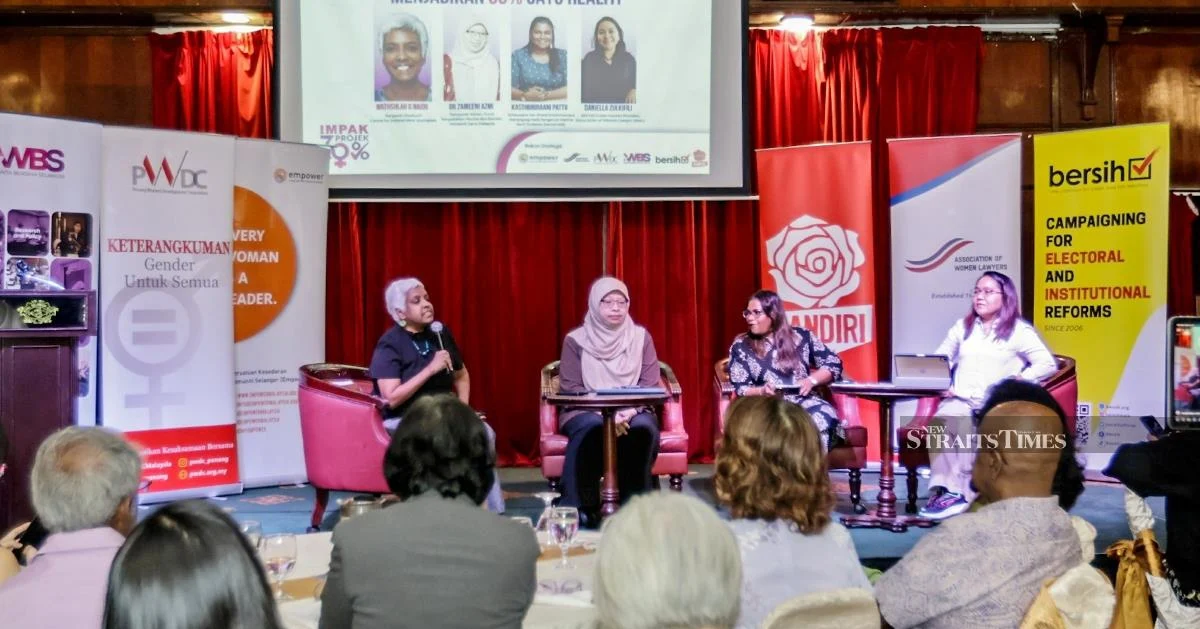
Malaysia's push toward greater female representation in politics moved forward as a coalition of civil society organisations presented the government with formal draft legislation and a memorandum on Tuesday, advocating mandatory inclusion of women candidates at a minimum threshold of 30 per cent in the upcoming general election.
The submission represents a sustained effort by advocacy groups to institutionalise gender parity within Malaysia's electoral framework. Rather than relying on voluntary party commitments or aspirational targets, the proposed legislation would establish a binding legal requirement, creating enforceable standards across the political system. This approach reflects growing international momentum toward quota systems, which numerous democracies have adopted to counter persistent underrepresentation of women in parliament.
The initiative gains significance given Malaysia's current political landscape, where female representation in the Dewan Rakyat remains substantially below the proposed benchmark. Women currently occupy a fraction of parliamentary seats, reflecting both historical barriers and the absence of formal mechanisms compelling political parties to prioritise female candidates. The civil society coalition's focus on legislating the requirement, rather than seeking voluntary adoption, acknowledges the limited success of non-binding appeals within Malaysia's competitive electoral environment.
The 30 per cent threshold itself carries symbolic and practical weight. International benchmarks suggest that roughly one-third representation represents a meaningful presence capable of influencing parliamentary discourse and policy outcomes, though it falls short of full parity. Several nations across Asia-Pacific have implemented similar or more ambitious quotas. In the Philippines and Nepal, for instance, constitutional provisions mandate women's participation at specific levels, creating precedent within the region that Malaysia's advocates likely invoke to bolster their case.
For Malaysian voters, the implications extend beyond representation. Research demonstrates that diverse legislative bodies produce broader policy agendas addressing healthcare, education, and social welfare with different priorities than male-dominated chambers. Women legislators have historically championed advances in family law, workplace equality, and protection against gender-based violence. A parliament reflecting closer to half the population's composition might reshape how government addresses chronic issues from maternal health to economic participation gaps.
Political parties themselves face potential operational shifts should such legislation pass. Candidate selection processes would require fundamental restructuring, potentially disrupting established networks and internal dynamics that have traditionally favoured male candidates. Parties would need to identify, mentor, and elevate female candidates capable of contending in competitive races rather than simply token appointments to unwinnable seats. This transformation could generate internal tension but might ultimately strengthen party benches by broadening recruitment pools.
The government's reception of this proposal remains a critical variable. Malaysian policymakers have previously engaged with gender-focused initiatives, though constitutional and electoral changes require parliamentary majorities. Any legislative pathway would necessarily navigate competing political incentives and entrenched interests within the major coalitions. Both Pakatan Harapan and Barisan Nasional have expressed rhetorical commitment to women's advancement, but translating this into enforceable candidates quotas demands political will beyond symbolic gestures.
Comparative experience from other democracies suggests implementation challenges warrant consideration. Nations adopting quota systems have reported difficulties ensuring the measures produce substantive influence rather than nominal presence. The placement of women candidates matters significantly—parties may technically meet quotas while strategically assigning women to unwinnable constituencies, effectively circumventing the law's intent. Robust legislative language preventing such circumvention represents a critical technical requirement for any Malaysian framework.
Regional dynamics add another dimension. Southeast Asian neighbours including Thailand and Indonesia have wrestled with similar questions, yielding varying outcomes. Indonesia's quota system has produced measurable increases in female legislators, though enforcement inconsistencies persist. Thailand's quota evolution across successive constitutions reflects the contentious nature of representation reforms. Malaysia's approach will inevitably invite comparisons and potentially influence how other ASEAN democracies address gender representation in their own electoral architecture.
Civil society advocacy around this issue also reflects broader patterns of citizen mobilisation on governance reform in Malaysia. The coalition's formal submission suggests organised infrastructure capable of sustaining pressure through legislative processes, potentially through public campaigns, media engagement, and stakeholder dialogue. Such persistence often proves decisive in policy change, particularly when united advocacy prevents issues from fading from political attention.
The memorandum and draft legislation now enter an uncertain political process where technical merit faces navigation through electoral calculations. Whether this initiative gains legislative traction depends substantially on how ruling coalitions assess voter receptiveness and internal party considerations. Nonetheless, the submission has placed concrete legislative language before decision-makers, elevating the conversation from abstract principle to implementable framework.

