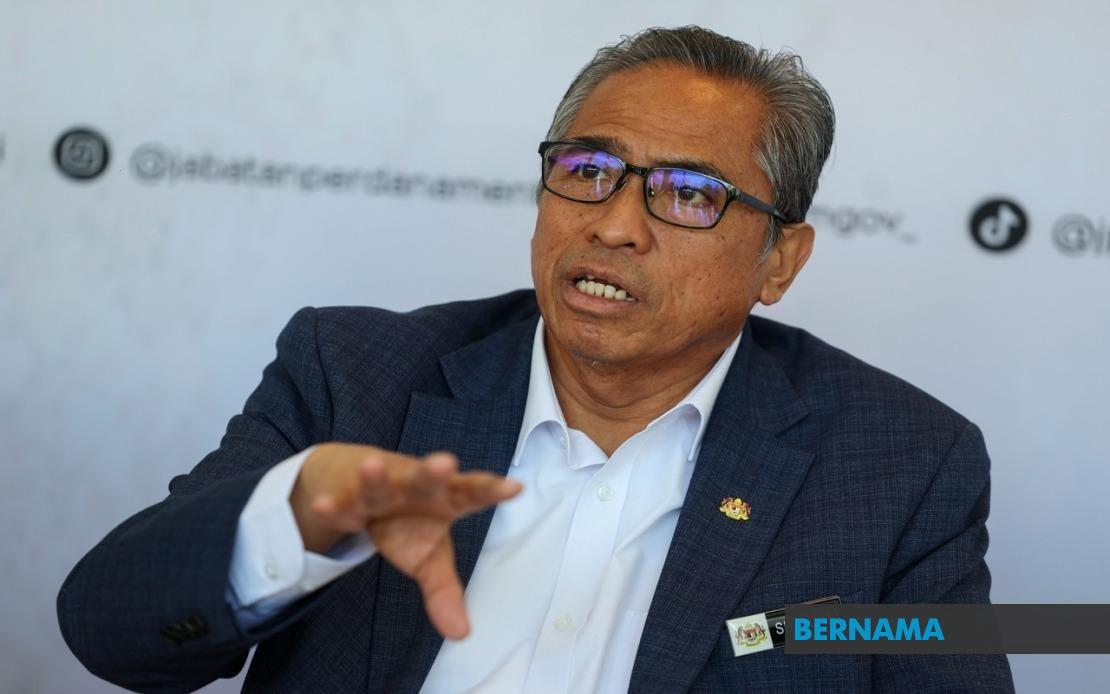
The machinery of government needs to move swiftly to translate Malaysia's emerging diplomatic engagement into tangible economic advantage, according to Tan Sri Shamsul Azri Abu Bakar, the country's Chief Secretary to the Government. Speaking to media on June 24, Shamsul Azri underscored the urgency with which public officials must seize the momentum created by Prime Minister Datuk Seri Anwar Ibrahim's recent high-level visits to Russia and Turkmenistan, framing these missions as opening doors to new markets and deeper cooperation with existing trading partners. The implicit message was clear: diplomatic breakthroughs must now be followed by administrative execution at home, or risk squandering the opportunity that has been created at the international level.
The Chief Secretary characterised the civil service as the backbone of the nation, with a special responsibility to recognise that successful foreign policy missions carry weight far beyond their diplomatic symbolism. Rather, he argued, they represent binding imperatives that demand immediate transformation into practical government action. This framing is significant in the Malaysian context, where coordination between foreign affairs and domestic economic agencies has historically been uneven. By positioning the civil service as custodians of a national mandate, Shamsul Azri was effectively raising expectations and accountability across the bureaucracy, signalling that inaction or delays would undermine the leadership's strategic vision.
At the heart of his address lay a call for heightened efficiency and agility within government agencies responsible for trade and economic matters. Shamsul Azri emphasised that officials must demonstrate preparedness to act decisively, building internal capacity while establishing networks that transcend conventional governmental silos. This reflects a growing recognition within Malaysia's upper echelons that the traditional compartmentalised approach to policy implementation can no longer suffice in an increasingly competitive global economy. The Chief Secretary's language of breaking boundaries and moving beyond conventional thinking suggests an acknowledgment that Malaysia faces stiffening competition from regional peers and must innovate in how it mobilises state resources to capture investment flows.
The concept of MADANI Diplomacy, which has become the hallmark of the current administration's international approach, also features prominently in Shamsul Azri's vision for the domestic bureaucracy. He called on all public service personnel, particularly senior department heads, to internalise the values underpinning this diplomatic philosophy within their own governance practices. The Whole-of-Government approach, equally central to his message, represents an attempt to dissolve traditional vertical hierarchies and foster horizontal collaboration across ministries and agencies. For Malaysian readers familiar with the frustrations of dealing with fragmented government services, this appeal signals a top-level commitment to institutional reform, though whether field-level implementation will match the ambition remains an open question.
The emphasis on the Ease of Doing Business initiative reveals where the government sees the critical chokepoint. International agreements and diplomatic goodwill count for little if domestic regulations, bureaucratic procedures, and administrative capacities remain cumbersome. Shamsul Azri stressed that the civil service must now position itself as an investment facilitator capable of converting every international accord into swift, tangible reality. This is a pointed critique of past practice, where Malaysia has occasionally secured attractive international partnerships only to see them falter due to domestic administrative delays or institutional foot-dragging. The Chief Secretary's directness on this matter suggests frustration within the highest levels of government at historical performance gaps.
A truly global mindset among public servants is presented not as a luxury but as a prerequisite for Malaysia's continued relevance in an increasingly multipolar world. Shamsul Azri argued that officials must function as international-class strategic partners capable of attracting, understanding, and executing agreements with foreign investors and governments at the highest professional standard. This demands not only technical expertise but also cultural awareness, linguistic capability, and exposure to best practices from leading economies. For a Malaysian civil service traditionally oriented toward domestic administration, this represents an ambitious reorientation that will require significant investment in training, recruitment, and institutional change.
The translation of investment opportunity into domestic prosperity is presented as the ultimate measure of success. Shamsul Azri explicitly linked the MADANI Diplomacy framework to the government's Public Service Reform Agenda (ARPA), particularly its internationalisation enabler. This is a sophisticated move, as it grounds the diplomatic ambitions of the leadership in a documented, structured reform programme rather than treating them as ad hoc political initiatives. By doing so, the Chief Secretary signals to the civil service that the government's international strategy is not a passing priority but a fundamental reorientation of state capacity and purpose. The reference to ARPA also suggests that resources, frameworks, and accountability mechanisms exist to support this transformation, reducing the excuse of unclear direction or inadequate tools.
The creation of high-income employment for Malaysians emerges as a primary objective against which the success of economic diplomacy will be judged. Rather than seeking investment for its own sake, Shamsul Azri emphasised that foreign partnerships and inflows of capital must translate into quality job creation and improved living standards for ordinary Malaysians. This touches on a persistent anxiety in the Malaysian electorate: that globalisation and foreign investment sometimes benefit foreign partners and a narrow domestic elite while leaving broader populations vulnerable. By centering job creation, the Chief Secretary attempts to frame economic engagement as a tool for inclusive growth.
The security of commodity supplies represents another tangible benefit that Shamsul Azri highlighted, underscoring Malaysia's vulnerability as an import-dependent economy. Building strategic partnerships with Russia, Turkmenistan, and other non-traditional partners potentially diversifies supply chains and reduces reliance on any single source or region. For Malaysia, managing commodity security—whether energy, food, or industrial raw materials—is a perennial challenge with direct implications for price stability and economic resilience. The diplomatic missions undertaken by the Prime Minister can be understood partly as attempts to secure medium to long-term supply agreements that insulate Malaysia from price shocks or geopolitical disruption.
Maintaining Malaysia's competitive position as a global investment destination sits at the apex of Shamsul Azri's concerns. Regional competitors, particularly Singapore, Thailand, and Indonesia, actively court foreign capital with streamlined regulatory frameworks and efficient government service. Malaysia's advantage has historically rested on its relatively large domestic market, its strategic geographic location, and its skilled workforce. However, if the government cannot efficiently convert diplomatic overtures into investment reality, or if investors encounter bureaucratic obstacles, Malaysia risks losing out to nimbler competitors. The Chief Secretary's stress on this point reflects awareness that Malaysia's international standing depends not merely on the quality of diplomatic relationships but on the capacity of state institutions to deliver on commitments and facilitate commerce.
The underlying tension in Shamsul Azri's message is between aspiration and institutional capacity. While the government has articulated an ambitious vision of Malaysia's role in a multipolar world and has begun pursuing new strategic partnerships, the civil service as it currently functions may lack the speed, agility, and integrated coordination necessary to realise this vision at scale. The Chief Secretary's remarks, in essence, constitute a wake-up call to the bureaucracy: the leadership has opened diplomatic doors; it now falls to officials to ensure those doors lead to prosperity rather than empty corridors. Whether the Malaysian civil service can rise to this challenge will significantly influence whether the diplomatic initiatives of the Anwar Ibrahim administration bear the economic fruit that the nation requires.

