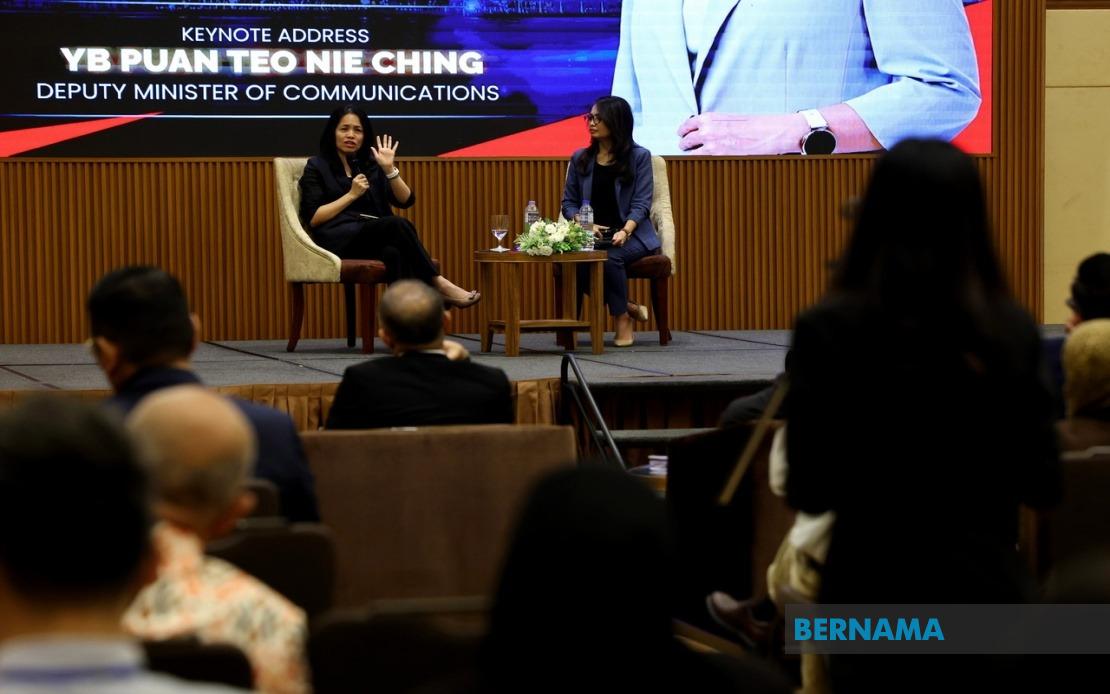
Deputy Communications Minister Teo Nie Ching has issued a pointed reminder that all public sector employees must exercise restraint when making statements to the media and public, steering clear of language that could be perceived as discourteous or divisive. Speaking in Putrajaya on June 15, Teo stressed that officials should be especially vigilant about avoiding remarks that intersect with Malaysia's three sensitive pillars—race, religion, and royalty, collectively known as 3R—not merely during election periods but throughout their tenure in office.
The minister's guidance comes as a response to growing scrutiny over the conduct of Mohd Hisyamuddin Ghazali, the newly appointed director-general of the Department of Community Communications (J-KOM), who assumed the post on June 9. Reports have surfaced suggesting that Mohd Hisyamuddin has employed language deemed inappropriate since taking office, prompting questions about professional standards among senior government communicators. Teo made her comments while officiating an industry dialogue focused on responsible journalism practices, underscoring the government's broader concern with maintaining decorum in public discourse.
The timing of Teo's statement reflects a significant moment in Malaysia's bureaucratic landscape. Mohd Hisyamuddin's appointment represents a transition at J-KOM, replacing the outgoing Datuk Ismail Yusop. As the department tasked with spearheading government communications and public messaging, J-KOM's leadership carries considerable weight in shaping how official narratives are disseminated to the Malaysian public and international audiences. Any misstep by its director-general inevitably casts a wider shadow over institutional credibility and the professionalism expected of Malaysia's civil service.
What makes Teo's intervention particularly noteworthy is her emphasis on applying these standards consistently rather than selectively. By framing the advice as applicable to all times and contexts—not merely during politically charged periods like election campaigns—she has articulated an expectation that transcends situational ethics. This universalising of the standard suggests the government views maintaining civility and sensitivity as fundamental to the civil service's legitimacy and public trust, rather than as tactical adjustments made when political winds shift.
The reference to 3R issues carries particular weight in Malaysia's political and social landscape. These three domains—race, religion, and royalty—are protected under the Federal Constitution and remain deeply embedded in the nation's founding compact. Remarks perceived as questioning or disparaging these areas can trigger significant social backlash and are subject to legal scrutiny. For civil servants, whose primary obligation is to serve all Malaysians regardless of their background, violating this boundary becomes not merely a matter of professional etiquette but a breach of constitutional and ethical duty.
Teo indicated that she has not yet had the opportunity to meet Mohd Hisyamuddin directly to convey these expectations in person. This statement suggests a measured approach rather than any immediate disciplinary response, though it also leaves open the possibility that such a meeting would address the concerns that have arisen. The deputy minister's approach reflects a belief that guidance and clarification may suffice, at least initially, to reset expectations within the newly restructured department.
The broader context surrounding this pronouncement touches on the evolving relationship between Malaysia's civil service and digital-age communication standards. In an era where statements circulate rapidly across social media and can be revisited or recontextualised at will, public officials face heightened scrutiny of their language choices. What might once have passed as casual remarks in a hallway conversation now risks becoming inflammatory incidents amplified across networks within minutes. Teo's intervention implicitly acknowledges that training and reminder systems for senior officials on communication best practices may need strengthening.
For journalists and news organisations, the deputy minister's remarks during the industry dialogue carry additional significance. By pairing her comments on civil servant conduct with participation in an event focused on responsible journalism, Teo has framed professional standards as a shared responsibility across both government communicators and media professionals. This suggests recognition that the credibility of public discourse depends on ethical practice across multiple institutions simultaneously.
The implications for Southeast Asian readers extend beyond Malaysia's borders. Many countries in the region grapple with similar questions about managing sensitive identity-based topics while maintaining open discourse. How Malaysia handles this particular issue—whether through formal institutional reforms, targeted training, or softer guidance—may offer lessons or cautionary tales for neighbouring nations navigating comparable tensions between free expression and social cohesion.
Moving forward, the success of Teo's approach will depend partly on whether the guidance translates into visible behavioural change among senior officials and whether the government demonstrates consistent application across different political contexts and rank levels. Should similar incidents recur within J-KOM or elsewhere in the bureaucracy without consequences, the credibility of these stated expectations would likely erode. Conversely, if officials visibly adhere to the standards articulated by the Deputy Communications Minister, it could establish a new baseline for professional conduct that enhances public confidence in the civil service's impartiality and judgment.