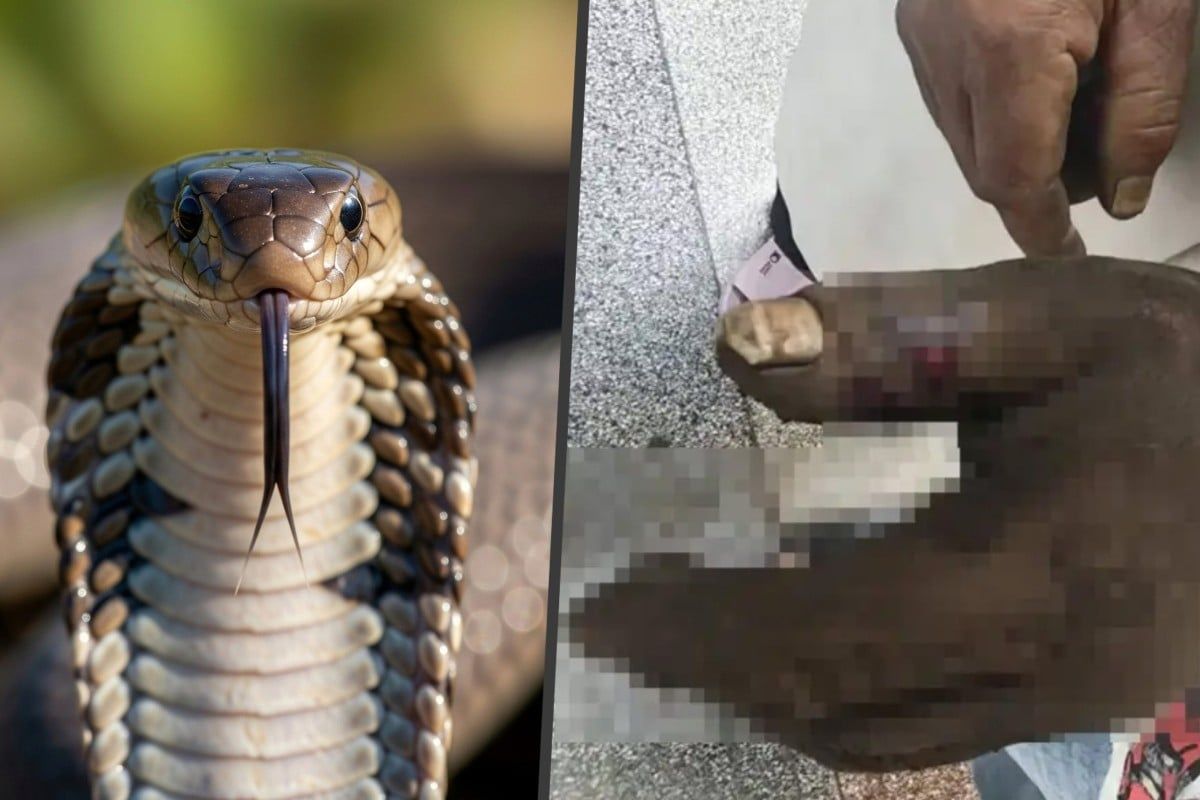
A harrowing incident in Yunnan province has drawn attention to widespread misconceptions about treating snakebite injuries, after a well-intentioned rescue attempt backfired catastrophically. The farmer was working alone in his field in Yuanyang county when a cobra struck, its fangs piercing his finger. Watching her husband's condition deteriorate—his hand swelling dramatically and dizziness overwhelming him—his wife made a split-second decision that seemed logical based on popular media portrayals of emergency medicine. She placed her mouth directly against the wound and began extracting what she believed to be venom, unaware that she was actually introducing poison into her own bloodstream.
The husband's condition prompted rapid hospital admission, yet within hours the real danger revealed itself when his wife started experiencing alarming symptoms. Numbness crept through her mouth, tongue, and face, then into her limbs. By the following day, exhaustion had become so severe that her family recognized something was seriously wrong and rushed her to Honghe Prefecture No 3 People's Hospital. Medical professionals quickly diagnosed both patients with cobra poisoning—the husband from the initial bite and the wife from the venom she had drawn into her oral cavity. Both received antivenom serum injections and supportive medical care, eventually stabilizing enough to be discharged after several days of treatment.
The incident underscores a critical gap between popular understanding and medical reality regarding snakebite response. Hospital physicians at the Yunnan facility seized the opportunity to explain why the suction method, so commonly depicted in action films and adventure television, is fundamentally ineffective and dangerous. The human mouth contains an extraordinarily rich network of capillaries—tiny blood vessels—in its mucous membranes. When venom comes into contact with these tissues, it crosses directly into the bloodstream within moments, poisoning the rescuer precisely as it would harm the bitten person. This physiological reality makes the mouth an exceptionally poor barrier against toxins.
Beyond the ineffectiveness of oral suction lies another crucial misunderstanding: the anatomy of snakebite wounds themselves makes venom extraction nearly impossible regardless of method. A cobra's fangs create puncture wounds that resemble nothing more than tiny pinholes on the skin's surface. The venom does not remain accessible at this shallow entry point. Instead, it rapidly permeates through subcutaneous tissues and disperses into the surrounding musculature and circulatory system within minutes of injection. By the time a rescuer attempts to extract it, the toxin has already traveled beyond reach, making suction futile even if it were safe.
Medical authorities in Yunnan warned against another equally dangerous practice: deliberately cutting open the bite wound to encourage bleeding. This approach, also popularized by fictional media, carries severe risks. Opening the wound can cause excessive blood loss in the already-compromised victim and creates a gateway for bacterial infection into exposed tissue and the bloodstream. Other ineffective and harmful interventions mentioned by doctors include applying direct heat from fire or flames to the wound site and using ice to freeze the affected area. Each of these approaches causes additional injury without addressing the fundamental problem of systemic venom toxicity.
The proper response to snakebite follows principles that prioritize medical expertise and controlled treatment. Victims should immediately contact emergency medical services rather than attempting home remedies. Minimizing movement is essential—increased physical activity accelerates the circulation of venom throughout the body and worsens outcomes. The bitten person should remain as calm and still as possible while awaiting professional help. If circumstances permit, attempting to identify or photograph the snake proves invaluable to medical teams, as different species require different antivenom preparations, and misidentification could mean administering ineffective treatment during a critical window.
China has witnessed repeated incidents involving snakebite emergencies, many of which have gained significant traction on social media platforms where they serve as cautionary tales. In May of this year, a fourteen-year-old student in Guangdong province experienced a particularly harrowing situation when something struck him in grassland on his school campus. The initial impact caused no pain, and he could not identify what had attacked him, leading him to dismiss the incident as minor. Only hours later, as numbness spread through his limbs and his vision blurred, did he inform a teacher that a snakebite might be responsible. The treating physicians later revealed sobering information: had medical intervention been delayed by merely one or two additional hours, the boy would have suffered complete respiratory failure, almost certainly resulting in death.
The Yunnan farmer and his wife's experience resonated powerfully across Chinese social media platforms, with observers drawing lessons about the dangers of blindly following televised depictions of emergency medicine. One online commenter noted the irony that the incident demonstrated how television dramas frequently present unreliable information, potentially leading viewers into life-threatening situations should they attempt to replicate such scenes in real emergencies. Another observer took a different interpretive angle, suggesting that the wife's willingness to risk her own health to help her husband revealed the depth of her devotion, even as her actions ultimately created an additional crisis rather than resolving one.
The case highlights a persistent challenge in public health communication: the difficulty of counteracting deeply embedded cultural narratives and entertainment-based misinformation. For Malaysian and Southeast Asian readers, the incident carries particular relevance given that venomous snakes inhabit similar tropical and subtropical environments throughout the region. King cobras, monocled cobras, and various pit viper species present genuine hazards to agricultural workers, outdoor enthusiasts, and residents in rural areas. The medical principles demonstrated by this case—the ineffectiveness of suction, the dangers of wound manipulation, and the critical importance of rapid professional treatment—apply equally to snakebite emergencies across Southeast Asia regardless of the specific species involved.
Beyond the immediate medical implications, the story illustrates broader questions about how health information circulates and becomes normalized within communities. Television and film have established such a strong association between snakebite and oral venom extraction that multiple individuals across different incidents have independently attempted this method, suggesting the mythical treatment has achieved near-universal cultural acceptance. Breaking through such entrenched misconceptions requires sustained educational campaigns from medical authorities, media literacy initiatives that help audiences distinguish fiction from medical fact, and perhaps most importantly, widely available emergency contact information and clear, simple guidance on what actually works when snakebite occurs.

