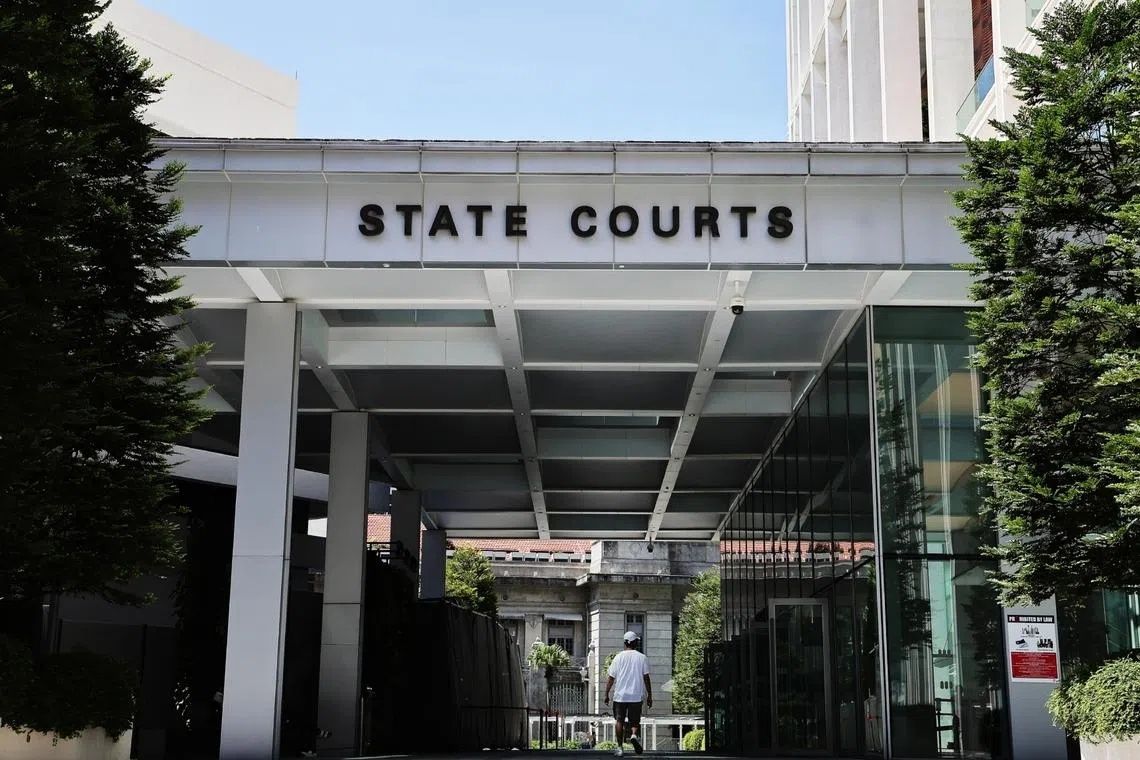
A 41-year-old Chinese national has confessed to conducting a calculated burglary campaign across Singapore's most affluent residential areas, remarkably during his maiden visit to the city-state. Huang Xiaozong arrived in the Republic on December 5, 2025, and within days had orchestrated a systematic theft operation targeting homes he identified as belonging to the wealthy. On Friday, Huang entered guilty pleas to two counts of housebreaking, with sentencing scheduled for August 14, signalling the swift conclusion to what authorities characterised as a premeditated criminal enterprise.
Huang's criminal motivation was rooted in straightforward financial desperation. Upon arriving in Singapore for the first time, he formed immediate impressions of the nation's prosperity and affluence, observing the visible signs of wealth concentrated in specific neighbourhoods. Rather than seeking legitimate employment opportunities, he resolved that burglary represented a viable path to accumulating funds. This decision led him to conduct research into Singapore's most prosperous residential enclaves, ultimately identifying Sentosa and Serangoon Gardens as suitable hunting grounds for high-value targets.
The burglary campaign commenced a mere day after his arrival, when Huang ventured to Sentosa on December 6, 2025. He conducted reconnaissance by walking through the area until he spotted a suite at a luxury hotel occupying the island precinct. The first victim, who maintained occasional residence at the suite but was travelling abroad at the time of the intrusion, became Huang's inaugural target. Finding the unit apparently unoccupied, Huang forced entry by breaching the sliding door at the rear balcony, demonstrating both methodical planning and tactical execution.
Within the Sentosa suite, Huang's haul proved substantial. He absconded with a Chanel timepiece valued at S$30,000, an array of five rings collectively worth S$25,000, and a gold necklace appraised at S$3,000. The theft remained undiscovered for two days, with the situation only coming to light when a housekeeper entered the unit and observed Huang's footprints alongside the absence of various items. This delay in detection likely emboldened Huang to continue his criminal activities rather than flee the jurisdiction.
On December 7, 2025, barely forty-eight hours after the Sentosa theft, Huang shifted his operations to Serangoon Gardens, a prestigious residential enclave known for substantial properties and significant concentrations of personal wealth. Arriving between 7pm and 8pm, he conducted preliminary surveillance of the neighbourhood, identifying a residence that displayed no illumination and appeared to be vacated. Demonstrating increasing confidence in his methods, Huang scaled the perimeter gate and entered the dwelling, where he systematically collected jewellery exceeding S$47,000 in value. His acquisitions encompassed multiple rings, gold necklaces, a diamond necklace accompanied by matching earrings, and a pair of wedding rings, suggesting he possessed knowledge of jewellery valuation or was targeting pieces based on apparent material worth.
Having secured the initial Serangoon Gardens haul, Huang immediately identified a second adjacent property exhibiting similar characteristics of vacancy. He again climbed the gate and prepared to conduct a second theft, but this attempted burglary encountered an unexpected complication. A domestic helper at the residence became aware of Huang's presence and directly questioned him regarding his activities. Faced with this confrontation, Huang abandoned the attempt and retreated to his hotel accommodation, transporting the jewellery already stolen from the first Serangoon Gardens residence.
The interruption proved consequential, as the homeowner returned that evening and discovered evidence of the intrusion. The resident promptly contacted law enforcement, initiating a police investigation that would culminate in Huang's rapid apprehension. Investigators traced Huang through his hotel accommodation in Little India, the neighbourhood where he had registered upon arrival. On December 8, 2025, authorities arrested Huang at his hotel, discovering him in possession of the stolen merchandise.
The cumulative value of items recovered represented a substantial criminal haul, with all stolen goods collectively valued at S$105,000. This figure underscores both the premium nature of items targeted and the scale of losses inflicted on the victims. For Malaysian observers and regional security analysts, the case illustrates vulnerabilities in residential security particularly affecting affluent neighbourhoods where properties may be temporarily unoccupied and where foreign visitors possess limited knowledge of local law enforcement response capabilities.
Huang's rapid apprehension and confession suggest that despite his initial planning, his execution involved significant operational deficiencies. His reliance on visual cues of vacancy, his failure to establish reliable intelligence about police patrol patterns or victim return schedules, and his continued residence at a traceable hotel address all facilitated swift detection. The case demonstrates that however carefully perpetrators research target locations, operational security breaches and chance encounters with witnesses frequently determine investigative outcomes.
The guilty pleas eliminate the necessity for trial proceedings, accelerating the judicial process considerably. With sentencing scheduled for August 14, Huang faces potential penalties under Singapore's Penal Code provisions governing housebreaking offences, which typically carry substantial custodial sentences proportionate to the value of stolen property and the number of offences committed. The matter underscores ongoing security concerns in residential areas across Southeast Asian financial centres, where transient populations and temporary absences create opportunities for opportunistic criminals.

