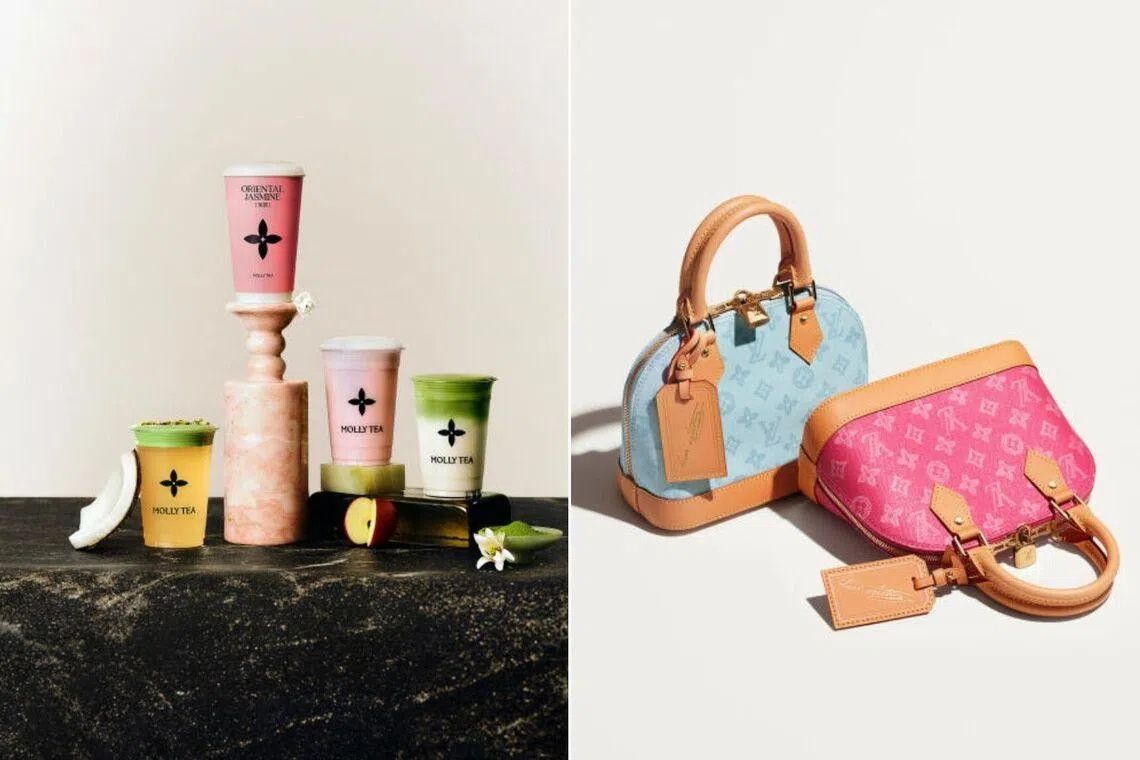
A Chinese court has dealt a significant blow to Molly Tea, a Shenzhen-based milk tea operator, by ordering it to pay 10.3 million yuan—approximately US$1.5 million—to Louis Vuitton after finding the company had infringed on seven of the French luxury brand's registered four-petal flower graphic trademarks. The Suzhou Intermediate People's Court in Jiangsu province handed down the ruling on June 29, also requiring the milk tea chain to cease the infringing use and issue a public apology. The verdict has shaken the casual dining sector across China and beyond, raising fundamental questions about how intellectual property law applies when traditional design elements intersect with modern commercial branding.
The dispute centred on the visual similarity between Molly Tea's brand emblem—a four-petal flower motif—and Louis Vuitton's iconic monogram designs that have anchored the French luxury house's identity for decades. The French brand initiated legal action in May 2025, setting in motion a case that would ultimately reshape how Chinese courts view trademark protection in the competitive food and beverage sector. Molly Tea's management has already signalled its intention to appeal the judgment to a higher court, suggesting the case will likely continue to develop through China's judicial system. The decision arrives at a time when China's domestic brands are increasingly competing on the world stage, making intellectual property disputes between local and international companies increasingly common and closely watched.
Since March 2024, Molly Tea and its affiliated entities had submitted multiple trademark applications to the China National Intellectual Property Administration, each featuring floral design elements intended for use across restaurant and accommodation services, advertising, and convenient food categories. The intellectual property authority rejected most of these applications outright. Only the trademark incorporating the Chinese characters for "Molly Tea" successfully secured registration, a pattern that suggests the administrative body had already identified potential conflicts with existing protected marks. This sequence of events reveals how the trademark registration process can serve as an early warning system when companies attempt to use designs that may overlap with established intellectual property rights.
The court's decision has catalysed an extraordinary level of public engagement with intellectual property issues on Chinese social media platforms. A hashtag reading "Louis Vuitton sues Molly Tea for 10.3 million yuan in damages" accumulated over 360 million views within days of the ruling being publicised, while a related topic about the invalidation of Molly Tea's trademark garnered more than 18.7 million reads. This unprecedented digital conversation reflects how IP disputes involving recognisable consumer brands have become mainstream cultural discourse in China, particularly when they pit domestic companies against international giants. The viral nature of the case underscores how Chinese consumers and internet users are increasingly attuned to questions of fairness and original creativity in the marketplace.
Public opinion on the case remains fractured along multiple lines. Supporters of the court's decision contend that Molly Tea's floral emblem bears striking visual resemblance to Louis Vuitton's celebrated trademark, creating genuine consumer confusion and unfairly capitalising on the luxury brand's decades of brand-building and investment. Conversely, other commentators point to what they perceive as substantial visual differences between the two designs and argue that the two companies operate in fundamentally different market segments—luxury fashion versus casual beverages—making direct competition implausible. Additionally, some social media users have questioned the originality of Louis Vuitton's signature pattern itself, suggesting that the French company may have drawn inspiration from traditional Chinese cultural aesthetics without acknowledgement or attribution.
Kang Lixia, a partner at Beijing Standzer IP Firm, provided expert analysis on the appellate prospects and broader legal framework governing such disputes. She explained that either party dissatisfied with the ruling possesses the right to appeal, and that the outcome of any appeal would hinge substantially on whether the appellant can present convincing evidence demonstrating that its design possesses genuine originality and distinctive character. She further clarified that floral patterns and decorative motifs rooted in traditional Chinese culture belong to the public cultural domain and remain available for use by any entity. However, she highlighted a critical aspect of Chinese trademark law: the "first to file" principle, which grants trademark rights to the earliest applicant when multiple parties seek to register identical or similar marks for the same or similar products.
The implications of this "first to file" doctrine extend beyond straightforward competition in the same product category. Kang noted that although Molly Tea and Louis Vuitton operate in different trademark classes, the French luxury brand's status as an earlier-registered and exceptionally well-known mark entitles it to cross-class protection under Chinese law. This mechanism means that Louis Vuitton's intellectual property rights can extend into unrelated product categories and services, creating substantial barriers for later applicants who wish to use similar designs even in entirely different industries. For businesses seeking to register trademarks in China, this principle represents a significant consideration: established international brands enjoy expansive protection that transcends their original business domains, fundamentally shaping the landscape of available design options for competitors and newcomers.
Liu Bin, an intellectual property lawyer from Beijing Zhongwen Law Firm, advocated for a nuanced and balanced perspective on the broader implications of this ruling. He clarified that under prevailing trademark law, protection for figurative or graphic marks does not require that the contested design be identical to the registered trademark in every detail. Instead, the governing legal standard focuses on whether typical consumers are likely to experience confusion when encountering the two marks. Liu underscored that public discourse surrounding this case reflects genuine uncertainty about how traditional Chinese cultural patterns ought to be protected and utilised equitably across society. Since these motifs constitute shared cultural heritage and public resources, many citizens believe that no single commercial entity should possess exclusive rights to them.
Yet Liu also articulated an essential counterbalance to this reasoning: intellectual property protection does not merely guard against the unauthorised copying of abstract designs but rather protects the brand recognition and commercial goodwill that enterprises develop through years of strategic marketing and consumer engagement when they deploy traditional elements in the commercial sphere. This distinction proves crucial for understanding why trademark law remains vigilant even when companies utilise motifs derived from public cultural sources. The protection extends to the accumulated consumer associations and market positioning that a company builds around those elements, not to the elements themselves in isolation. Traditional cultural patterns should indeed remain open and available for broader cultural perpetuation and artistic development, Liu maintained, but commercial marks used in trade cannot permissibly create market confusion or replicate the distinctive identity that earlier-registered brands have established through years of commercial presence and consumer recognition.

