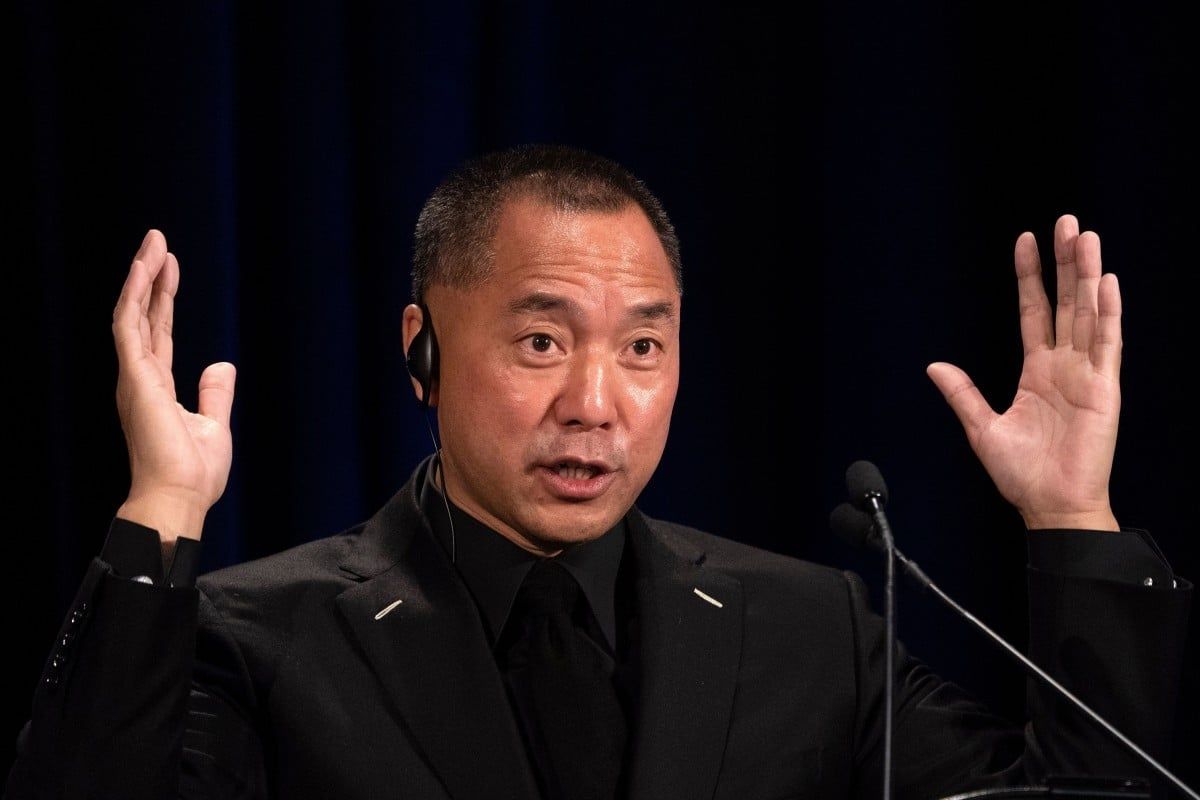
In a significant legal development that underscores vulnerabilities in cross-border financial schemes and immigration systems, Guo Wengui, a once-prominent Chinese business magnate who reinvented himself as a Communist Party critic in the United States, has been handed a 30-year prison sentence for orchestrating one of the most extensive investment frauds in recent memory. Judge Analisa Torres delivered the sentence in a Manhattan courtroom on Monday, June 30, finding that Guo's elaborate deception had devastated more than 1,000 people across multiple continents, resulting in combined losses exceeding hundreds of millions of dollars.
The case represents a cautionary tale about how political grievances can be weaponised alongside financial crime. Guo, who fled China a decade ago and eventually settled in New York, marketed himself as a crusader against Beijing's authoritarian government while simultaneously extracting wealth from supporters who believed they were advancing the cause of democracy. The federal judge's characterisation of his behaviour was damning: Guo deliberately "preyed on those seeking to bring Democracy to China," exploiting their idealism to fund an extravagant lifestyle that included luxury apartments, yachts, sports cars, and designer collections. The disconnect between his stated mission and his actual conduct illuminates how charismatic figures operating in politically charged environments can manipulate vulnerability and hope for personal gain.
At sentencing, Guo attempted to minimise his culpability by focusing on his health complaints rather than addressing the substance of the charges against him. He claimed he had experienced vomiting and gastrointestinal distress during his courthouse appearance, seeming to dispute prosecutors' characterisation of him as someone feigning illness. However, when he did address the criminal case directly, his response was evasive. Rather than acknowledging the harm inflicted on victims, Guo reiterated his political motivation, stating that coming to the United States was fundamentally about destroying the Chinese Communist Party. This posture—deflecting responsibility while maintaining his ideological narrative—troubled Judge Torres, who noted that Guo "takes no responsibility for his actions and instead insists incredibly his conduct caused no loss and harmed no one."
The human toll revealed during proceedings painted a devastating picture of lives disrupted and families fractured. One victim, Wei Chen, testified that Guo's fraud "destroyed my life" and that of her entire family. Letters submitted to the court by other victims documented the psychological aftermath: people had lost their life savings, experienced severe anxiety, and faced ostracism from relatives who blamed them for making poor investment decisions. Judge Torres read these accounts aloud during sentencing, ensuring the full weight of victim impact was registered in the courtroom. The judge further condemned Guo for allegedly mobilising his remaining supporters to harass and intimidate those willing to testify against him, a pattern suggesting ongoing attempts to suppress accountability.
Prosecutors detailed the mechanics of the fraud, which operated between 2018 and 2023 and convinced hundreds of thousands of people to invest more than USD 1 billion in entities under Guo's control. These vehicles included his media company, GTV Media Group Inc., and the so-called Himalaya Farm Alliance and Himalaya Exchange. Each entity was presented as legitimate investment opportunity or political platform, but all were vehicles through which Guo diverted funds to support his personal excess. The government's presentence filing characterised his theft as driven by a "lifestyle of extraordinary excess and indulgence," painting a portrait of someone who weaponised political dissent as cover for unbridled personal enrichment. Guo was convicted of nine of twelve criminal charges during a seven-week trial that exposed his systematic deception across thousands of investor interactions.
Guo's trajectory prior to his arrest illustrates how political controversy in the United States can create space for individuals with questionable credentials to gain influence and access. Before his detention without bail three years ago, he had grown sufficiently close to conservative political strategist Steve Bannon that the two announced a joint initiative in 2020 ostensibly aimed at overthrowing the Chinese government. Guo had secured residence in a luxury Manhattan apartment overlooking Central Park and joined President Donald Trump's Mar-a-Lago golf club in Florida. These affiliations granted him credibility and social positioning that he leveraged to solicit investments from people who believed they were supporting anti-communist efforts. His ability to penetrate such circles while simultaneously perpetrating fraud raises questions about due diligence practices within political networks and elite social institutions.
The defence mounted by Guo's legal team appealed to geopolitical sympathy, arguing that he was fundamentally a victim of Chinese government persecution. They contended that the Communist Party had engaged in a "grand, pervasive, and life threatening" pursuit of their client and had allegedly recruited elites across American business, entertainment, and politics to conspire against him. The defence presented evidence that Guo bore physical scars from alleged torture inflicted during his time in China and had undergone multiple surgeries between 1993 and 2022 to repair resulting injuries. In their presentence submission, they argued that imposing a lengthy sentence would validate Beijing's smear campaign and embolden further suppression of Chinese dissidents. They pointed to comparable cases where defendants received two-to-four year sentences, suggesting Guo's punishment was disproportionate. However, the magnitude of Guo's admitted fraud and his refusal to acknowledge responsibility ultimately overwhelmed these mitigating arguments.
The sentencing also reflected an ongoing diplomatic dimension that carries implications for Southeast Asian financial systems and governance. China's Ministry of Foreign Affairs issued a statement noting Guo's sentence and reiterating that he remains wanted by Beijing for charges including rape, kidnapping, bribery, and other offences—allegations Guo has denied as politically motivated. China had already placed an Interpol "Red Notice" on Guo, a request circulated globally to law enforcement agencies requesting his arrest pending extradition. This international legal architecture creates complex scenarios for countries like Malaysia, Singapore, and others in the region, which must navigate requests from Beijing while managing their own sovereignty and refugee protection obligations. The case illustrates how transnational fugitives can simultaneously claim political persecution while evading accountability for financial crimes.
Judge Torres ordered Guo to forfeit USD 889 million in restitution, though collection of this sum from an imprisoned individual with assets potentially frozen or beyond reach presents practical challenges. The sentencing represents the culmination of federal prosecution efforts to hold accountable someone who exploited asylum and immigration frameworks while conducting systematic financial predation. The case underscores vulnerabilities in how financial ecosystems and political networks interact, particularly when charismatic individuals leverage geopolitical narratives to solicit investment from populations motivated by ideological commitment. For Malaysian observers and policymakers, the Guo case provides instructive lessons about scrutinising the credentials and backgrounds of politically active foreigners, implementing stronger financial transparency requirements for cross-border investment schemes, and recognising that claims of political victimhood do not automatically convey immunity from criminal prosecution for separate financial transgressions.
The broader implications extend to how Southeast Asia might strengthen defences against similar schemes that exploit political narratives and diaspora communities. Guo's elaborate fraud apparatus succeeded partly because it merged legitimate criticism of Chinese governance with illegitimate financial operations, creating a veneer of credibility that obscured predatory intent. As the region becomes increasingly integrated into global financial networks and hosts growing populations of Chinese diaspora, governments would be wise to develop enhanced regulatory frameworks that do not discriminate against political refugees but do require transparent accounting and legitimate business practices from anyone soliciting investment. The Guo sentencing serves as a reminder that political conviction and financial integrity remain distinct moral and legal domains.

