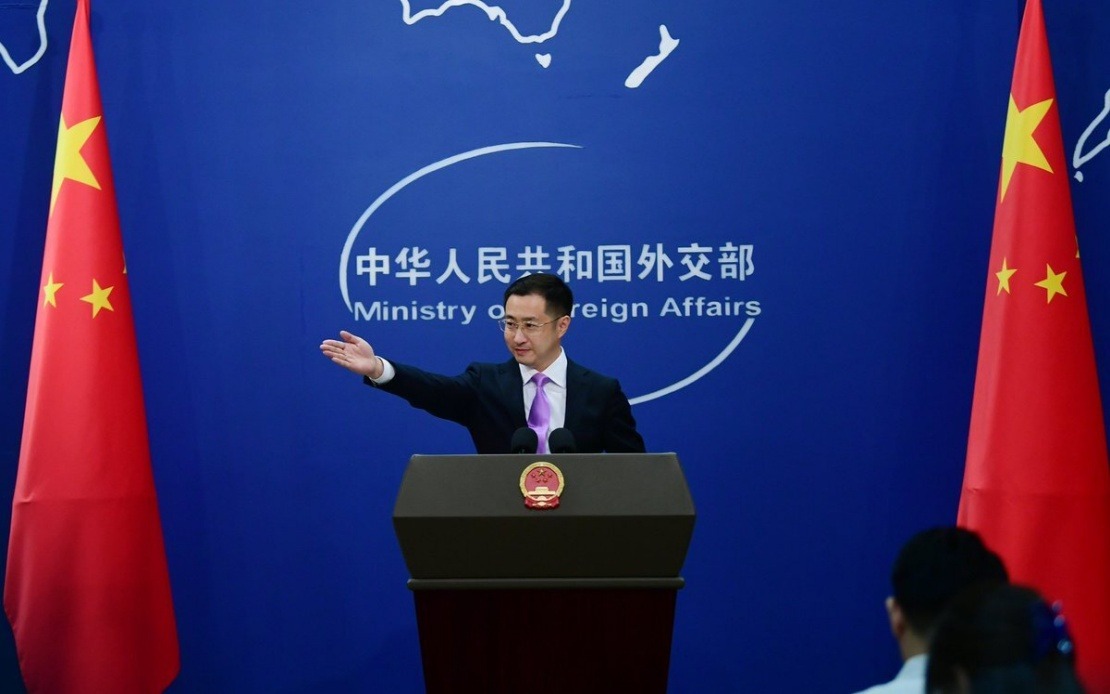
China has expressed formal appreciation for Prime Minister Datuk Seri Anwar Ibrahim's recent public endorsement of the one-China principle, particularly his characterisation of Taiwan's status within the framework of Chinese sovereignty. The commendation from Beijing's foreign ministry underscores the diplomatic significance of Malaysia's consistent alignment with China's foundational position on territorial integrity, a stance that carries particular weight given Malaysia's strategic position in Southeast Asia and its economic interdependence with Beijing.
The Chinese Ministry of Foreign Affairs issued its statement through official channels on Wednesday, highlighting Anwar's remarks during an interview with international broadcaster Al Jazeera. In that conversation, the Malaysian Prime Minister articulated a straightforward position: Taiwan constitutes part of China, and this understanding enjoys universal acceptance within the international community. The framing of the one-China principle as universally acknowledged reflects not merely a diplomatic courtesy but a deliberate political messaging strategy aimed at reinforcing consensus around Beijing's interpretation of cross-strait relations.
Chinese foreign ministry spokesperson Lin Jian expanded on Beijing's perspective during a regular briefing in the capital, characterising adherence to the one-China principle as both a reflection of popular sentiment and an alignment with historical justice. Lin's comments positioned support for this principle as morally and politically righteous, suggesting that nations maintaining this position stand on the correct side of international law and acceptable conduct. This rhetorical framing attempts to elevate the principle beyond mere diplomatic protocol into a matter of fundamental principle and historical inevitability.
The substance of Beijing's position, as articulated by Lin, rests on the assertion that Taiwan represents an integral and non-negotiable component of Chinese territory. The characterisation of eventual reunification as an unstoppable historical trend reflects China's long-standing position that the present separation of Taiwan and mainland China constitutes an abnormal and temporary situation rather than a permanent political arrangement. Such language has profound implications for regional stability and Malaysia's own strategic calculations regarding its relationship with both Beijing and the broader international community.
Malaysia's endorsement of the one-China principle, while formally consistent with the position adopted by most nations through diplomatic recognition of the People's Republic of China, carries specific importance for regional geopolitics. As a Southeast Asian nation with significant Chinese diaspora populations and substantial economic ties to both China and Taiwan, Malaysia navigates a delicate balance between maintaining relations with Beijing while preserving pragmatic connections with Taiwan's democratic government and economy. Anwar's public statements therefore signal Malaysia's preference for stability and adherence to established diplomatic frameworks rather than any repositioning toward alternative perspectives on cross-strait relations.
The timing of these exchanges occurs within a broader context of intensifying great power competition in the Indo-Pacific region. Taiwan's political and strategic status remains one of the most sensitive issues in contemporary international relations, with implications extending far beyond the island itself to encompass questions of regional order, freedom of navigation, and the principles governing international conduct. Malaysia's reaffirmation of support for the one-China principle, when articulated by its prime minister on international platforms, contributes to the diplomatic environment surrounding these fundamental geopolitical questions.
From Beijing's perspective, securing explicit statements from regional leaders regarding the one-China principle serves multiple strategic objectives. Such affirmations reinforce the diplomatic isolation of alternative perspectives, strengthen the appearance of international consensus around China's preferred understanding of Taiwan's status, and demonstrate that major regional powers recognise the futility of supporting positions contrary to Beijing's core interests. The public commendation of Anwar's remarks functions as positive reinforcement for alignment while simultaneously signalling to other regional actors the benefits of maintaining consistent positions on this question.
For Malaysia specifically, the maintenance of this diplomatic position reflects both historical precedent and practical calculation. Malaysia's recognition of the People's Republic of China since 1974 represents a settled question of foreign policy, and Anwar's recent statements represent continuity with established positions rather than any novel development. However, the timing and public nature of these affirmations suggest heightened attention to ensuring that Malaysia's stance remains clearly articulated in an international environment where such positions increasingly face challenge from various quarters.
The broader Southeast Asian context adds further significance to Malaysia's position. The region contains several nations maintaining complex relationships with both mainland China and Taiwan, balancing commercial relationships with political considerations. Singapore, Vietnam, and the Philippines each navigate these waters with varying degrees of caution. Malaysia's clear enunciation of support for the one-China principle demonstrates that within Southeast Asia, substantial consensus persists around this diplomatic framework despite the region's increasing exposure to technological, economic, and strategic competition between China and Western-aligned powers.
Looking forward, Malaysia's consistent reiteration of the one-China principle positions the country as a predictable and reliable partner from Beijing's perspective, potentially generating diplomatic benefits in areas including trade negotiations, infrastructure investment through initiatives like the Belt and Road framework, and regional cooperation mechanisms. Simultaneously, this position requires careful management to ensure that Malaysia's relationships with democratic nations and international partners sharing different perspectives on cross-strait governance remain stable and mutually beneficial. The balancing act inherent in contemporary Southeast Asian diplomacy becomes evident in how nations articulate positions on Taiwan while maintaining broader strategic flexibility.
The exchange between Beijing and Kuala Lumpur illustrates the persistence of the one-China principle as a foundational element of contemporary international relations. Despite decades of separation and Taiwan's evolution into a vibrant democracy with distinct political institutions, the diplomatic framework acknowledging Beijing's claim to represent all of China remains legally and practically dominant in most international forums. Malaysia's reiteration of this position, when publicly praised by Chinese officials, reinforces this framework while simultaneously inviting reflection on how long such diplomatic formulas can coexist with the evident political realities of Taiwan's self-governing status.

