China has publicly acknowledged Malaysia's pivotal diplomatic contributions to the ongoing negotiations for a Code of Conduct governing activities in the South China Sea, signalling Beijing's appreciation for Kuala Lumpur's balanced approach to one of the region's most sensitive geopolitical issues. During a media briefing in the capital, China's Ambassador to Malaysia Ouyang Yujing underscored the significance of Malaysia's constructive engagement, particularly through its role as co-chair of the implementation mechanism for the Declaration on the Conduct of Parties in the South China Sea—a framework that predates the more ambitious Code of Conduct now being negotiated.
The ambassador's remarks come as Prime Minister Datuk Seri Anwar Ibrahim has reaffirmed Malaysia's commitment to propelling the Code of Conduct process forward, positioning the country as a key bridge-builder among competing interests in the disputed waters. The timing of China's commendation reflects growing momentum in negotiations that have stretched over more than a decade, with diplomats and observers increasingly confident that a final agreement may be achievable in the near term. For Malaysia, this recognition bolsters its standing as a responsible middle power capable of facilitating consensus among larger regional players despite deep-seated territorial disagreements.
Since the previous year, bilateral maritime engagement between China and Malaysia has intensified substantially, moving beyond rhetorical support to concrete institutional arrangements. The two nations have maintained consistent high-level communication channels specifically dedicated to managing maritime disputes and exploring avenues for joint cooperation in the waters between them. This dialogue framework has proven instrumental in preventing isolated incidents from escalating into broader confrontations, creating space for the broader regional negotiation process to advance without constant interruptions from bilateral tensions. The establishment of such mechanisms reflects a pragmatic understanding that peaceful coexistence requires structured channels for addressing grievances before they become diplomatic flashpoints.
The Code of Conduct represents an evolution beyond the original Declaration signed in 2002, which itself was a watershed moment in regional diplomacy. Where the Declaration established general principles and a commitment to peaceful resolution of disputes, the Code of Conduct aims to create binding legal obligations and dispute resolution procedures with real enforcement mechanisms. This institutionalisation is crucial for the region because it would theoretically constrain unilateral actions and provide predictable frameworks for economic activity, maritime safety, and environmental protection across the contested waters. Malaysia's role in shepherding these negotiations demonstrates its understanding that even incremental progress on such issues can yield substantial security dividends.
Ambassador Ouyang's statement that negotiations have reached a critical juncture carries important implications for the broader regional architecture. Most ASEAN member states, including Malaysia, have publicly expressed aspirations for completing the Code by year's end, creating both political pressure and momentum toward a final agreement. However, such timelines are frequently optimistic given the complexity of balancing the interests of ten ASEAN nations and China, each with distinct territorial claims, strategic concerns, and economic dependencies. Malaysia's diplomatic flexibility stems partly from its geographic position—not a claimant to the most disputed features—which enables it to pursue solutions that other stakeholders, such as Vietnam or the Philippines, might find insufficiently protective of their interests.
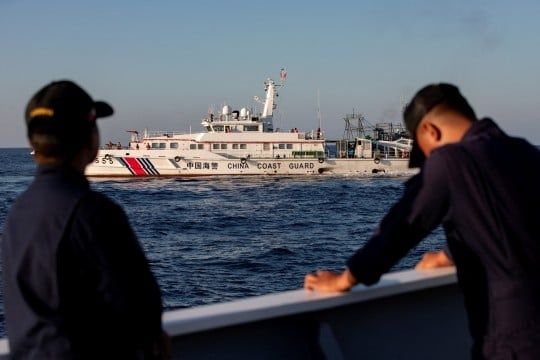
The ambassador emphasised that China remains committed to collaborative negotiation while simultaneously pursuing its own strategic objectives, a formulation that reflects the underlying tension pervading these talks. Beijing's willingness to credit Malaysia's contributions serves multiple purposes: it recognises genuine diplomatic efforts, encourages continued Malaysian alignment, and demonstrates to international observers that China engages constructively in multilateral processes. This public diplomacy strategy becomes particularly important when China faces criticism in Western capitals regarding its conduct in the disputed waters, where Chinese vessels have occasionally clashed with those from other claimant states.
Bilateral relations between Malaysia and China have reached unprecedented levels of warmth and frequency of engagement, according to the ambassador's assessment. President Xi Jinping's state visit to Malaysia in the previous year marked a symbolic high point, while subsequent visits by Premier Li Qiang and reciprocal visits by Prime Minister Anwar Ibrahim have reinforced personal relationships between leaders at the highest levels. These exchanges have generated multiple bilateral agreements spanning trade, infrastructure, technology, and security cooperation, embedding Malaysia deeply within China's regional strategic framework. For Malaysian policymakers, this enhanced relationship creates both opportunities and constraints—opportunities for developmental partnerships, but potential constraints on independent foreign policy positioning should disputes arise.
The frequency of high-level exchanges between the two countries has reached historic proportions, with the ambassador noting that such engagement strengthens mutual understanding and political trust. Regular dialogue at the leadership level helps prevent misunderstandings and creates informal channels for managing disagreements before they escalate into formal disputes. This personal dimension of international relations often receives insufficient attention in analyses focused on strategic competition, yet it frequently proves decisive in determining whether nations choose escalation or accommodation when conflicts emerge. Malaysia's leaders have clearly prioritised cultivating these relationships as an investment in regional stability and bilateral prosperity.
Cross-sectoral cooperation between Malaysia and China extends far beyond maritime issues, encompassing infrastructure development, trade partnerships, technology transfer, and educational exchanges. The expansion of such cooperative frameworks creates mutual dependencies and shared interests that provide incentives for conflict avoidance. Malaysian businesses and workers benefit from access to Chinese investment and markets, while Chinese firms gain access to Malaysian markets and strategic locations. This economic interdependence forms a practical foundation for the more aspirational statements about regional peace and stability, suggesting that these diplomatic achievements rest on material interests as well as shared principles.
The ambassador's confidence that the Code of Conduct negotiations will progress according to schedule reflects Beijing's assessment that the political constellation currently favours agreement. This optimism may also signal that China perceives sufficient protection for its interests in the emerging framework, though the actual text remains subject to ongoing refinement. For Malaysia, successfully stewarding these negotiations toward completion would represent a significant foreign policy achievement, demonstrating the value of non-aligned positioning and pragmatic engagement with major powers. The outcome will likely shape regional geopolitics for decades, making Malaysia's diplomatic contributions during this critical phase historically significant for Southeast Asia.
Looking ahead, Malaysia faces the challenge of maintaining its balanced posture while ensuring that the Code of Conduct incorporates sufficient protections for smaller claimant states and non-claimant ASEAN members. The country's success in this balancing act will determine whether the final agreement contributes genuinely to conflict prevention and economic cooperation, or merely formalises existing power imbalances. China's public commendation suggests satisfaction with Malaysia's trajectory, but final success depends on whether other stakeholders feel similarly served by the emerging framework. Malaysia's diplomatic credibility, carefully built through years of engagement with all parties, represents its most valuable asset in these final stages of negotiation.