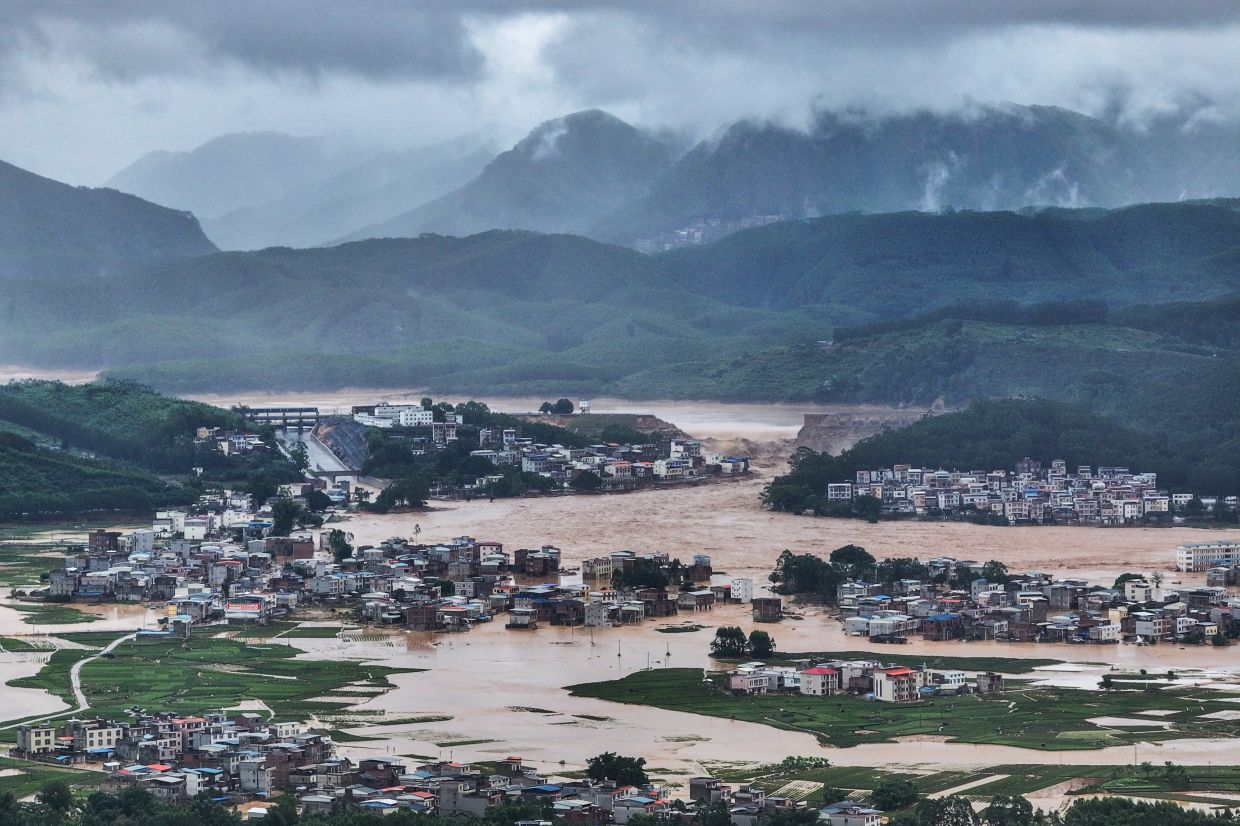
China's State Council has launched a public inquiry into the catastrophic failure of Liulan Reservoir in Hengzhou, Guangxi Zhuang autonomous region, opening a dedicated hotline and accepting submissions until mid-August as part of an official investigation into one of the deadliest infrastructure disasters in the region this year. The appeal, reported by state media on Monday, represents a significant effort to gather eyewitness accounts and community insights into the July 6 collapse and its aftermath, a mechanism Beijing has employed in previous high-casualty incidents that have captured public attention and generated substantial concern across the country.
The investigation framework established by the government aims to achieve several interconnected objectives: comprehensively mapping the sequence of events leading to and following the dam failure, identifying the root causes of the structural breach, evaluating the effectiveness of existing disaster prevention protocols, assessing the adequacy of emergency response coordination, documenting rescue operation performance, and extracting lessons applicable to similar infrastructure systems nationwide. This methodical approach reflects China's institutional response pattern to major disasters, signalling to the public that accountability mechanisms are operational even as questions about the incident continue to circulate online and across social media platforms.
The Liulan Reservoir catastrophe occurred in the context of extraordinary meteorological conditions associated with Typhoon Maysak, which dumped record-breaking precipitation across southern China and triggered cascading failures throughout the region's hydrological infrastructure. The torrential downpour caused severe erosion around the dam structure, ultimately creating a massive breach through which enormous volumes of floodwater surged downstream with devastating force. The resulting inundation swept through communities in the affected area with minimal warning, necessitating the emergency evacuation of tens of thousands of residents who faced potential loss of life and property damage.
Official casualty figures compiled in the immediate aftermath documented 26 deaths and seven persons missing from the primary Liulan Reservoir incident alone, while concurrent dam breaches and flooding at nearby reservoirs added thirteen additional fatalities and two more missing persons to the broader disaster toll. These numbers, representing at least 39 confirmed or presumed deaths across the reservoir system failures in the region, establish the July event as a significant public safety catastrophe. The absence of updated casualty announcements since the initial reporting period has created an information vacuum that has generated speculation and rumour on Chinese social media, with unverified claims suggesting substantially higher death tolls.
Local authorities have consistently refuted allegations of concealed casualties, denying what they characterise as exaggerated online claims. However, these denials have not fully resolved public scepticism, particularly given historical precedents where official figures have later been revised upward or accuracy has been questioned. The information environment surrounding the disaster has been complicated by the detention of at least one resident by police authorities on allegations related to disseminating what officials deemed to be false information, an action that has raised concerns among observers about the boundaries of permissible public discourse surrounding the incident.
The circumstances surrounding evacuation procedures have also become a focal point for online discussion and analysis, with residents and observers questioning the adequacy of warning time provided to populations downstream before the floodwaters arrived. These questions about emergency management protocols extend beyond simple hindsight assessment; they touch on fundamental issues of how China's disaster response systems function, what information is shared with vulnerable populations, and whether existing protocols meet contemporary standards for public safety. Such discussions, while sometimes framed by authorities as unhelpful speculation, often contain substantive concerns about systemic preparedness.
The State Council investigation team commenced operations when it travelled to Nanning, the provincial capital of Guangxi, and convened its inaugural meeting on July 24, approximately three weeks after the initial collapse. This timeframe, while not extraordinary for organising a comprehensive disaster investigation, reflects the complexity of assembling documentation, securing access to affected areas, and coordinating among multiple government agencies with overlapping jurisdictional responsibilities. The investigation's expansion of public input mechanisms represents an evolution in how China conducts such inquiries, recognising that community members and residents often possess crucial information and perspectives that formal bureaucratic channels might overlook.
Historical precedent demonstrates that such investigations have meaningful consequences for official accountability. The 2021 Zhengzhou floods, which claimed more than 300 lives in Henan province during intense rainfall, prompted a rigorous State Council investigation that concluded with disciplinary and legal actions against dozens of officials at multiple levels of government, including the removal of Communist Party leadership and municipal administration figures in the provincial capital. That investigation determined that official negligence and failures in duty contributed substantially to the disaster's severity, establishing a framework where responsibility could be assigned beyond simple attribution to natural causes. The precedent signals that the Guangxi investigation, if conducted with similar rigour, could produce consequences for officials deemed accountable for systematic shortcomings.
For Malaysia and Southeast Asia, the Liulan Reservoir disaster carries particular relevance given the region's vulnerability to typhoon systems and reliance on extensive dam and reservoir infrastructure for water management, electricity generation, and flood control. The technical failures evident in Guangxi's case—inadequate erosion protection, insufficient spillway capacity, or potential maintenance deficiencies—represent risks that exist across Asia's expanding hydroelectric and water storage systems. Malaysian infrastructure planners and water management authorities can draw valuable lessons from examining how the structural failure occurred, what warning systems failed, and how emergency protocols performed under extreme stress, insights that could inform improvements to domestic disaster preparedness.
The invitation for public participation in the investigation also reflects broader shifts in governance approaches across East Asia, where governments increasingly recognise that disasters generate valuable local knowledge that complements technical and engineering analysis. For Southeast Asian nations building or maintaining complex water infrastructure in monsoon and typhoon-prone regions, understanding both the technical factors and the human and institutional dimensions of infrastructure failure becomes critical for improving resilience and public safety outcomes.
As the investigation proceeds through August and beyond, the adequacy of public input mechanisms and the transparency with which findings are ultimately disclosed will indicate whether this inquiry represents a genuine effort at comprehensive accountability or a more managed exercise in addressing public concern. The information eventually released could either reinforce public confidence in China's disaster management systems or contribute further to the scepticism that has already emerged from the information gaps and disputes surrounding casualty figures in the weeks following the collapse.

