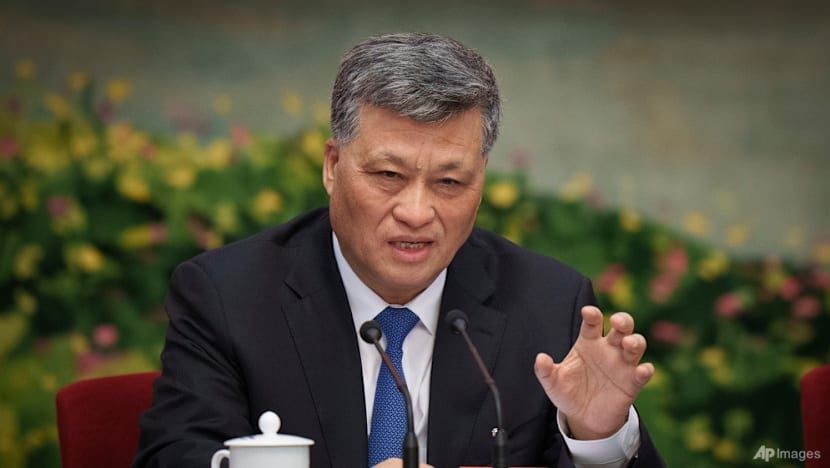
Beijing's ruling Communist Party has removed Ma Xingrui from both the party and all official positions following substantiated findings of widespread corruption, marking a significant disciplinary action against a former member of the Politburo, the upper echelon of China's governance structure. The 66-year-old had served as a senior decision-maker in the highest ranks of power during his tenure on the Politburo, the body directly chaired by President Xi Jinping that exercises supreme authority over the country's administration and policy direction.
The Communist Party's disciplinary arm, responsible for investigating misconduct among senior officials, compiled an extensive catalogue of transgressions against Ma that earned approval from the full Politburo membership. His investigation commenced in April, and subsequent findings revealed a pattern of personal enrichment and abuse of official authority that prompted the conclusive sanction. State news agency Xinhua disclosed the allegations in a detailed statement that underscored the gravity of the violations uncovered.
Among the substantiated charges were systematic schemes involving his family members' property acquisitions at artificially depressed prices, leveraging his position to secure financial advantage through inappropriate relationships, and facilitating relatives' personal gain by exploiting his official standing and connections. The investigation documented instances where he directed benefits toward business associates through contract awards, project assignments, and employment appointments in exchange for personal compensation. Beyond these schemes, Ma was found to have illegally accumulated significant sums of money and valuable assets through his abuse of power, with investigators characterising the overall pattern as particularly egregious.
Ma's administrative authority encompassed Xinjiang's governance from 2021 until 2025, placing him at the helm during a period when the northwestern region continued operating under extensive security protocols established over the preceding decade. His four-year stewardship coincided with the later stages of what Beijing characterised as counter-terrorism operations that fundamentally reshaped regional security and governance frameworks.
The region's security environment had deteriorated significantly in the years preceding Ma's appointment, with documented incidents of violence targeting civilian populations through the mid-2010s. Chinese authorities attributed these disturbances to armed separatist movements and militant organisations with religious ideological underpinnings, framing the violence as terrorism requiring decisive state response. Subsequent years witnessed the implementation of security measures of unprecedented scope and intensity across Xinjiang's communities.
The crackdown orchestrated over the past decade has disproportionately affected Xinjiang's Uyghur population, a Turkic Muslim ethnic minority comprising a substantial segment of the region's inhabitants. Authorities justified the intensive security operations and administrative controls as counter-terrorism necessity, though the scale and targeting of these measures have generated sustained international scrutiny and condemnation from rights advocates. The measures included mass surveillance systems, detention facilities, and restrictions on cultural and religious expression that prompted widespread concern among international observers.
Global human rights organisations have issued persistent criticism of the security apparatus and practices implemented in Xinjiang, characterising them as disproportionate and unjustified. These organisations have documented accounts from affected communities and former detainees detailing conditions and treatment that they argue violate fundamental human dignity and international humanitarian standards. The mounting evidence compiled by these groups has informed international diplomatic responses and statements from multiple governments expressing concern.
A particularly influential assessment emerged in 2022 from Michelle Bachelet, who served as the United Nations' high commissioner for human rights before completing her term. Bachelet's comprehensive report examined conditions and practices within Xinjiang and raised the possibility that documented actions might constitute crimes against humanity under international law frameworks. The report's findings lent substantial weight to advocacy groups' contentions and prompted intensified international attention to the situation.
Ma's expulsion from the Communist Party underscores Beijing's stated commitment to combating corruption within its ranks, even among high-ranking officials with significant tenure in powerful positions. The party maintains anti-corruption operations as a cornerstone of its governance legitimacy, positioning such investigations and sanctions as evidence of institutional self-regulation and accountability mechanisms. The scope and detail of allegations against Ma, combined with the Politburo's decisive action, demonstrate that proximity to the highest levels of power provides no immunity from disciplinary proceedings when misconduct is substantiated.
For Southeast Asian observers and Malaysian policymakers particularly, Ma's case illustrates the internal dynamics of China's elite governance structures and the mechanisms through which power is exercised and occasionally constrained. Understanding these institutional pressures and anti-corruption drives provides context for evaluating China's broader strategic behaviour and the reliability of its officials in bilateral and regional dealings. The expulsion also highlights the contested nature of governance in Xinjiang, where security objectives have created administrative environments that critics contend enable rather than prevent abuse of authority for personal enrichment.
The timing and severity of Ma's sanction may reflect broader factional dynamics within the Communist Party's leadership, as Xi Jinping has employed anti-corruption campaigns strategically to consolidate authority and eliminate potential challengers. Ma's removal from the Politburo represents a significant loss of political status and influence, signalling that even proximity to the highest governing circles cannot shield officials from consequences when corruption is publicly documented and formally adjudicated through party mechanisms.

