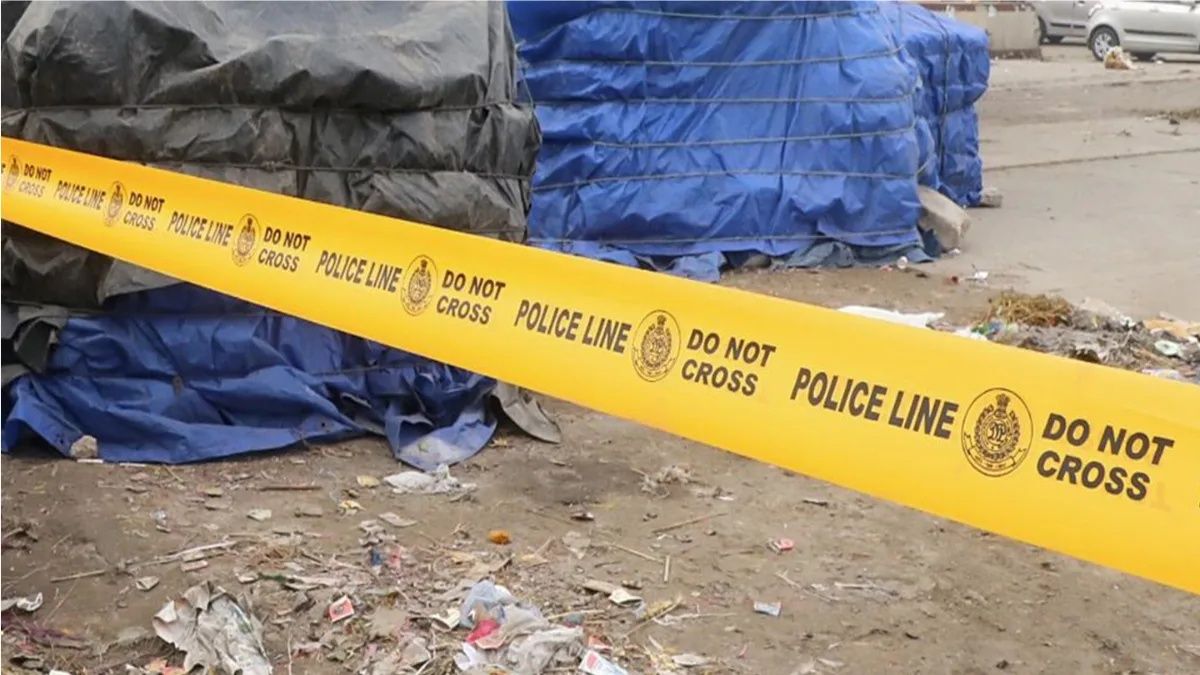
A child's death in West Bengal has ignited communal fury and exposed the fragile state of law and order in parts of rural South 24 Parganas. On Sunday, the body of a 12-year-old girl was discovered in a pond near her home at Suryapur, triggering mass protests that culminated in a mob lynching, injuries to police personnel, and paralysis of transportation networks across the region. The incident, occurring in Baruipur under Dhapdhapi II Gram Panchayat, has become the latest flashpoint in a district already familiar with cycles of vigilante justice and official response.
According to accounts from the victim's family, the girl had ventured out on Saturday evening with a simple errand—to purchase food from a nearby shop. She never returned. Her relatives reported that four unidentified men had forcibly taken her away, sparking an overnight search that ended tragically when her body was found floating in a nearby pond the following morning. The discovery transformed a family tragedy into a broader communal crisis, as the tightly-knit village community mobilized with intense emotion, effectively taking over the investigation and dispensing their own version of justice in the absence of swift police action.
The authorities' initial response inadvertently fueled the escalation. When hundreds of villagers converged on the recovery site, they refused to permit police to remove the body for examination, creating a standoff that lasted several hours. This delay, born of community distrust in the formal justice system's capacity to deliver justice, became a flashpoint for collective action. The crowd's blockade of roads and railway tracks was not mere protest—it represented residents exerting pressure on the state while simultaneously positioning themselves as custodians of accountability.
A particularly troubling dimension of the violence involved the mob's attack on a local youth whom they suspected of involvement in the crime. Residents claimed to have seen him in the company of alleged perpetrators, prompting them to beat him to death as police arrived at the scene. Law enforcement personnel faced intense resistance as they attempted to rescue the youth, with protesters hurling stones and vandalizing vehicles. Several officers sustained injuries in the melee, with one requiring hospitalization. This incident highlights the dangers that emerge when community vigilantism replaces legal processes—the mob may target innocent individuals based on suspicion rather than evidence, potentially compounding tragedy.
The disruption to basic services underscored the scale of anger. Protesters erected road blockades for nearly five hours and obstructed railway tracks at Suryapur station on the Sealdah-Namkhana line, disrupting train services for approximately one hour before police intervention restored normalcy. For a region dependent on rail connectivity for commerce and commuting, such interruptions carry economic consequences extending beyond the immediate locality. The blockade reflected residents' view that their grievances warranted suspension of regular life until authorities demonstrated commitment to justice.
Police response involved deployment of substantial personnel reinforcements and central forces to restore order. Inspector General of Police (Presidency Range) Kankar Prasad Barui visited the area and deployed a large police picket while appealing to residents through public address systems. His statement—assuring that those responsible would face maximum punishment and that no stone would be left unturned—represented an attempt to rebuild confidence in institutional justice and convince residents to stand down from their own enforcement mechanisms. Barui also promised that post-mortem examination would proceed swiftly under proper legal protocols.
The political establishment mobilized to contain the crisis. West Bengal Chief Minister Suvendu Adhikari personally telephoned the victim's father, offering sympathies and guarantees of strictest legal punishment for the accused. He further extended an invitation for the bereaved father to visit Nabanna on Tuesday to discuss the case, a gesture designed to signal high-level governmental attention and commitment. Such symbolic interventions, while important for maintaining public confidence, also reveal the inherent instability when state machinery must rely on senior leadership to restore faith that basic protections and justice mechanisms function adequately.
The investigation itself now encompasses multiple dimensions beyond the original crime. Police have identified two arrested suspects and are investigating another individual handed over by residents, but they must also examine the lynching that occurred, the assault on police personnel, and the attack on vehicles during the chaos. This multiplication of alleged offences complicates the investigative framework and raises questions about how authorities will prosecute both the original crime and the subsequent violence when the latter enjoys some level of community sanction.
For Malaysian and Southeast Asian observers, the Baruipur case illuminates persistent challenges in post-colonial democracies where institutional trust remains tenuous. The incident demonstrates how inadequate police presence, delayed response, or perceived indifference can catalyze community self-policing that quickly spirals into violence and extrajudicial action. The victim's family, faced with their daughter's death and uncertain faith in official mechanisms, could not prevent the mobilization of collective revenge. The mob, motivated by genuine outrage but lacking judicial authority, killed based on suspicion rather than proof.
The implications extend to questions of gender-based violence prevention and survivor protection. South Asia's continued prevalence of crimes against children and women, coupled with community perceptions of inadequate police responsiveness, creates a dangerous environment where prevention becomes nearly impossible and justice becomes conflated with vengeance. Strengthening investigative capacity, ensuring prompt and professional police response, and building public confidence in the judiciary remain essential for breaking cycles where high-profile cases trigger cycles of official inaction, community anger, and vigilante action.
As security was tightened across Baruipur and the victim's body was sent to Baruipur Sub-Divisional Hospital for post-mortem examination, officials faced the longer challenge of rebuilding institutional legitimacy. The police department and judiciary will need to demonstrate that formal mechanisms can deliver justice swiftly and visibly, thereby reducing incentives for future community interventions. Without demonstrable improvements in investigation speed, prosecution efficiency, and sentencing consistency, similar incidents will continue to trigger cycles of violence that claim lives beyond those directly involved in the original crime.

