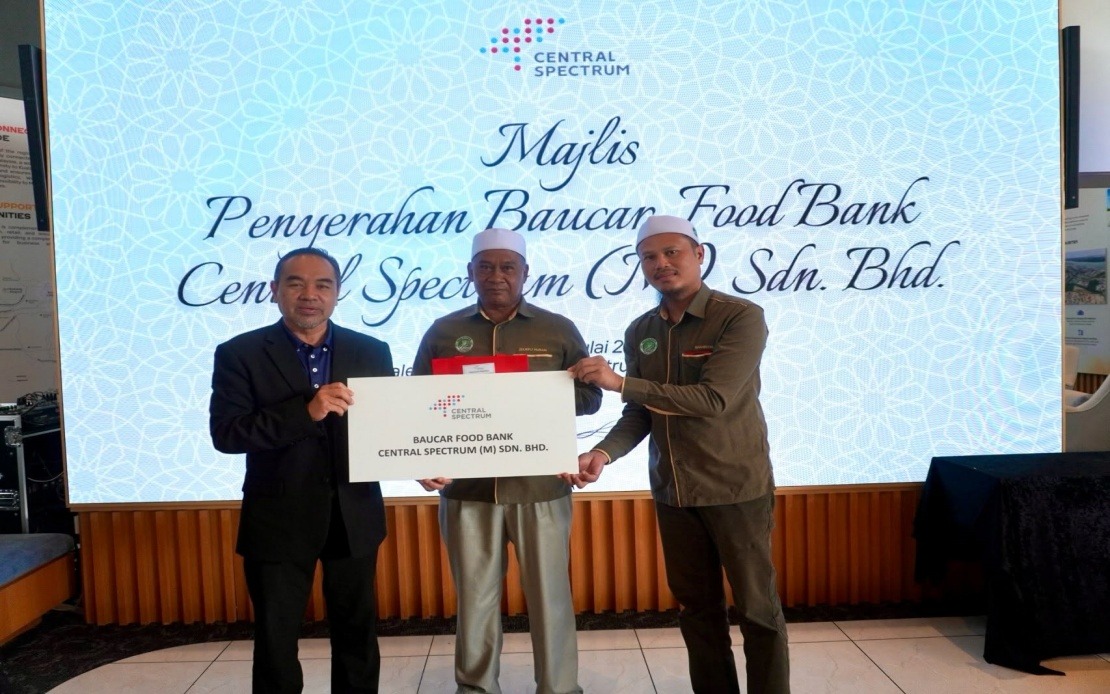
Central Spectrum (M) Sdn Bhd has demonstrated its corporate commitment to social welfare by allocating RM10,000 towards assisting economically disadvantaged residents in the Pulau Indah locality of Klang, Selangor. The initiative, executed through a partnership with four neighbourhood mosques, represents a deliberate effort to embed corporate assistance within existing community infrastructure rather than introducing parallel support mechanisms. The strategy underscores a growing recognition among Malaysian corporations that religious institutions possess inherent advantages in identifying genuine need and maintaining public trust in aid distribution.
The programme distributed 500 food bank vouchers valued at RM10,000 collectively to four houses of worship: Masjid AlQayyum in Bandar Armada Putra, Masjid Ar-Rahman in Kampung Sungai Pinang, Masjid Ar-Raudhah in Kampung Sungai Kembong, and Masjid Sultan Abdul Aziz in Kampung Perigi Nanas. Each mosque received mandate to disseminate assistance to qualifying families and individuals within their respective congregational networks, thereby ensuring that aid reached those most vulnerable within the community. This decentralised approach allows for localised decision-making and reduces administrative overhead while strengthening institutional relationships at the grassroots level.
Central Spectrum's selection of mosques as operational partners reflects a broader corporate philosophy regarding community engagement in Malaysia. Rather than viewing religious institutions merely as beneficiary recipients, the company positioned them as active partners in welfare delivery, acknowledging their established networks and credibility within neighbourhoods. This framework proves particularly effective in Muslim-majority areas where mosques function as multifaceted community hubs extending beyond spiritual purposes to encompassing social support, financial assistance, and health services for congregants and surrounding populations.
The presentation ceremony, held at Central Spectrum's sales gallery in Pulau Indah, was presided over by acting chief operating officer Edi Zuhri Abd Rahim, signalling the importance the company attributed to the initiative. Senior representation at the event conveyed that this represented genuine organisational commitment rather than a peripheral charitable activity. The visible involvement of executive leadership helps establish the programme's legitimacy and encourages broader participation from other community stakeholders and institutional partners within the locality.
For Pulau Indah residents facing financial constraints, food bank assistance constitutes meaningful relief during periods of economic hardship. The voucher mechanism provides both dignity and agency to recipients, allowing them to select foodstuffs appropriate to their household circumstances rather than receiving predetermined packages. This approach respects individual dietary requirements, cultural preferences, and family composition considerations that standardised food parcels frequently overlook. Such flexibility enhances programme effectiveness and acknowledges recipients as rational decision-makers rather than passive consumers of charity.
The partnership model adopted here offers valuable lessons for corporate social responsibility strategies across Malaysia's diverse communities. By leveraging established institutions with deep community roots, companies can achieve more efficient resource deployment and more effective need assessment than would be possible through entirely external programmes. Mosques, temples, churches, and community associations across the nation possess the local knowledge and institutional credibility necessary to guide corporate investment towards areas of genuine need. This collaborative approach also strengthens civil society by acknowledging religious and community institutions as legitimate welfare actors.
Edi Zuhri's statement emphasising the programme's intention to foster compassion and strengthen collaborative networks articulated the broader vision motivating Central Spectrum's initiative. Beyond immediate hunger relief, the company identified an opportunity to deepen institutional relationships within Pulau Indah and position itself as a development partner genuinely invested in neighbourhood wellbeing. This longer-term relationship building carries commercial advantages for the property developer, as enhanced community relationships can facilitate future projects and strengthen the company's reputation for responsible business practices within the locality.
The timing and scale of the intervention warrant consideration within Malaysia's evolving economic context. Food insecurity remains an underappreciated challenge affecting middle and lower-income households, particularly following periods of economic disruption or individual family crises. Corporate participation in addressing this challenge distributes responsibility beyond government welfare systems, which frequently operate with resource constraints limiting their capacity to reach all eligible populations. When property developers, retailers, manufacturers, and service providers collectively allocate resources toward community welfare, their cumulative effect substantially expands safety nets protecting vulnerable populations.
The mosque partnership model employed by Central Spectrum demonstrates how corporate initiatives can enhance rather than supplant existing community institutions. Rather than creating dependency on corporate charity, this approach strengthens the institutional capacity of established community bodies to fulfil their traditional welfare roles. Mosques receiving vouchers to distribute effectively receive organisational capacity enhancement, as they coordinate with corporate partners, develop distribution systems, and maintain records of assistance provision. Over time, this institutional strengthening creates lasting benefits extending beyond the immediate charitable intervention.
Central Spectrum's commitment to ongoing welfare initiatives, as expressed in company statements, suggests this represents one iteration within a sustained engagement strategy rather than an isolated charitable gesture. Repeated, consistent corporate involvement in community welfare produces measurable benefits for residents while establishing predictable support patterns that communities can anticipate and incorporate into their coping mechanisms. The public articulation of commitment to continued programming signals that residents need not regard this year's assistance as exceptional but rather as part of an evolving partnership benefiting the Pulau Indah locality.
For Malaysian policymakers examining strategies to address food insecurity and support vulnerable households, the Central Spectrum initiative provides a practical example of public-private collaboration that extends beyond traditional corporate donation models. By positioning corporations as development partners working through established community institutions rather than as donors providing standalone assistance, policymakers can encourage greater private sector participation in social welfare provision. Such collaboration distributes responsibility appropriately while leveraging each sector's distinctive strengths—corporate resources, institutional credibility, and community knowledge.
The programme's focus on Pulau Indah, an industrial and residential area within Klang that houses diverse populations including migrant workers and lower-income households, reflects targeted corporate investment responding to documented local needs. Rather than dispersing resources broadly across Selangor or Malaysia generally, Central Spectrum concentrated support within its operational locality, demonstrating how companies can meaningfully contribute to welfare challenges they directly encounter through their business activities. This geographic focus enhances programme coherence and establishes the company as a committed member of the local community rather than a distant corporate entity distributing charity.

