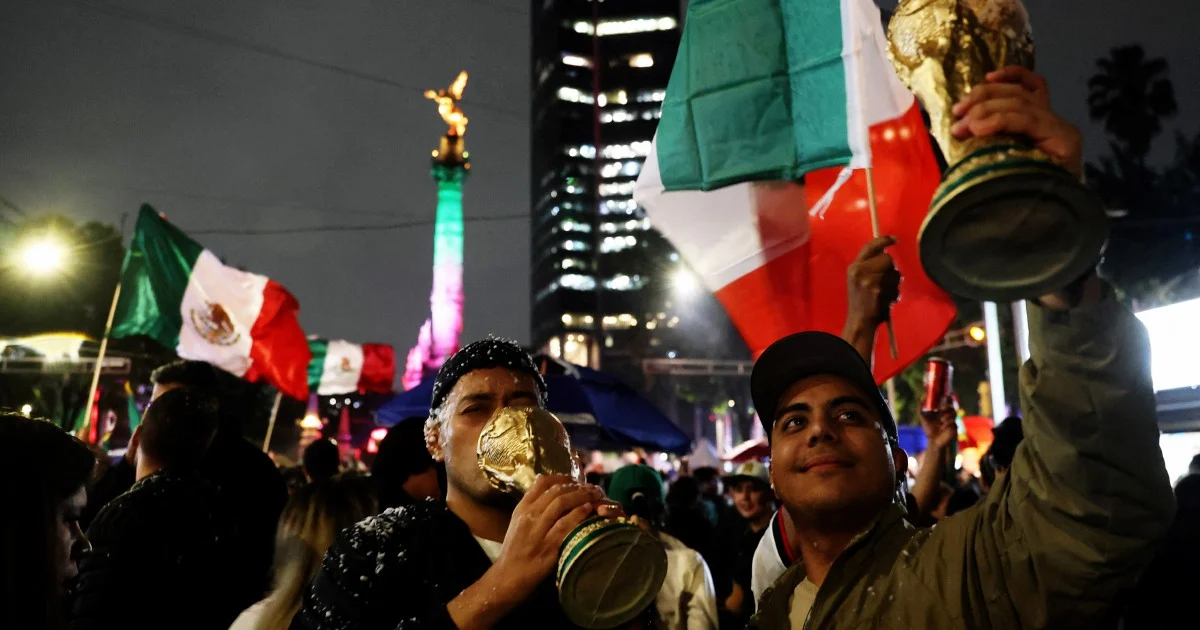
A vehicle ploughed through a gathering of Mexico national football team supporters in Cabo San Lucas on Wednesday evening, leaving seventeen individuals requiring hospital treatment and sparking a chaotic scene in the popular beach destination. According to municipal authorities in Los Cabos, the incident occurred as fans were celebrating their nation's World Cup result, transforming what should have been a moment of sporting joy into a traumatic public safety emergency. The driver of the black car was detained at the scene, becoming one of the injured parties transported for medical evaluation.
Footage circulating on social media and independently verified by Reuters captured the alarming sequence of events as it unfolded. In the moments before impact, the vehicle sat stationary amid a throng of supporters dressed in the distinctive emerald and white colours of Mexico's national side. Without apparent warning, the driver accelerated sharply, propelling the automobile directly into the crowd and sending multiple individuals sprawling across the pavement and into the air from the force of the collision.
The vehicle continued its destructive path before striking a line of protective bollards, finally halting its advance through the densely packed gathering. The impact left visible victims sprawled across the ground, with bystanders rushing to assist the injured whilst simultaneously attempting to extract the driver from the vehicle. Additional recorded material verified by Reuters depicted members of the crowd physically pulling the driver from the car and responding with violence as panic and confusion gripped the scene.
Cabo San Lucas, situated at the southern tip of Mexico's Baja California Peninsula, attracts thousands of international visitors annually and serves as a major hub for tourism and nightlife throughout the region. The resort municipality has become particularly popular during major sporting events when fans converge to celebrate national achievements. The incident raises questions about public safety infrastructure and crowd management protocols during large spontaneous gatherings that characterise football celebrations across Latin America.
The motivations behind the driver's actions remain unclear, and authorities have not yet released detailed information regarding potential charges or preliminary investigations. In similar incidents globally, such ramming attacks have occasionally reflected deliberate actions prompted by various causes ranging from personal disputes to ideological grievances. However, alternative explanations such as mechanical failure or medical episodes affecting the driver remain under investigation.
For Malaysian readers familiar with the occasionally exuberant celebrations surrounding national football achievements, this incident underscores the unpredictable nature of spontaneous crowd situations. Southeast Asia has experienced similar incidents during major sporting events, reminding officials across the region of the importance of adequate venue management and security planning. Public spaces, particularly in tourist-dependent economies reliant on their reputation for safety, require careful consideration of how to accommodate celebratory gatherings whilst minimising risk to participants.
The broader context of Mexico's World Cup performance and the celebratory atmosphere across the nation provides essential background to understanding the incident's impact. Football victories in Mexico carry profound cultural significance, drawing supporters into public spaces with infectious enthusiasm. When such moments intersect with vehicular traffic in densely populated areas, the potential for tragedy emerges despite the joyful intentions underlying the assembly.
Medical teams in Cabo San Lucas responded swiftly to the emergency, treating victims for injuries ranging from minor trauma to severe impact wounds. The fact that all seventeen individuals survived the incident suggests either fortunate circumstances regarding injury severity or effective emergency response protocols. The driver's inclusion among those requiring treatment indicates the violence inherent in the collision itself, though questions persist regarding whether injuries were self-inflicted during the vehicle's impact with the bollards or resulted from the crowd's response.
Localised investigations by Los Cabos authorities will likely determine whether the incident reflected a criminal act, vehicular malfunction, or accident stemming from driver incapacity. Mexican law enforcement agencies have experience managing public disorder situations, though ramming incidents present distinct investigative and evidentiary challenges. The arrest of the driver ensures that preliminary questioning and assessment can proceed whilst forensic examination of the vehicle and scene documentation advances.
The incident serves as a sobering reminder that public celebrations, whilst constituting vital expressions of collective national identity and sporting passion, necessitate thoughtful planning and protective measures. Tourist destinations throughout the Americas, Mediterranean regions, and Asia regularly navigate the delicate balance between fostering vibrant public culture and ensuring visitor and resident safety. Authorities in Cabo San Lucas, recognising the municipality's economic dependence on maintaining a welcoming atmosphere, must now address both the immediate aftermath of this tragedy and longer-term public safety considerations.

