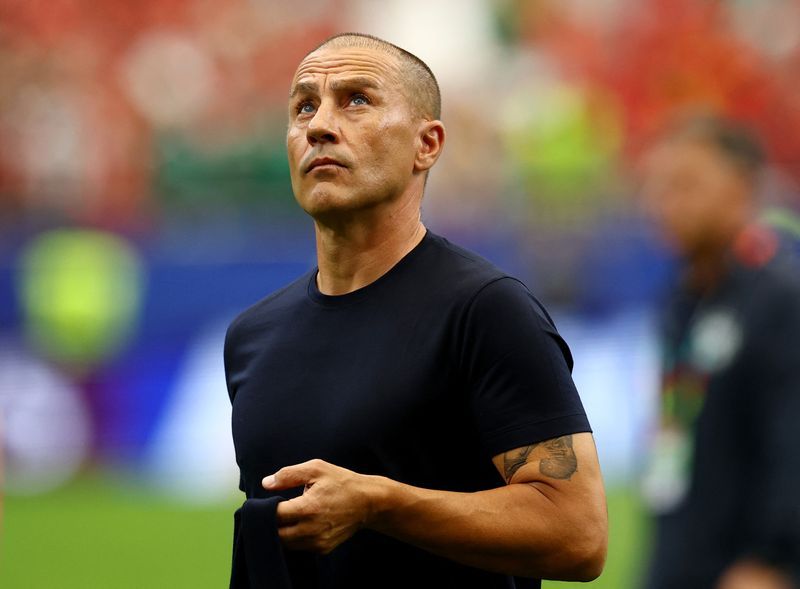
Uzbekistan's maiden World Cup campaign has turned into a painful learning experience following their emphatic 5-0 defeat at the hands of Portugal in Houston on Tuesday. In the aftermath of the match, coach Fabio Cannavaro—the decorated Italian defender who lifted the trophy with his nation in 2006—offered no excuses and instead placed the burden of responsibility squarely on his own shoulders. Speaking to journalists after the Group K encounter, Cannavaro acknowledged that the scale of the loss reflected tactical or strategic shortcomings in his approach, not a lack of effort or commitment from his players.
The Central Asian side now faces an uphill battle to remain in contention for a place in the knockout stages, their tournament trajectory having deteriorated alarmingly over the past week. Following their opening 3-1 loss to Colombia, the Portuguese drubbing leaves Uzbekistan with just one match remaining—a Saturday fixture against the Democratic Republic of Congo—in which a victory becomes essential if they are to harbour any mathematical hope of progressing further. With two heavy defeats already recorded and their goal difference now severely damaged, the path to qualification has narrowed dramatically, yet Cannavaro refused to concede that the dream has ended entirely.
Despite the grim situation, Cannavaro's public statements revealed a coach attempting to extract positives from adversity while acknowledging his own culpability. He reiterated that his players had given maximum effort and deserved credit for their commitment, even as the scoreline painted a picture of overwhelming dominance by the Portuguese. This distinction between player performance and coaching execution allowed Cannavaro to maintain morale while accepting the strategic responsibility that comes with his position. His willingness to shoulder the blame publicly represents a deliberate attempt to shield his squad from external criticism during a tournament in which many teams from less established football nations struggle to maintain psychological equilibrium.
A pivotal moment in the match came when Azizjon Ganiev's seemingly legitimate goal was disallowed for an infringement in the build-up while the score remained at 2-0. This decision, Cannavaro believed, had profoundly demoralised his team at a crucial juncture when they were still very much in the contest. The disallowed strike appeared to puncture Uzbekistan's confidence precisely when they required it most, transforming what might have been a competitive match into a rout. Cannavaro was candid about the impact, suggesting that had the goal stood, his side's psychological disposition might have been sufficiently altered to produce a more resilient defensive performance in the subsequent half hour.
As a former World Cup winner with Italy, Cannavaro brings considerable credibility to his assertion that his young Uzbek squad can mature as a unit through exposure to the competition's most elite teams. His perspective is coloured by decades of experience at the highest level of professional football, where he accumulated wisdom about how international teams develop through adversity. He stressed to his players that mistakes and misplaced passes were inevitable components of growth, and that fear must not paralyse their decision-making. Rather than castigate them for individual errors, he advocated for encouraging a bold, adventurous approach to their football even if mistakes occasionally resulted.
Cannavaro's philosophy regarding his team's tournament participation extends beyond mere results. He framed the Uzbek presence at the World Cup as an invaluable educational experience, one from which the national programme could extract long-term benefit regardless of the immediate elimination that now appears likely. This perspective—treating participation itself as a development opportunity—represents a mature approach to international football management, particularly when dealing with nations relatively new to competing at such exalted levels. The experience gained by his players against world-class opposition would theoretically inform future tournaments and the evolution of Uzbek football over subsequent years.
The coach's refusal to diminish his players' contributions suggests an understanding that maintaining squad morale and confidence becomes critical when facing potential early elimination. By publicly accepting the responsibility for tactical decisions, Cannavaro created space for his players to retain their dignity and self-belief during what could otherwise be a traumatic experience. For young players competing at their first World Cup, the psychological impact of heavy defeats can be lasting; a coach's public support becomes an essential buffer against the corrosive effects of media scrutiny and external judgment.
Central to Cannavaro's message was his repeated insistence that Uzbekistan would continue to believe in the possibility of progression until mathematical elimination became absolute. This was not mere platitude but rather a deliberate attempt to galvanise his team ahead of their final group match. Despite the overwhelming difficulties, he refused to concede the tournament before the final whistle had sounded in their encounter against the Democratic Republic of Congo. The possibility of an unlikely combination of results—a convincing Uzbek victory coupled with unfavourable outcomes elsewhere in the group—retained a sliver of theoretical viability.
For Malaysian football observers, the Uzbek experience offers instructive perspectives on how emerging footballing nations navigate the World Cup stage. Uzbekistan's struggles mirror challenges faced by other Asian teams operating outside the traditional continental powerhouses. The manner in which Cannavaro approached the setback—emphasising learning, maintaining discipline, and building for future campaigns—provides a template for how coaching staff in the region might manage similar circumstances. The tournament exposure, while painful, represents an investment in institutional knowledge and player development that extends well beyond the immediate competition.
Cannavaro's comments also reflect the balancing act required of international coaches managing emerging programmes. They must simultaneously pursue competitive results while building long-term foundations for improvement. His decision to take personal responsibility rather than deflect blame onto refereeing decisions or other external factors demonstrates professionalism and maturity. This approach may ultimately serve Uzbek football better than defensive recriminations, as it establishes a culture of accountability while protecting the squad's development during a formative tournament experience.

