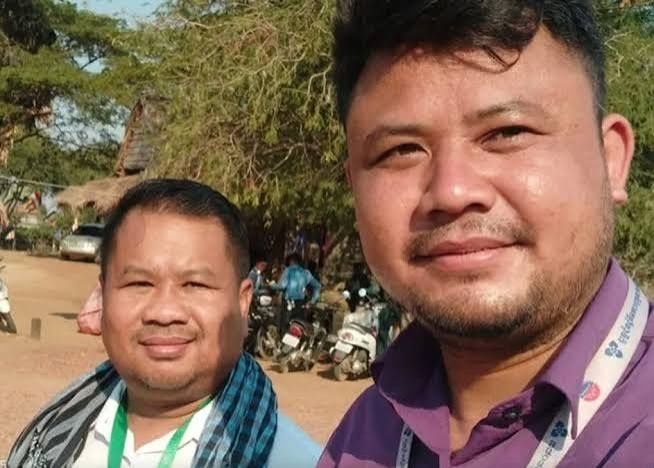
Cambodia's highest court is set to deliver a significant judgment Thursday on the appeal of two journalists whose convictions for treason have drawn intense scrutiny from international press freedom organisations. The Supreme Court ruling on Phorn Sopheap of Battambang Post TV Online and Pheap Pheara of TSP 68 TV Online comes at a critical moment, as questions intensify regarding the independence and impartiality of Cambodia's judicial system under the government of Prime Minister Hun Manet.
The two men were arrested in July following reporting trips to Cambodia's border with Thailand, charged with uploading photographs taken in a restricted military zone to social media platforms without authorisation. Both journalists maintain they had legitimate permission to access the area where they captured the images. In December, a provincial court sentenced each to 14 years imprisonment on charges of supplying foreign powers with information harmful to national defence. A lower appellate court upheld the convictions in March, setting the stage for this week's Supreme Court hearing.
The photographs at the centre of the case proved unusually consequential in bilateral relations. One image depicting land mines circulated widely through Thai news outlets and substantially strengthened Thailand's position that Cambodia had deployed fresh anti-personnel mines along their shared frontier, causing injuries to Thai soldiers conducting border patrols. Cambodia's government flatly denied employing such weapons, asserting adherence to international treaties prohibiting land mines and suggesting that any ordnance discovered likely remained from decades-old conflicts that concluded in the late 1990s. The disagreement over mine deployment became emblematic of deeper tensions between the neighbouring nations.
The border dispute itself proved deadly and destabilising. Armed clashes erupted in both July and December, triggering massive displacement waves affecting hundreds of thousands of civilians across both nations. Casualty figures reached approximately one hundred military and civilian deaths combined. A ceasefire agreed in December has held thus far, though underlying animosities persist and the region remains volatile. The journalists' case became intertwined with this broader security catastrophe, with authorities arguing their reporting directly compromised national interests during an active conflict.
The conviction's significance extends beyond a single border dispute. The case exemplifies what human rights advocates characterise as a systematic pattern of using vaguely worded national security legislation to suppress legitimate journalism and punish critical voices. The Committee to Protect Journalists, based in New York, explicitly accused the Cambodian authorities earlier this year of exploiting broad security laws to criminalise standard reporting practices. More than a dozen domestic and international journalism associations issued coordinated demands that the government withdraw its prosecution after the initial conviction stand.
The Supreme Court's imminent decision arrives amid a broader erosion of judicial credibility. Just days before Thursday's hearing, the same court upheld conviction charges against Rong Chhun, a 56-year-old opposition politician convicted of incitement for meeting with villagers displaced by government-sponsored development projects. That ruling reignited international criticism of Cambodia's legal system, with Human Rights Watch describing the verdict as evidence of judicial capture by the ruling party. Government officials countered such assertions by insisting the Supreme Court operates with complete institutional independence from political influence.
Cambodia's press freedom condition reflects these structural deficiencies in judicial independence. The Paris-headquartered Reporters Without Borders ranked Cambodia 161st among 180 countries in its 2025 World Press Freedom Index, placing the kingdom in the category of nations where press freedom conditions are deemed "very serious." This ranking underscores how substantially Cambodia's media environment has deteriorated relative to international standards, and how severely restrictions constrain journalists' capacity to report without fear of prosecution.
The trajectory of Cambodia's political system since Hun Manet assumed office in August 2023 has disappointed observers hopeful that his American education might usher in democratic reforms. The younger leader inherited an autocratic apparatus constructed over nearly four decades by his predecessor, former Prime Minister Hun Sen, under whose rule Cambodia accumulated extensive documentation of human rights violations including systematic suppression of expression and association rights. Despite transition of power, substantive liberalisation has remained conspicuously absent.
For Malaysia and broader Southeast Asia, the Cambodia case carries instructive weight. It demonstrates how security legislation, ostensibly justified by external threats or border stability, can provide governments with instruments to silence critical journalism and political opposition. The photographers' prosecution also illustrates how information control extends beyond domestic audiences to encompass international perception during regional disputes. Their case serves as a cautionary example of judicial systems subordinated to executive authority, undermining the rule of law foundations essential for stable governance.
The Supreme Court's decision will signal whether Cambodia intends to maintain this restrictive trajectory or demonstrate meaningful commitment to judicial independence through overturning convictions many international observers consider fundamentally unjust. Observers across the region will scrutinise Thursday's ruling as an indicator of whether Hun Manet's administration intends to chart any meaningful departure from his predecessor's governance model. The outcome will substantially affect how Cambodia's government is perceived internationally regarding human rights commitments and judicial fairness, with implications extending across Southeast Asia's broader geopolitical relationships.

