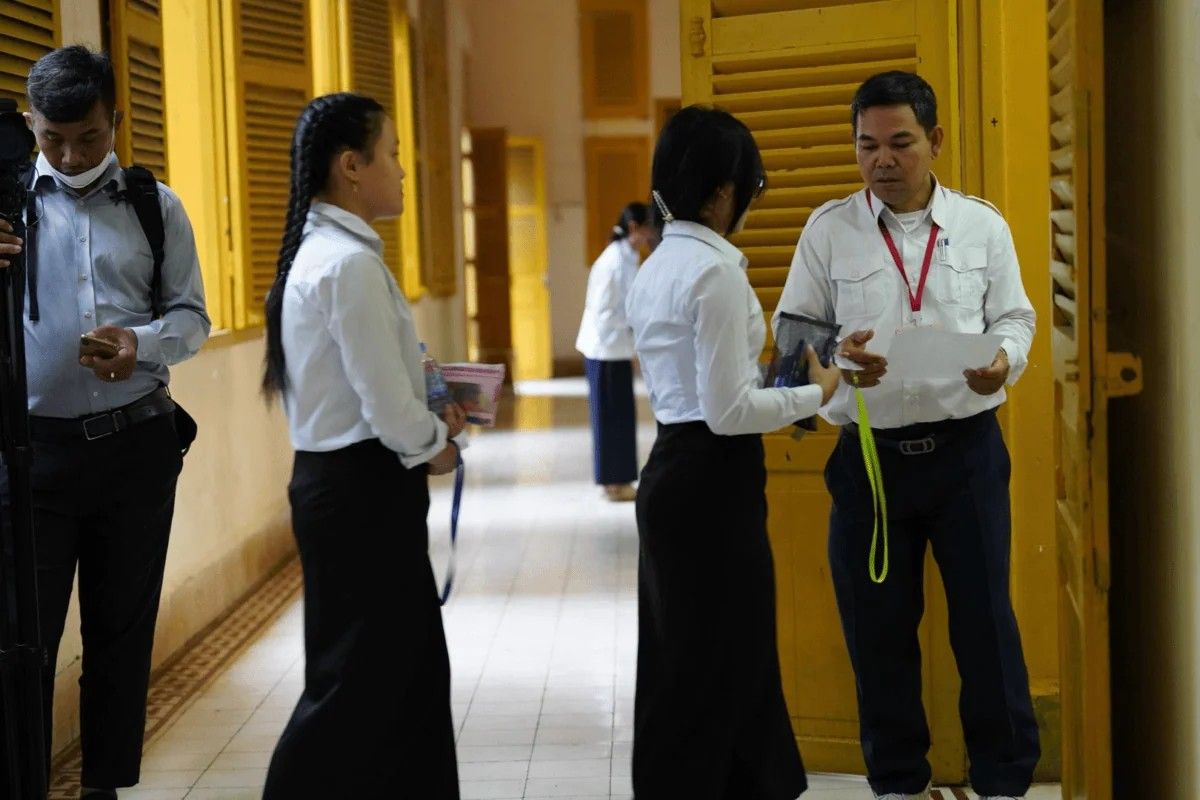
Cambodia's crucial high school graduation examinations commenced on August 10, with the education system attempting to restore normalcy following last year's turbulent circumstances. The examinations represent a significant milestone for the Kingdom's youth, yet the proceedings are shadowed by the persistent reality that nearly two dozen educational institutions remain beyond students' reach due to the occupation of border areas by Thai forces. The Ministry of Education, Youth and Sport acknowledged both the progress and the unresolved challenges facing the nation's pupils as they undertake assessments that will shape their academic futures.
The scale of this year's examination effort is substantial, with examination centres nationwide preparing to accommodate more than 150,000 candidates seeking to complete their secondary education. Among these students, the scientific stream accounts for over 37,000 participants, while the significantly larger social sciences cohort comprises more than 130,000 candidates. This distribution reflects broader educational patterns in Cambodia, where humanities and social science subjects attract substantially larger enrolment numbers than their STEM counterparts, a trend common across Southeast Asia.
Education Minister Hang Chuon Naron drew explicit comparisons between this year's examination period and the considerably more fraught circumstances of 2025, when the Kingdom's students faced assessments while border violence was actively unfolding. Last year's exams took place on August 28, occurring precisely one month after initial armed skirmishes erupted along the Cambodia-Thailand frontier. The temporal proximity of those examinations to the onset of hostilities created extraordinary pressure on students and educators alike, fundamentally altering the environment in which academic assessments occurred.
The minister elaborated on the human cost of those border conflicts, recounting incidents that illustrated the severity of displacement and disruption affecting border communities. In Oddar Meanchey province, where conflict intensity was particularly pronounced, some students were compelled to pursue their education in makeshift circumstances, studying from tractors while their families fled the violence engulfing the region. These extraordinary measures by desperate families underscore how education persists even amid crisis, yet also highlight the profound inequities and hardships imposed upon vulnerable populations caught between rival military forces.
Despite these obstacles, individual stories of resilience emerged from the previous year's examination cycle. The minister highlighted one student who, despite studying under such harrowing conditions, achieved top marks and subsequently secured admission to a prestigious higher education institution. Such narratives, while inspiring, also serve as reminders that academic success amid displacement requires exceptional circumstances and considerable fortune, remaining inaccessible to most students facing similar displacement.
The persistence of school closures represents the most tangible ongoing consequence of the border dispute for Cambodia's education sector. Twenty-five schools across border provinces remain inaccessible to their student populations due to Thai military occupation of those territories. This situation creates a distinct class of disadvantaged students who cannot access their regular educational facilities, exacerbating existing regional disparities in educational opportunity and quality. The closure of these institutions effectively denies thousands of young Cambodians the learning environments and resources available to their counterparts in other regions.
Currently, only one institution has managed to establish a workaround, albeit a partial and temporary one. Banteay Mean Rith Lower Secondary School in Oddar Meanchey has relocated its operations to temporary camps, allowing students from that facility to continue their education outside the closed campus. This arrangement, while better than complete cessation of instruction, remains far from ideal, as temporary facilities typically lack the proper infrastructure, resources, and stability that permanent schools provide. The Royal Government has publicly demanded that Thai forces permit students to return to their regular classrooms, but no resolution to this dispute has materialised.
Concerns about examination integrity, a persistent challenge in Cambodian education administration, receive heightened attention this year. The previous examination cycle was marred by allegations that mathematics papers were leaked before administration, undermining the credibility and fairness of assessments. To prevent recurrence of such breaches, Education Ministry officials have pledged enhanced organisational protocols, stricter enforcement mechanisms, and expanded oversight participation from diverse stakeholder groups. These commitments represent official acknowledgment of past failures and determination to protect the legitimacy of this year's results.
The Anti-Corruption Unit has mobilised substantial monitoring capacity to ensure examination procedures conform to established standards. The agency has deployed more than 4,000 observers across examination centres nationwide, a deployment figure matching last year's observer contingent. This consistent commitment of monitoring resources reflects institutional recognition that external oversight remains necessary to maintain standards and prevent unethical conduct. The presence of such observers aims to deter potential misconduct and provide evidence-based assurance regarding examination administration quality.
For Malaysian and broader Southeast Asian observers, Cambodia's examination challenges illuminate the regional fragility that border disputes can create within national institutions. The interconnection between geopolitical tensions and educational disruption demonstrates how military conflicts extend consequences far beyond immediate combat zones, affecting the life trajectories of tens of thousands of young people. The examination period thus becomes not merely an academic ritual but a barometer of state capacity and resilience during periods of external pressure. Cambodia's determination to proceed with comprehensive examinations despite unresolved border tensions reflects institutional commitment to continuity, yet the persistent closure of 25 schools serves as an uncomfortable reminder that normalcy remains elusive for substantial portions of the student population.

