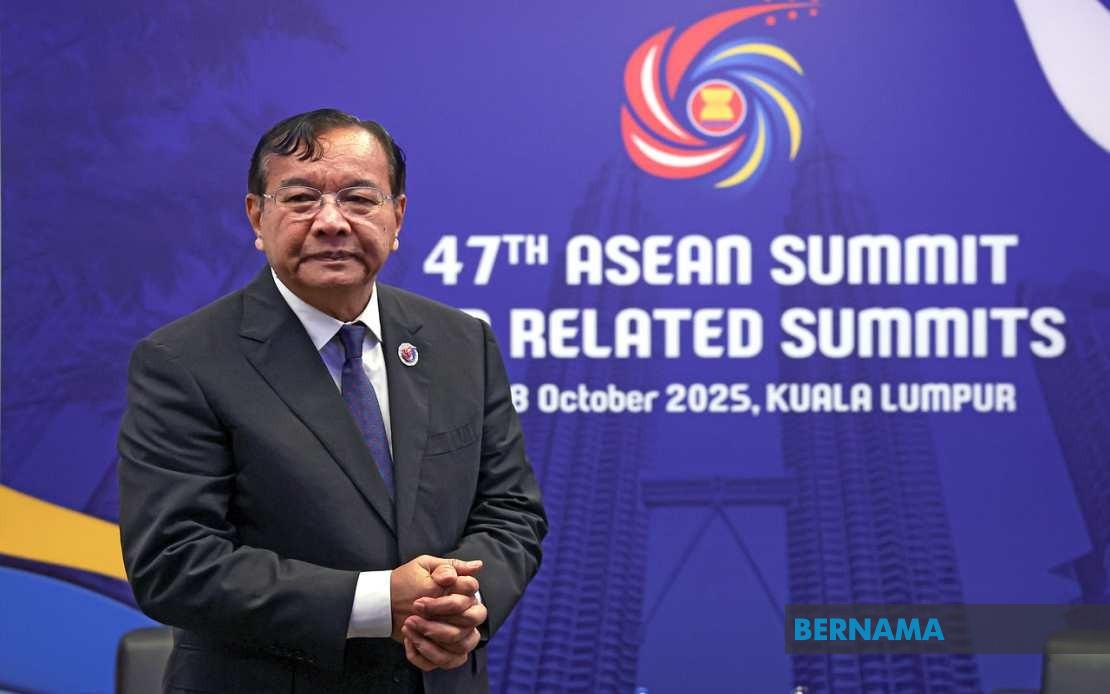
Cambodian Deputy Prime Minister and Minister of Foreign Affairs and International Cooperation Prak Sokhonn has arrived in Malaysia for a two-day official visit, signalling a significant strengthening of ties between the two neighbouring Southeast Asian nations. The visit is particularly noteworthy for its purpose: to co-chair the third Malaysia-Cambodia Joint Commission for Bilateral Cooperation (JCBC) with Malaysian Foreign Minister Datuk Seri Mohamad Hasan, an initiative that has lain dormant for the past 20 years. This resumption represents a deliberate effort by both governments to reinvigorate their partnership and establish a more structured framework for addressing mutual interests and challenges.
The timing of Prak Sokhonn's visit carries symbolic weight, arriving ahead of the 70th anniversary of diplomatic relations between Malaysia and Cambodia in 2027. Wisma Putra, Malaysia's Foreign Ministry, noted that the visit underscores the close and enduring partnership between Kuala Lumpur and Phnom Penh, suggesting that both nations view this moment as a pivotal opportunity to reset and deepen their engagement. Such official visits at the ministerial level typically pave the way for more substantive cooperation across multiple sectors, from trade and investment to security and cultural exchange.
During his stay, Prak Sokhonn is scheduled to meet with Prime Minister Datuk Seri Anwar Ibrahim, where the two leaders are expected to reaffirm their commitment to bilateral ties and discuss issues of shared concern. These courtesies between heads of government and senior ministers serve to establish personal rapport and political will necessary for advancing more ambitious cooperation frameworks. The courtesy call on the Prime Minister before the formal JCBC meeting indicates the importance Malaysia places on this engagement and the high political level at which the relationship is being managed.
The third JCBC meeting itself will take place on Tuesday in Kuala Lumpur, ending a two-decade gap since the second such meeting convened in Siem Reap in 2006. This 20-year hiatus suggests that bilateral mechanisms had been allowed to atrophy, despite the underlying economic and strategic interests both countries share. The decision to resurrect the JCBC reflects a renewed momentum in relations and a shared commitment to placing bilateral cooperation on a more predictable and institutionalised footing, something increasingly important in Southeast Asia's competitive geopolitical environment.
At the conclusion of the JCBC meeting, both foreign ministers are expected to sign the Agreed Minutes of the third JCBC, a formal document that will outline the substantive outcomes of their discussions and reaffirm each nation's commitment to advancing cooperation. Such agreements typically establish working groups, timelines for future initiatives, and specific areas of focus—whether trade facilitation, labour mobility, tourism development, or security cooperation. The signing of these minutes transforms informal dialogue into actionable commitments with designated responsibilities and benchmarks.
The economic relationship between Malaysia and Cambodia has shown considerable dynamism, providing concrete reasons for deepening ties. In 2025, bilateral trade surged by 27.4 per cent year-on-year, reaching RM5 billion (US$1.17 billion), a figure that reflects both the complementarity of their economies and growing consumer and business-to-business demand. Malaysian exports to Cambodia totalled RM4.13 billion (US$970 million), while imports from Cambodia reached RM880 million (US$200 million), indicating that the relationship is not merely about Malaysia supplying Cambodia but involves substantial Cambodian products entering Malaysian markets as well.
Beyond trade flows, Malaysia's investment position in Cambodia is substantial and growing. As of 2024, Malaysia's cumulative foreign direct investment in Cambodia stood at US$3.20 billion (RM13.07 billion) spread across 162 registered projects, making Malaysia the third-largest foreign investor in Cambodia after China and Vietnam. This investment base creates a significant Malaysian business constituency with direct stakes in Cambodia's political stability and economic health, further cementing the practical foundations for closer government-to-government cooperation. Malaysian companies operate across diverse sectors in Cambodia, from manufacturing to services, and depend on stable bilateral relations for their operations and expansion plans.
For Malaysian policymakers, renewed engagement with Cambodia addresses a strategic imperative within the broader Southeast Asian context. Cambodia's location along major trade routes, its role within the Association of Southeast Asian Nations (ASEAN), and its relationship with major powers make it a key player in regional affairs. Strengthening ties with Phnom Penh allows Malaysia to exercise greater influence over regional issues and to ensure that Cambodian policy aligns with Malaysian interests on matters ranging from maritime security to the South China Sea disputes to migration and labour issues that affect Malaysian employers and communities.
The resumption of the JCBC after such a prolonged absence also reflects broader regional trends toward deepening ASEAN integration and intra-regional cooperation. As member states face shared challenges—from climate change and pandemic preparedness to managing great power competition—bilateral mechanisms like the JCBC serve as platforms for coordinating responses. For Malaysia and Cambodia specifically, these mechanisms can address transnational issues such as human trafficking, irregular migration, environmental degradation along shared waterways, and maritime security in the Gulf of Thailand.
Looking ahead to 2027 and beyond, this visit may mark the beginning of a more active phase in Malaysia-Cambodia relations. The momentum generated by resuming the JCBC could lead to additional ministerial visits, expanded people-to-people exchanges, enhanced cultural and educational cooperation, and more ambitious joint initiatives. Both nations have incentives to build on this foundation, whether through facilitating investments, streamlining visa procedures for business travellers, or coordinating positions within ASEAN forums.
The significance of Prak Sokhonn's visit extends beyond bilateral considerations to reflect the evolving architecture of Southeast Asian diplomacy. In an era where geopolitical competition is intensifying and regional stability is under strain, bilateral relationships like that between Malaysia and Cambodia provide stability and predictability. The formal resumption of the JCBC signals that both governments recognise the value of institutionalised engagement and are committed to managing their relationship through structured dialogue rather than allowing it to drift. This approach, if sustained over the coming years, could serve as a model for other pairs of ASEAN members seeking to deepen cooperation in an increasingly complex regional environment.

