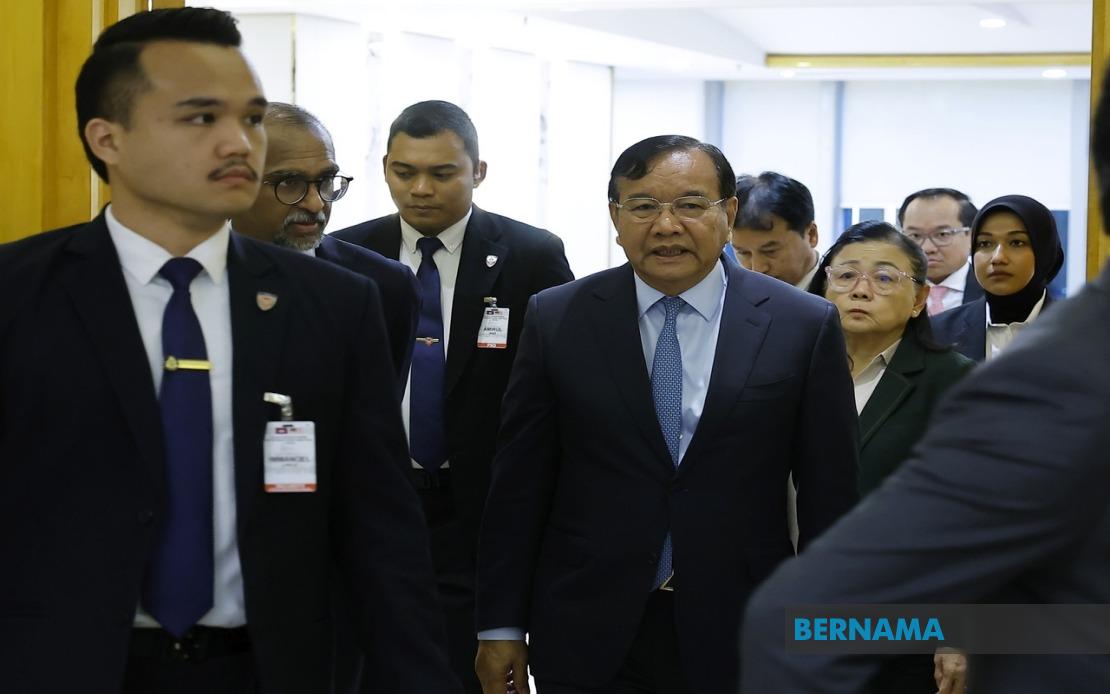
Cambodian Deputy Prime Minister and Foreign Minister Prak Sokhonn departed Malaysia on August 4, concluding a strategically significant two-day visit that underscored the depth of bilateral engagement between Phnom Penh and Kuala Lumpur. Sokhonn and his accompanying delegation left Kuala Lumpur International Airport Terminal 1 at 4:45 pm, boarding a commercial flight back to Phnom Penh. Malaysia's chief ceremony officer Datuk Rozainor Ramli attended the departure to formally bid farewell, reflecting the protocol importance the Malaysian Government places on this neighbouring nation's leadership.
The visit arrived at a particularly symbolic juncture for both countries. Sokhonn's arrival on Monday was timed to coincide with preliminary discussions and planning for the 70th anniversary celebration of Malaysia-Cambodia diplomatic relations, scheduled for 2027. This milestone presents an opportunity for both governments to consolidate gains made over seven decades and chart fresh directions for their partnership. The emphasis on forward-looking collaboration suggests that both capitals view this period as crucial for deepening institutional ties and establishing frameworks that will sustain bilateral relations well into the future.
The centrepiece of Sokhonn's visit was his courtesy call on Malaysian Prime Minister Datuk Seri Anwar Ibrahim at the Prime Minister's Office. During this high-level meeting, both leaders reaffirmed their commitment to the historical relationship between Malaysia and Cambodia, a partnership that has weathered regional shifts and global transitions. Beyond ceremonial affirmations, the two premiers engaged in substantive discussions about broadening strategic cooperation across multiple sectors. The agenda touched upon the digital economy and artificial intelligence—growth areas where both nations see opportunity for mutual advancement. Food security and human capital development, two pressing concerns for Southeast Asian policymakers grappling with climate volatility and demographic change, also featured prominently in their talks. The inclusion of the halal industry signals Malaysia's interest in leveraging its expertise and certification frameworks in a market where there is growing commercial interest.
A landmark achievement emerged from Sokhonn's tenure in Malaysia: the co-chairing of the 3rd Malaysia-Cambodia Joint Commission for Bilateral Cooperation Meeting alongside Malaysian Foreign Minister Datuk Seri Mohamad Hasan. This commission mechanism, which had lapsed for two decades, now represents a formal return to structured bilateral engagement at the ministerial level. The 20-year hiatus underscores how regional dynamics and competing priorities can strain even longstanding partnerships, yet its revival demonstrates both governments' determination to reinvigorate institutional dialogue. Such joint commissions typically serve as platforms for negotiating trade agreements, harmonising standards, resolving disputes, and coordinating positions on regional issues. The resumption of this mechanism is therefore far more consequential than protocol niceties might suggest.
The economic dimension of Malaysia-Cambodia relations has shown remarkable vigour, particularly in recent years. Bilateral trade in 2025 achieved striking growth, expanding 27.4 per cent year-on-year to reach RM5 billion, equivalent to approximately USD1.17 billion. This figure represents a dramatic acceleration in commercial ties, indicating strong demand for each country's exports and deepening supply chain integration. Malaysian exports to Cambodia amounted to RM4.13 billion, or roughly USD970 million, highlighting the significant market penetration Malaysian businesses have achieved in Cambodia. Conversely, Cambodian exports to Malaysia totalled RM880 million (USD200 million), reflecting the complementary nature of their economies and the substantial imbalance tilted toward Malaysian suppliers. Understanding this asymmetry is important for Malaysian readers evaluating where opportunities lie for Cambodian producers seeking greater market access.
Beyond trade flows, Malaysia's investment footprint in Cambodia has matured into a substantial presence. As of 2024, Malaysia's cumulative foreign direct investment in Cambodia reached USD3.20 billion, equivalent to RM13.07 billion, distributed across 162 registered projects. This places Malaysia as the third-largest foreign investor in Cambodia, a position earned through decades of business confidence and institutional stability. Malaysian companies operate across diverse sectors—manufacturing, services, real estate, and agriculture—giving Malaysian investors considerable leverage in shaping Cambodia's economic trajectory. For Southeast Asian business observers, this investment concentration indicates that Malaysian enterprises have successfully navigated Cambodia's regulatory environment and identified durable commercial opportunities. The scale of these investments creates powerful stakeholder interests within Malaysia's business community in maintaining stable, predictable relations with Phnom Penh.
The timing of this visit also carries broader regional implications. As ASEAN members, Malaysia and Cambodia both navigate complex geopolitical currents, from great power competition to transnational challenges such as pandemic preparedness and climate change. Bilateral cooperation serves as a foundation for coordinated ASEAN positioning on contentious regional issues. Cambodia's recent presidency of ASEAN, combined with Malaysia's permanent seat at the table, means that strengthened bilateral ties can amplify ASEAN's collective voice. The emphasis during Sokhonn's visit on cooperation in digital economy and artificial intelligence reflects the shared recognition that technological advancement will determine competitive advantage in coming decades. Neither Cambodia nor Malaysia can afford to lag in these domains if they wish to maintain relevance in a rapidly evolving global economy.
For Malaysian readers and policymakers, several implications emerge from this visit's trajectory. First, the revival of structured bilateral mechanisms signals confidence in Cambodia's institutional capacity and stability after years of political flux. Second, the growth in bilateral trade and Malaysia's substantial investment stake mean that Malaysian prosperity is increasingly intertwined with Cambodia's economic performance. Third, the focus on emerging sectors like artificial intelligence and the digital economy suggests that both governments are preparing their respective economies for technological disruption and seeking complementarities rather than competition. Finally, the explicit nod toward deepening cooperation on halal industry and food security acknowledges Malaysia's distinctive competencies—areas where Malaysian firms and expertise command respect regionally.
The departure of Sokhonn from KLIA marks not a conclusion but rather a transition point in an ongoing relationship. The visit has established political momentum, revived institutional channels, and anchored cooperation in forward-looking sectors. The question now becomes implementation: whether the commitments made during high-level visits translate into sustained bureaucratic engagement, binding agreements, and measurable commercial outcomes. The next test will emerge as the 70th anniversary of diplomatic relations approaches, an occasion that both governments will likely use to announce new initiatives and deepen institutional integration across government, business, and civil society sectors.

