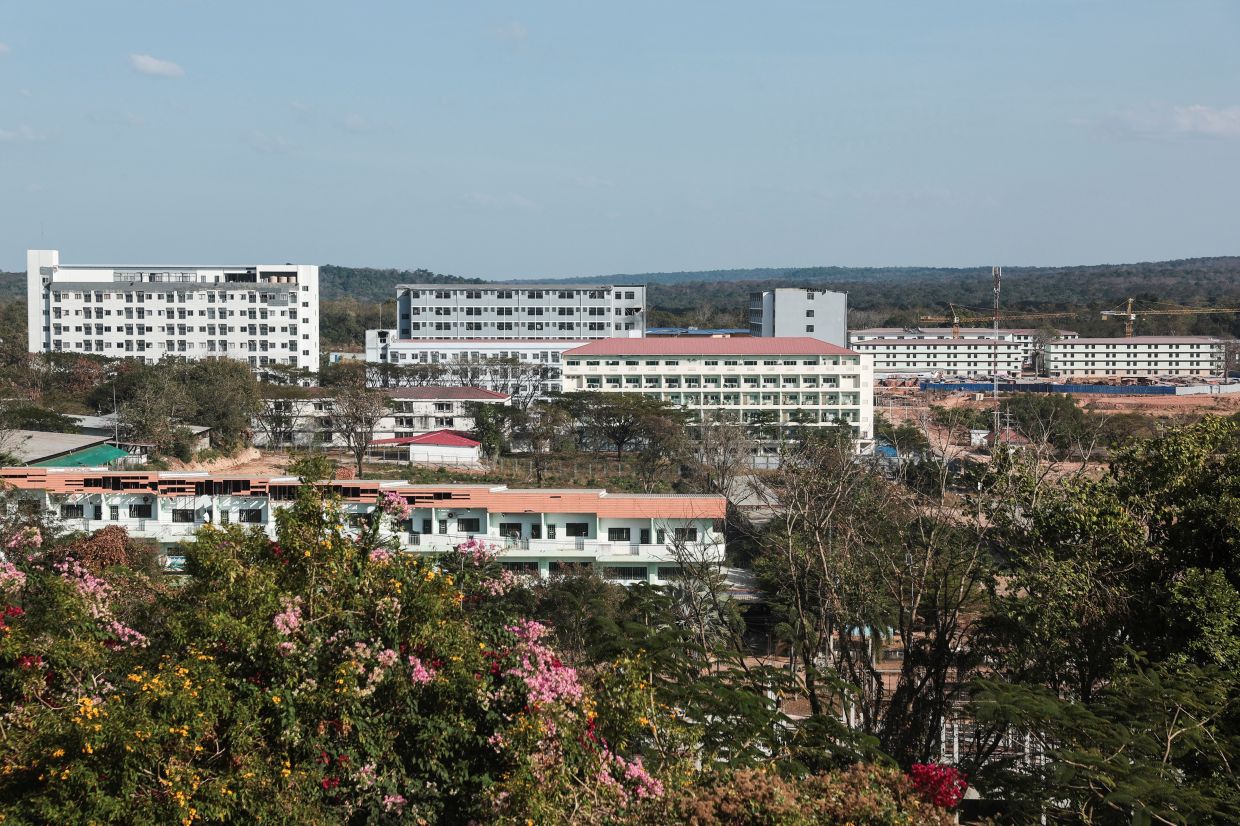
A sprawling gambling compound controlled by one of Cambodia's most connected businessmen served as a landlord to criminal networks orchestrating massive international fraud and human trafficking schemes, according to a Reuters investigation that has significant implications for how Southeast Asia addresses organised crime and regulatory oversight of the gaming industry. The Royal Hill casino, situated metres from the Thai border, leased buildings within its compound at substantially above-market rates to operators who transformed rooms into fake police stations and bank offices designed to deceive victims worldwide through impersonation scams, according to documents reviewed by Reuters and testimony from Thai military officials and former workers at the facility.
The discovery underscores how Cambodia's casino sector has become intertwined with transnational criminal networks, particularly those operating romance scams and police impersonation fraud targeting wealthy individuals across North America, Europe, and other developed economies. The compound's owner, Lim Heng, is a prominent figure with deep political connections, photographed regularly at gatherings with senior military generals, holding a royal title equivalent to a duke, and having donated US$20,000 to Cambodia's military last year. Yet despite his prominence and ties to the state apparatus, no evidence has emerged of any consequences for his business entity's role as landlord to these criminal operations.
The rental arrangement itself provides a crucial window into how scam operations function within Cambodia's permissive environment. A lease dated March 2024, reviewed by Reuters, shows Royal Hill agreed to rent three buildings within its casino compound to a Chinese national for US$200,000 monthly over two years. This figure is extraordinarily inflated compared to legitimate commercial property rates in the region—a comparable mixed-use building in an upscale Phnom Penh neighbourhood was advertised for just US$25,000 monthly in the same period. The disparity suggests that the premium paid reflected the strategic location, protection from law enforcement interference, and proximity to the casino's operational infrastructure and security apparatus.
The structures housed rooms meticulously designed to impersonate official institutions from multiple countries, creating the deceptive backdrops necessary for executing sophisticated fraud campaigns at scale. These fake offices were not amateurish operations but rather professional setups designed to convince victims they were interacting with legitimate financial institutions or law enforcement agencies. Such elaborate infrastructure requires not merely physical space but also reliable electricity, telecommunications connectivity, security protection, and freedom from unexpected law enforcement raids—precisely the guarantees a casino compound controlled by a well-connected businessman could provide.
The involvement of Cambodian casino owners in scam operations is not an isolated anomaly but rather part of a systemic pattern documented by international human rights organisations. Amnesty International's investigation, based on Cambodia's gambling regulator records and witness testimony, identified at least a dozen scam centres operated directly by casino proprietors, though Reuters has not independently verified these figures. The convergence of casino ownership and fraud operations reflects a fundamental characteristic of the sector: casinos provide ideal money-laundering vehicles through which illicit proceeds from cybercrime can be cleansed and moved through legitimate gaming revenues.
The broader context reveals why Southeast Asia has become the epicentre of industrial-scale cybercrime. Criminal syndicates, predominantly Chinese-led operations, maintain detention facilities where trafficking victims are coerced into perpetrating fraud against targets worldwide. The US government estimated Americans alone lost US$10 billion to regional fraudsters in 2024, yet actual global losses likely far exceed this figure. Jason Tower of the Global Initiative against Transnational Organized Crime notes that many Chinese-affiliated scam syndicate operators maintain direct ownership stakes in casino operations, creating an integrated criminal ecosystem where gaming establishments simultaneously launder proceeds and provide operational cover.
Lim Heng Group itself appears to have received notice of trafficking concerns at Royal Hill by September 2024, when its representatives filed legal complaints against two Cambodian media outlets that had reported on foreign nationals being confined at the casino compound. The summonses, dated September 16 and filed under incitement to discrimination statutes, did not specify which claims in the articles the company found objectionable. One publisher, Penn Nuon, confirmed the complaint existed and stated his reporting was accurate, yet subsequently removed the article after taking legal advice. This pattern—legal intimidation leading to self-censorship—represents a common mechanism through which politically connected businesses suppress reporting on criminal activities within their operations.
Cambodian legal experts emphasise that landlords of scam compounds can face prosecution if investigations establish they knew about criminal use of their properties and permitted operations to continue. The complaint filed in September 2024 suggests Lim Heng Group had knowledge of at least trafficking allegations, if not wider fraud activities, yet took no apparent action to terminate rental arrangements or cooperate with authorities. Royal Hill casino itself declined to respond to multiple attempts at contact, including registered post containing detailed questions about cybercriminal activities at the property. This pattern of non-responsiveness, combined with the documented legal threats against media outlets, suggests deliberate avoidance of accountability rather than innocent ignorance.
The Cambodian government's public response reveals the extent to which elite political protection shields major casino operators from consequences. Despite worldwide media coverage of fake police stations and bank offices discovered at Royal Hill, and despite possession of detailed evidence by Thai authorities, Cambodia has repeatedly described the facility merely as a hotel. This sustained mischaracterisation, maintained even as photographic evidence circulated globally, indicates either deliberate deception or institutional unwillingness to acknowledge casino-criminal nexus realities. The kingdom has committed rhetorically to eradicating scam centres and has extradited alleged kingpin Chen Zhi to China while passing legislation targeting scammers, yet these headline-generating actions have not addressed the core problem of politically connected owners providing operational infrastructure.
Thailand's military occupation of the Royal Hill site following border conflict in December 2024 has provided international investigators unusual access to physical evidence, yet this remains a temporary circumstance dependent on continued military control. The Thai military conducted bombings that destroyed portions of the facility during what Thailand characterised as necessary military action against Cambodian forces allegedly using casino buildings for drone and sniper positions. However, regardless of the military rationale, the occupation has enabled documentation of scam operations that would likely have been concealed under normal circumstances. Cambodian minister Chhay Sinarith, tasked with combating online fraud, responded to Reuters' questions by requesting that Thai security forces return seized locations to facilitate Cambodian investigations, yet this request reflects institutional protocols rather than demonstrated commitment to prosecuting politically connected casino owners.
For Malaysian readers and Southeast Asian observers more broadly, the Royal Hill case illustrates how governance failures in individual jurisdictions create regional security challenges that transcend borders. The existence of industrial-scale scam operations targeting Malaysian citizens, other ASEAN nationals, and individuals globally depends on the maintenance of permissive environments where politically connected businesspeople can provide operational infrastructure with impunity. Addressing this requires not merely law enforcement operations or border security measures, but rather international pressure to dismantle the economic relationships through which casino ownership and criminal operations become mutually reinforcing. Without confronting the elite protection mechanisms that shield figures like Lim Heng from consequences for housing transnational crime, Southeast Asian governments will continue hosting the infrastructure through which millions worldwide lose billions to sophisticated fraud.
The investigation also raises uncomfortable questions about the adequacy of current regulatory frameworks governing casino operations across Southeast Asia. If Cambodian gambling regulators possessed records identifying which casino owners operated scam centres, as suggested by the Amnesty International investigation's methodology, then the question becomes why regulatory action has not followed. Whether through corruption, political capture, or institutional weakness, casino regulatory bodies throughout the region have failed to enforce basic standards preventing operator involvement in trafficking and fraud. Malaysian regulators and those in other ASEAN nations would benefit from examining whether similar vulnerabilities exist within their own gaming sectors, and whether current oversight mechanisms could be exploited by criminal networks in comparable ways.

