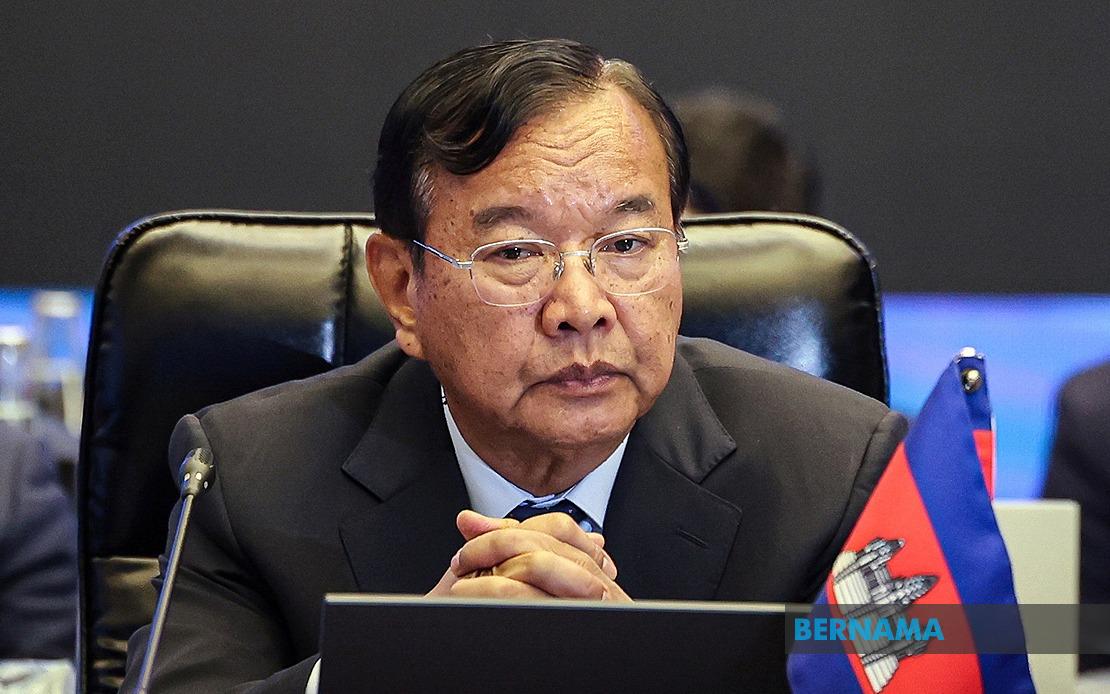
Cambodia's Deputy Prime Minister and Foreign Minister Prak Sokhonn will arrive in Malaysia next week for a significant bilateral visit aimed at strengthening the partnership between the two Southeast Asian nations. The three-day mission, beginning August 3, marks an important moment in Cambodia-Malaysia relations as officials from both countries prepare to conduct a comprehensive review of their ongoing cooperation frameworks and chart new directions for deepening ties.
The centrepiece of Sokhonn's visit will be the 3rd Meeting of the Cambodia-Malaysia Joint Commission for Bilateral Cooperation in Kuala Lumpur, a formal mechanism that serves as the primary platform for reviewing and advancing shared interests between Phnom Penh and Kuala Lumpur. This triennial gathering provides an opportunity for senior officials to assess progress made since the previous commission meeting and to evaluate the implementation of agreements already concluded between the two governments.
According to Cambodia's Ministry of Foreign Affairs and International Cooperation, the upcoming JCBC session will conduct a thorough assessment of how both nations have executed the agreed minutes from their second meeting, as well as reviewing the status of various bilateral accords signed in previous years. This comprehensive audit of existing commitments ensures accountability and identifies areas where cooperation has flourished or where adjustments may be needed to maximise mutual benefits.
Beyond merely reviewing past accomplishments, the commission is expected to serve as a springboard for proposing fresh initiatives and concrete mechanisms to expand cooperation across multiple sectors of mutual interest. The two nations share interests in trade, investment, regional security, cultural exchange, and infrastructure development—sectors where enhanced collaboration could yield tangible benefits for both populations. Cambodia's ministry statement emphasised that the meeting would "outline concrete measures to deepen and broaden cooperation across multiple sectors," signalling a forward-looking agenda rather than a retrospective exercise.
The timing of this visit reflects broader dynamics in Southeast Asian diplomacy, where ASEAN member states continue to strengthen bilateral relationships to reinforce the regional architecture. Malaysia, as a major economic power in ASEAN with significant influence in regional affairs, holds particular importance for Cambodia's foreign policy objectives. Similarly, Cambodia's strategic location and growing role in regional initiatives make it a valuable partner for Malaysian policymakers seeking to expand influence across the Mekong subregion.
During his stay, Sokhonn has scheduled bilateral meetings with Malaysian Foreign Minister Datuk Seri Mohamad Hasan, reflecting the customary protocol for such high-level visits and enabling direct dialogue between the two nations' chief foreign policy architects. These tête-à-tête sessions typically address sensitive matters that benefit from personal discussion and allow both ministers to communicate priorities that might not be fully captured in formal commission proceedings. The Foreign Ministry engagement ensures that political dimensions of the relationship—including regional security concerns and ASEAN coordination—receive appropriate attention.
A courtesy call on Malaysian Prime Minister Datuk Seri Anwar Ibrahim represents another significant element of the visit's political architecture. While such protocol visits are routine in diplomatic practice, they carry symbolic weight in demonstrating respect and elevating the profile of bilateral discussions to the highest governmental level. This gesture also provides Sokhonn with an opportunity to communicate Cambodia's perspectives directly to Malaysia's chief executive and to underscore the importance Phnom Penh places on the relationship with its neighbouring nation.
The diplomatic emphasis on injecting "fresh momentum" into Cambodia-Malaysia relations suggests that officials from both countries recognise untapped potential in their partnership. Despite geographic proximity and shared ASEAN membership, bilateral relations sometimes receive less attention than ties with larger regional powers or more economically developed neighbours. This visit appears designed to correct that imbalance by elevating the profile of Cambodia-Malaysia cooperation and signalling to both governments and business communities that deepening engagement offers mutual advantages.
For Malaysia, strengthening ties with Cambodia aligns with broader strategic objectives of maintaining stability and prosperity throughout the region. Cambodia's role as a bridge between ASEAN's mainland and maritime components, combined with its growing economic importance as a manufacturing hub and its relevance to regional supply chain networks, makes it strategically significant. Enhanced cooperation on trade facilitation, investment promotion, and infrastructure connectivity could generate economic benefits for Malaysian companies seeking expansion opportunities in Southeast Asia.
For Cambodia, the Malaysian relationship carries distinct value given Malaysia's economic development, technological sophistication, and influence within ASEAN and among major powers. Malaysian investment, expertise, and diplomatic support have contributed meaningfully to Cambodia's development trajectory, and strengthening these bonds could accelerate progress on Cambodia's own development agenda. Furthermore, closer coordination with Malaysia enhances Cambodia's influence within ASEAN councils and enables both nations to address regional challenges more effectively through collaborative approaches.
The multisectoral approach envisioned for the JCBC meeting reflects contemporary understanding that bilateral relations must extend beyond traditional diplomatic and security domains to encompass economic integration, people-to-people exchange, environmental cooperation, and other transnational issues. This holistic framework acknowledges that prosperity and stability are interconnected with cooperation across numerous dimensions of national life, and that sustainable partnerships require progress across multiple fronts simultaneously.
As both nations prepare for Sokhonn's arrival, stakeholders in Malaysia will watch closely for any announcements regarding new initiatives, investment commitments, or cooperative frameworks emerging from the talks. The outcomes of the JCBC meeting and bilateral discussions may influence investment decisions by Malaysian companies eyeing Cambodian opportunities and could shape government policies affecting cross-border commerce, labour migration, and other practical matters affecting ordinary citizens of both nations. The visit thus carries implications extending far beyond diplomatic ceremony into the economic and social fabric connecting the two countries.

