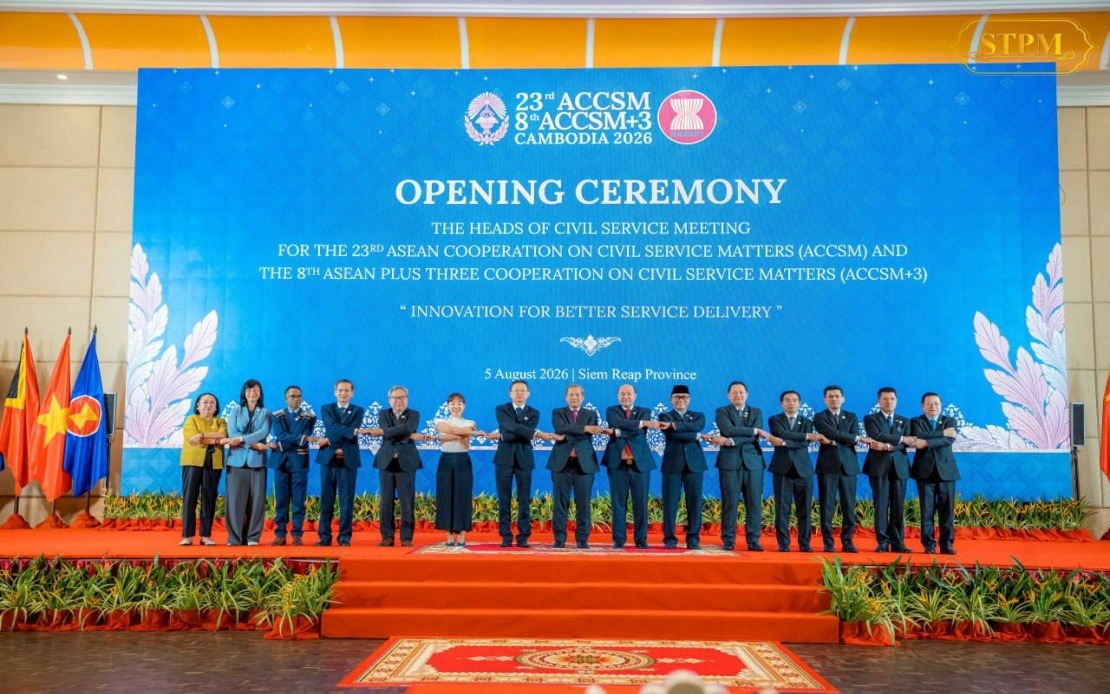
Cambodia is championing a people-centred approach to artificial intelligence and digital innovation within ASEAN, with Prime Minister Hun Manet arguing that the region's modernisation efforts must serve genuine citizen needs rather than pursuing technology for its own sake. Speaking at the 23rd ASEAN Cooperation on Civil Service Matters conference held in Siem Reap from August 3 to 5, Hun Manet articulated a vision for technological adoption that acknowledges the vast differences in development across the ten-member bloc while maintaining a commitment to inclusive growth and shared prosperity.
The Cambodian leader's intervention arrives at a pivotal moment when ASEAN governments are increasingly investing in AI and digital infrastructure to streamline administrative functions and enhance public service delivery. However, Hun Manet's emphasis on institutional foundations and human resource development suggests caution against a rush to implement complex systems without adequate preparation. His framing positions the conference, held under the theme "Innovation for Better Service Delivery", as an opportunity to pause and reset expectations about what effective modernisation actually requires in practical terms.
Hun Manet stressed that successful innovation cannot be separated from the capacity of institutions and their workforces to manage, maintain and adapt these systems over time. This observation holds particular relevance for Southeast Asian nations where civil service training infrastructure and technological expertise remain uneven. By anchoring innovation in human capability rather than merely importing foreign solutions, Cambodia is signalling that lasting transformation requires investment in people before machines.
A central concern running through Hun Manet's remarks is the substantial gap in development levels across ASEAN members. While Singapore, Brunei and Thailand have more mature digital ecosystems, countries including Cambodia, Laos, Myanmar and Timor-Leste face greater constraints. The Cambodian Prime Minister explicitly called for each nation to adopt new technologies, particularly AI, at a pace suited to its circumstances and readiness. This measured approach contrasts with the pressure many developing economies face to rapidly digitise regardless of preparedness, often resulting in expensive systems that remain underutilised or inadequately secured.
Beyond administrative efficiency, Hun Manet connected digital innovation to ASEAN's broader capacity to address transnational challenges that no single nation can solve alone. Climate-related disasters, uneven economic development and persistent poverty represent systemic problems requiring coordinated responses. Innovation in this context becomes a tool for building collective regional resilience rather than simply modernising individual government departments. This framing elevates the conference discussion from technical implementation details to strategic questions about ASEAN's role in managing shared regional futures.
The emphasis on knowledge-sharing and mutual support through forums like the ASEAN Cooperation on Civil Service Matters reflects recognition that the region possesses valuable experiences to exchange. Rather than adopting standardised AI solutions designed for wealthy Western markets, ASEAN nations can learn from peers navigating similar constraints and opportunities. Malaysia's experience with digital government initiatives, Thailand's fintech developments and Vietnam's technology ecosystem offer practical lessons beyond what international consultants typically provide.
For Malaysia specifically, Hun Manet's message carries implications for how the country positions itself within ASEAN's digital transformation. As a more developed economy with stronger technological capacity, Malaysia could play a leadership role in supporting less advanced neighbours through knowledge transfer and capacity building. Simultaneously, Malaysian policymakers might benefit from Cambodia's reminder that sustainable innovation requires matching technological ambition with institutional reality—a balance that developing nations often navigate more carefully than their wealthier counterparts.
The conference venue of Siem Reap, Cambodia's cultural heartland, symbolically grounds this discussion in developing-world realities rather than the gleaming technology hubs where such conversations often occur. Hun Manet's insistence that innovation must address citizens' actual needs—healthcare access, education quality, economic opportunity—rather than following a predetermined technological roadmap reflects the priorities of ordinary people across the region who expect government services to work reliably regardless of underlying infrastructure sophistication.
The call for ACCSM to function as a platform for harmonising policies and building shared capacity suggests that ASEAN sees civil service modernisation as a collective endeavour requiring coordination. This approach differs markedly from the competitive, market-driven technology adoption patterns dominant in developed nations. By positioning innovation as something requiring regional consensus and mutual support, ASEAN potentially creates space for more equitable development pathways than would emerge from purely bilateral technology partnerships or commercial vendor competition.
Looking ahead, Hun Manet's framing sets expectations for how ASEAN should evaluate digital transformation success. Rather than measuring progress purely through technology deployment metrics—number of systems implemented, data processed, transactions digitalised—the region might instead assess whether innovations genuinely improved citizens' experience of government, expanded access to services, and strengthened institutions' ability to serve their populations. This outcome-focused perspective demands more rigorous evaluation than typical technology adoption narratives provide.
The Cambodian initiative also acknowledges that AI and digital innovation carry risks alongside opportunities. Without careful institutional frameworks, these technologies could concentrate power, exclude vulnerable populations, or entrench existing inequalities. By emphasising people-centred approaches and inclusive innovation strategies, Hun Manet implicitly warns against allowing AI deployment to proceed without democratic safeguards and social consideration. This concern resonates particularly in Southeast Asia, where governance capacity varies considerably and technology's regulatory frameworks remain underdeveloped.
The broader regional context matters here too. ASEAN's stated commitment to the ASEAN Digital Master Plan and various digital economy initiatives suggests ambition, but implementation challenges have proven substantial. Hun Manet's emphasis on building institutional capacity and human resources suggests recognition that policy documents and technology investments alone prove insufficient without matching investment in developing the people who operate, manage and benefit from these systems. This perspective could help reset regional expectations about what genuine digital transformation actually entails.

