Cambodia is charting an ambitious economic course away from its decades-long dependence on garment manufacturing, launching a concerted investment drive targeting South Korean companies in automotive components, electric vehicle systems, and healthcare technology. The initiative took tangible shape during Deputy Prime Minister Sun Chanthol's high-profile mission to South Korea in June, where he led a delegation on an intensive roadshow in Incheon featuring company visits and formal pitches to major conglomerates already operating or considering expansion in the Southeast Asian nation.
The timing of Cambodia's pivot reflects a critical juncture for the regional economy. The garment sector, which has anchored Cambodia's manufacturing base and employment for three decades, faces mounting pressure from rising labour costs, geopolitical uncertainties in global supply chains, and the accelerating shift toward automation. Rather than compete on low costs alone, Cambodian policymakers now recognise that economic sustainability requires moving into higher-value production requiring greater technical sophistication, stronger integration into regional supply networks, and deeper technology transfer from foreign investors.
During the 2026 Incheon-Cambodia Investment Roadshow, Chanthol emphasised the Royal Government's commitment to facilitating Korean investment across multiple sectors. His message resonated with concrete examples of existing Korean presence. Daejoo KC Group, a diversified conglomerate with operations spanning metallurgy, chemicals, construction, automotive components and energy, already operates two subsidiaries in Cambodia. Camko Motor assembles Hyundai vehicles for domestic consumption and manufactures automotive wire harnesses for export, generating approximately 500 jobs and demonstrating the employment multiplier effects Cambodia seeks to replicate.
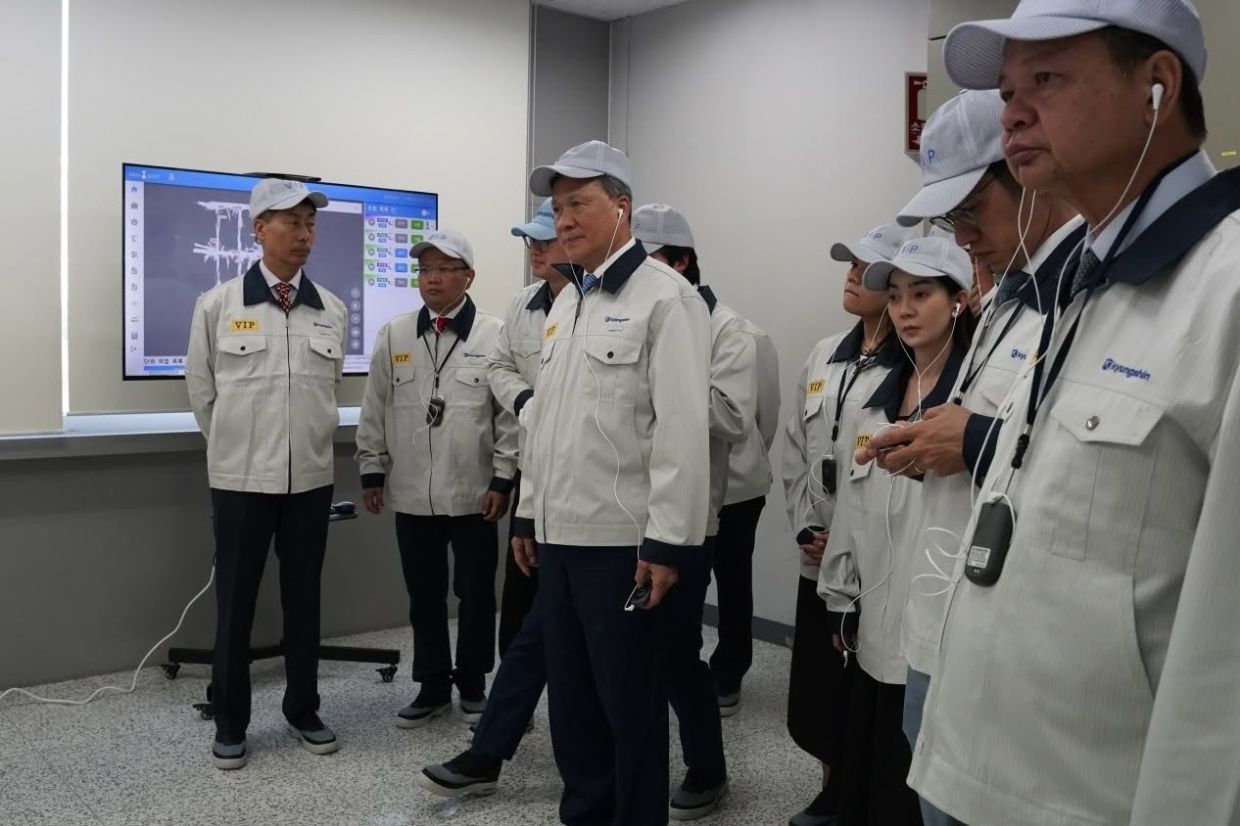
The selection of Kyungshin Co., Ltd., as a focal point of the delegation's visit underscores Cambodia's strategic ambitions in emerging sectors. Founded in 1974, Kyungshin has evolved into a leading manufacturer of automotive electronic components, wiring harnesses, connectors and electrical systems specifically engineered for electric vehicles. The company's existing Cambodian operations, established since 2012 in Kandal province with approximately US$20 million in capital investment and 1,467 employees, provide tangible proof that Cambodia can sustain complex manufacturing operations requiring precision engineering and quality standards.
What distinguishes Cambodia's current investment push from previous efforts is the explicit focus on value chains aligned with technological transformation. Electric vehicles represent the fastest-growing segment of global automotive demand, with projections suggesting that by 2030, EVs will constitute a significant share of new vehicle sales in developed and emerging markets alike. Cambodia's geographic proximity to Thailand, which is positioning itself as a regional automotive hub, and its existing manufacturing expertise create natural advantages for clustering EV component suppliers. By attracting Korean firms specialising in EV electronics and wire harnesses, Cambodia positions itself not as a peripheral supplier but as an integrated node in genuinely sophisticated supply networks.
Beyond manufacturing, the delegation's visit to Incheon Baek Hospital revealed another facet of Cambodia's diversification strategy. Chanthol described healthcare and the establishment of internationally-accredited medical facilities as government priorities, indicating official recognition that Cambodia's emerging middle class and regional medical tourism potential create opportunities extending beyond traditional manufacturing. The government explicitly requested assistance from South Korean healthcare providers in transferring advanced medical technologies, establishing training programmes for Cambodian medical professionals, and developing digital healthcare management systems. This dimension matters because healthcare technology and medical services represent labour-intensive but high-value-added sectors that rely less on raw commodity prices and more on specialised human capital.
The composition of the delegation itself reflected the comprehensiveness of Cambodia's approach. Alongside CDC officials and Commerce Ministry representatives, participation included the Cambodian ambassador to South Korea, the Korean Chamber of Commerce in Cambodia, and representatives from the Cambodian Oknha Association—the influential business association of Chinese-Cambodian entrepreneurs. This alignment of diplomatic, governmental and business interests signals that investment promotion is now a whole-of-system effort rather than an isolated initiative by a single ministry.
Cambodia's pitch to Korean investors also emphasised the institutional framework enabling such investment. The government highlighted the recently enacted Law on Investment of the Kingdom of Cambodia, which offers incentive packages including tax holidays for priority sectors, accelerated depreciation allowances, and import duty exemptions on capital equipment. Additionally, investors receive macroeconomic stability assurances and formal investment protection mechanisms—institutional improvements reflecting Cambodia's broader effort to rebrand itself as a predictable investment destination beyond the garment sector.
The strategic focus on South Korea specifically carries particular significance for Cambodia's regional positioning. South Korean companies have accumulated extensive expertise in manufacturing globalisation, quality management, and rapid technological adaptation. Unlike some competitors, Korean firms have maintained substantial manufacturing operations in Southeast Asia rather than relocating to China or India, suggesting confidence in regional supply-chain stability. Korean automotive suppliers, in particular, operate across multiple Southeast Asian countries, enabling them to view Cambodia not in isolation but as a complementary location within broader regional strategies.
For Malaysian observers, Cambodia's trajectory warrants attention. While Malaysia maintains deeper technological sophistication and higher average wages, both countries compete for foreign direct investment in automotive components and electrical manufacturing. Cambodia's aggressive investment promotion, combined with lower labour costs, could attract suppliers seeking lower-cost tiers within component supply chains. Conversely, Malaysia's established electronics ecosystem and higher technical capabilities position it for more advanced segments. The competition between the two nations for sectoral dominance in Southeast Asian automotive manufacturing will likely intensify as global suppliers reconfigure supply chains around EV production.
The broader context involves China's evolving role in Southeast Asian manufacturing. As Chinese wage costs escalate and its own automotive industry moves upmarket, Chinese investors increasingly look to lower-cost ASEAN nations for labour-intensive operations. Cambodia's investment drive implicitly acknowledges this dynamic, seeking to capture investment that might otherwise flow to Vietnam or Laos. By emphasising institutional frameworks, government commitment and existing Korean investments, Cambodia attempts to position itself above the lowest-cost tier while remaining affordable relative to Thailand or Malaysia.
Looking forward, Cambodia's success in this reorientation depends on several factors beyond government promotion. The quality of technical education requires substantial improvement to support sophisticated manufacturing. Infrastructure, particularly reliable electricity supply and port facilities, must expand to handle increased industrial throughput. Crucially, the government must sustain political stability and property rights protection—conditions sometimes questioned by international investors evaluating Cambodia against regional alternatives.
The mission to Incheon represents not merely a delegation's visit but a strategic reorientation visible across ASEAN. As global manufacturing patterns shift due to technological change and geopolitical fragmentation, every Southeast Asian nation must determine where it fits within emerging value chains. Cambodia's choice to pursue high-tech manufacturing alongside healthcare and digital services suggests policymakers have internalised that perpetual reliance on low-cost garment assembly offers limited long-term prosperity. Whether this ambition translates into sustained investment flows and genuine economic transformation, however, will ultimately depend on follow-through—not ceremony.