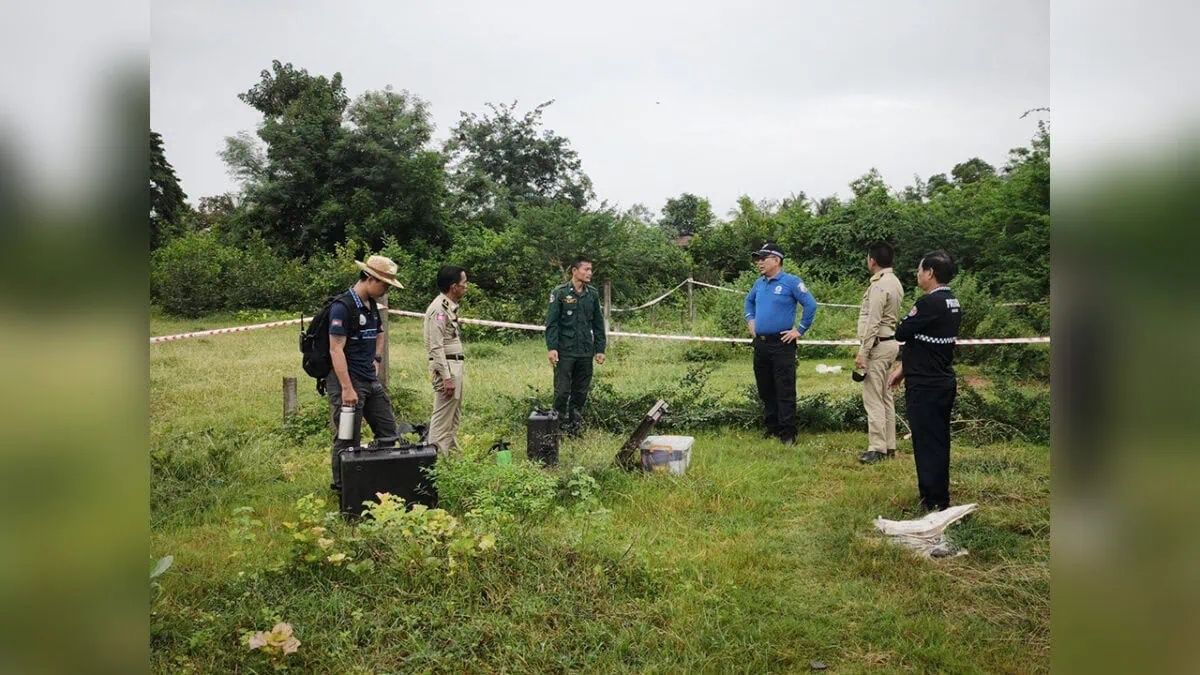
Cambodia's law enforcement authorities have mobilised a multi-agency response to investigate the deaths of two young children discovered in Banteay Meanchey province on July 28. The Cambodian National Police and the Child Protection Unit (CPU), a key non-governmental organisation working within the kingdom's justice system, confirmed on Monday that both cases are being treated as separate homicides and are unrelated to one another. The simultaneous discovery of the bodies has prompted what officials describe as a comprehensive forensic and investigative effort involving provincial police, the National Police, and the Minister of Interior's Department of Technical and Scientific Police.
The first victim was a 15-month-old child whose body was discovered in a pond in Mongkol Borei district at approximately 8am on July 28. The discovery triggered immediate alarm and escalated the case swiftly through the investigative hierarchy. On the same morning, authorities also recovered the remains of a five-year-old child in Teuk Thla commune, completing what would become a devastating day for the province. The older child had been reported missing three days earlier, on July 25, raising questions about the circumstances leading to the discovery and the timeline of potential foul play.
These incidents occur against a backdrop of ongoing child protection concerns across Southeast Asia, where vulnerable populations remain exposed to violence and exploitation. Cambodia, like several of its neighbours, has faced persistent challenges in safeguarding children and bringing perpetrators to justice. The involvement of the CPU, which operates as a partnership between international and domestic stakeholders, reflects the gravity authorities attach to such cases and the recognition that child homicides require specialised investigative protocols distinct from conventional crime investigation.
The CPU's homicide investigation team moved quickly to coordinate with provincial authorities and the Department of Technical and Scientific Police to establish the facts surrounding both deaths. Forensic examinations of the crime scenes were conducted to preserve evidence and establish cause of death. Such examinations are critical in the Cambodian context, where investigative capacity and resources have historically been constrained compared to developed nations. The involvement of the technical and scientific police division indicates that authorities are attempting to apply modern investigative methods to secure evidence that might withstand eventual court scrutiny.
James McCabe, the director of the Child Protection Unit, issued a statement emphasising the commitment of both the CPU and Cambodian law enforcement to pursue thorough investigations. McCabe's statement carried particular weight given that international organisations working within Cambodia's justice system often serve as benchmarks for accountability and transparency. He pledged that every investigative resource available would be deployed to advance both cases to their fullest extent, signalling that authorities view these deaths as priority matters requiring sustained attention rather than cases likely to languish in the system.
The assertion that anyone involved in the deaths would face prosecution represents a standard commitment from law enforcement, yet carries significance within a Cambodian context where conviction rates for certain categories of crime have historically been uneven. The involvement of multiple agencies and an international partner suggests that authorities recognise the potential scrutiny these cases will attract from both domestic civil society and international child protection advocates. Such scrutiny can serve as an informal accountability mechanism in jurisdictions where judicial independence and resources may be limited.
The CPU extended formal condolences to the families of both children, language that underscores the human dimension of these cases and signals respect for the bereaved. For families in Cambodia, particularly those in provincial areas, the loss of a young child represents not only profound personal tragedy but often an economic catastrophe, as children contribute to household subsistence and represent future security for elderly parents. The gesture of institutional sympathy, while necessarily formal, acknowledges the social and economic devastation such losses inflict.
Authorities have declined to release operational details regarding either investigation while both cases remain active. This approach balances the legitimate operational need to protect investigative integrity and avoid compromising evidence or witness testimony against public interest in understanding how such tragedies occur. In Cambodia's media environment, such information restrictions are relatively routine and reflect law enforcement practice across much of the region, though they can sometimes contribute to public speculation and rumour-mongering absent reliable official information.
The cases highlight broader child safety challenges across Cambodia and Southeast Asia more broadly. Violence against children, trafficking, exploitation, and inadequate social protection systems remain persistent regional concerns despite legal frameworks and institutional efforts to address them. These two deaths in Banteay Meanchey, a province in northwestern Cambodia, underscore how child vulnerability transcends urban-rural divides and affects remote communities where social services and child protection networks may be sparse. The swift investigative response by multiple agencies suggests that when cases reach the attention of authorities, institutional commitment to accountability can mobilise rapidly, though questions about how many similar incidents go unreported or uninvestigated remain pertinent.
The CPU's involvement represents an important institutional presence in Cambodia's approach to child protection within the criminal justice system. As a specialist organisation working within Cambodia's law enforcement structure, the unit brings focused expertise and international engagement to cases involving minors. The coordination between domestic police, provincial authorities, and the international-connected CPU illustrates how Cambodia's child protection architecture attempts to balance local investigative capacity with external expertise and accountability mechanisms. These two cases will likely be closely monitored by international child rights organisations and regional observers as potential indicators of Cambodia's progress in protecting its most vulnerable citizens and delivering justice in cases of grave harm to children.

