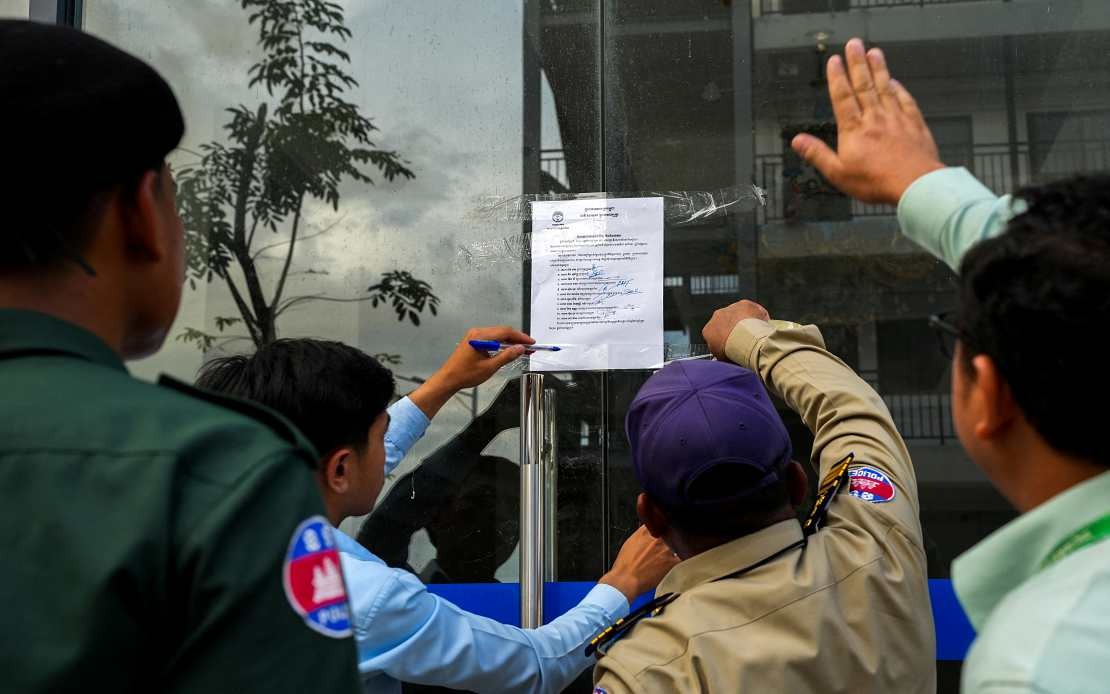
Cambodia has ramped up its enforcement operations against transnational cybercrime, expelling over 16,000 foreign nationals suspected of participating in online scam operations during the opening half of 2026. The deportations represent a significant portion of the 45,000 total foreign nationals removed from the country during the same period, according to Police Lieutenant General Sok Veasna, director general of the General Department of Immigration, who disclosed the figures at a mid-year policy review meeting.
The acceleration of cybercrime enforcement reflects mounting regional and international pressure on Phnom Penh to dismantle sophisticated scam networks that have extensively targeted individuals across Asia and beyond. Cambodia's geography and investment environment have historically made it an attractive haven for transnational criminal syndicates, particularly those engaged in online fraud operations. The enforcement operations commenced with renewed vigour from January onwards, signalling a deliberate policy shift toward disrupting these illicit activities before they cause further harm to vulnerable populations across neighbouring countries.
Policetenant General Sok Veasna emphasised that all expelled individuals face permanent entry bans, a measure designed to prevent recidivism and reduce the likelihood of repeat operations. This blanket prohibition on re-entry represents a hardline approach to border management and reflects the gravity with which Cambodian authorities now treat cybercrime involvement. The permanence of these bans underscores governmental recognition that repeat offenders pose an ongoing threat to regional cybersecurity and financial stability.
The crackdown gained legislative teeth in April when Cambodia enacted the Law on Combating Online Scams, which introduced stringent penalties targeting the architects and organisers of scam networks. The legislative framework specifically enhances punishments for senior figures and ringleaders, moving beyond simple worker-level prosecutions to target command structures. This legal innovation addresses a critical gap in Cambodia's previous regulatory approach and aligns with international norms for combating organised cybercrime at higher hierarchical levels.
Thong Mengdavid, deputy director at the China-ASEAN Studies Centre of the Cambodia University of Technology and Science, characterised the mass deportations as overdue and necessary steps toward rehabilitating Cambodia's severely damaged international reputation. The nation has faced considerable international criticism regarding its perceived tolerance of cybercriminal infrastructure, with countries across the region experiencing mounting losses to Cambodian-based scam operations. The deportations therefore serve both a practical security function and a symbolic gesture of governmental commitment to international norms and cooperative law enforcement.
However, Mengdavid cautioned that expulsions alone constitute an incomplete response to the underlying problem. His analysis highlights a critical distinction between symptoms and root causes: while removing foreign operatives addresses visible manifestations of the cybercrime challenge, it leaves untouched the deeper systemic vulnerabilities that permit such networks to establish and maintain operations. The expert's assessment suggests that operational efficiency improvements, though welcome, do not constitute a comprehensive strategy.
The fundamental weakness in Cambodia's approach, according to observers, resides in the persistent vulnerability of local institutional protections. Domestic networks that have historically provided shelter, logistical support, and corruption-facilitated immunity for foreign cybercriminals remain substantially intact despite recent enforcement actions. These internal support systems allow scam operations to function despite international investigations and border controls, creating a protected ecosystem where foreign criminal enterprises can operate with relative impunity.
Mengdavid specifically identified human trafficking and corruption as foundational issues requiring sustained policy attention. The same institutional channels and corrupt networks that enable human trafficking simultaneously facilitate cybercrime operations, creating synergistic relationships between different forms of transnational organised crime. These overlapping illicit economies share common infrastructure, corrupt facilitators, and geographic advantages, meaning that addressing one without confronting the other produces only temporary disruptions.
For Malaysia and other Southeast Asian nations experiencing significant economic losses and reputational damage from Cambodia-based scam operations, the current enforcement campaign offers limited reassurance. While the scale of deportations demonstrates visible enforcement activity, the persistence of underlying protection networks means that new criminal cohorts will likely replace expelled operatives, continuing the cycle of victimisation. Malaysian regulators and financial institutions remain vulnerable to sophisticated attack vectors originating from reorganised criminal networks within Cambodia.
The sustainability of Cambodia's enforcement campaign remains uncertain, particularly given historical patterns of cyclical crackdowns followed by re-establishment of criminal infrastructure. Long-term success would require simultaneous institutional reform addressing corruption, enhanced regional intelligence-sharing mechanisms, and coordinated capacity-building within Cambodian law enforcement. Without these complementary measures, the current deportations may represent tactical victories within a fundamentally unresolved strategic problem affecting regional cybersecurity.
Regional observers anticipate that effective resolution of Cambodia's cybercrime challenge will ultimately depend on whether Phnom Penh can sustain political will for systemic institutional reform. The government faces inherent tensions between projecting enforcement effectiveness and addressing the corruption that enables such networks. Neighbouring countries including Malaysia will likely monitor implementation of the Law on Combating Online Scams and prosecution of high-level organisers as indicators of genuine commitment versus performative enforcement. The coming months will reveal whether Cambodia's current campaign represents a genuine turning point or another temporary disruption in the broader transnational cybercrime economy affecting Southeast Asia.

