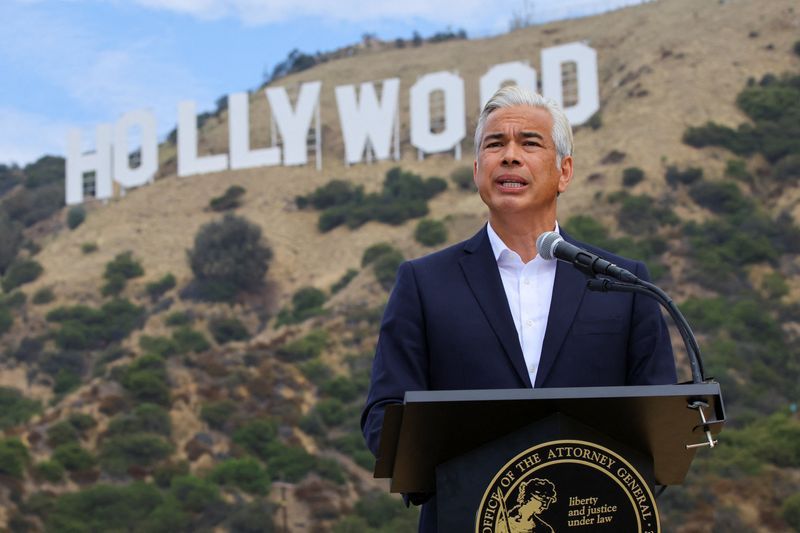
A coalition of twelve American states, spearheaded by California, has initiated legal action to prevent Paramount from acquiring Warner Bros Discovery in a transaction valued at $110 billion. The lawsuit, lodged in federal court in Oakland, represents a significant challenge to Paramount Chief Executive David Ellison's strategy to position his company as a formidable competitor against Netflix and Disney through this transformative acquisition.
The states assert that the merger would fundamentally reshape the entertainment landscape by creating an entity with unprecedented market dominance. According to their legal filing, the combined company would capture more than a quarter of revenue generated from wide-release theatrical films and basic cable channels across the United States. This concentration of power, the plaintiffs contend, would translate into substantial financial gains for the newly formed behemoth while simultaneously harming consumers, theatres, cable distributors, and workers throughout the entertainment ecosystem.
The scope of anticipated market control is staggering. Paramount would command approximately 27 percent of the film distribution market, control 30 percent of blockbuster film distribution, and dominate 27 percent of basic cable channels. This consolidated position would fundamentally alter competitive dynamics in both theatrical exhibition and pay television, the states argue. Smaller competitors would face diminished leverage in negotiating screen time at cinemas and channel placement on cable systems, potentially resulting in reduced consumer choice and elevated pricing.
The lawsuit underscores genuine concerns held by multiple stakeholders within the entertainment industry. Theatre owners worry that consolidation would reduce the volume of film releases, directly impacting their revenue streams and employment. Hollywood's creative workforce—writers, actors, technical crews, and supporting staff—fear that cost-cutting measures arising from operational consolidation would eliminate thousands of positions. These anxieties are not hypothetical; they reflect the real economic impact that mega-mergers typically generate across creative industries.
Paramount's counter-arguments focus on efficiency gains and expanded production capacity. The company maintains that the transaction would enable accelerated content creation following the elimination of $6 billion in redundant infrastructure, marketing expenses, and corporate overhead. CEO Ellison has committed to releasing thirty feature films annually from the combined studios, suggesting that consolidation would paradoxically increase output rather than restrict it. However, state attorneys general remain unconvinced, characterizing such commitments as unenforceable and noting that even if maintained, pricing power and quality degradation could still occur post-merger.
The legal challenge has assumed a distinctly partisan character that reflects broader ideological divisions within American antitrust enforcement. All twelve attorneys general pursuing this action represent states with Democratic leadership, while Republican counterparts have notably declined to join the lawsuit. This political fracture echoes broader debates about how antitrust law should function in contemporary America. California Attorney General Rob Bonta has explicitly framed the lawsuit as resistance to what he characterizes as the Trump administration's pro-business posture, particularly regarding corporate consolidation. The Justice Department had previously approved the transaction, prompting speculation that connections between Paramount leadership and Republican political figures—specifically billionaire Larry Ellison, Paramount CEO Ellison's father, and his ties to Donald Trump—may have influenced federal regulatory clearance.
The intersection of antitrust enforcement and partisan politics has intensified considerably in recent years. Democratic state officials increasingly view antitrust litigation as a mechanism to contest corporate mergers approved by Republican-appointed regulators and to harness public frustration regarding rising living costs and corporate dominance. Notably, some Republican attorneys general have participated in other significant antitrust actions against entities such as Live Nation and Nexstar Broadcasting, suggesting that antitrust activism transcends clean partisan boundaries. Nevertheless, the absence of Republican participation in this particular case underscores the politicization of merger review.
The financial implications of litigation could substantially reshape transaction economics. Paramount has committed to paying Warner Bros Discovery shareholders approximately $650 million in quarterly fees should the transaction fail to close by October. Even without transaction failure, protracted legal proceedings would impose considerable costs through extended uncertainty, potential financing complications, and delayed value realization. Historical precedent suggests that comparable merger disputes require an average of eight months for judicial determination, implying substantial interim costs regardless of litigation outcome.
Market participants appear relatively unfazed by immediate developments. Paramount shares rose 2.9 percent following the lawsuit announcement, while Warner Bros Discovery shares increased 2.6 percent. This apparent market indifference likely reflects investor confidence in ultimate deal completion, though the legal challenge represents what analysts describe as the most credible threat to the transaction's viability since federal approval. Industry observers acknowledge that even a successful ultimate outcome for Paramount would impose meaningful costs through prolonged uncertainty and potential financing complications.
For Southeast Asian and Malaysian audiences, this case illuminates critical dynamics affecting global media industries. As international media companies increasingly consolidate, the implications ripple across regional economies. Content availability, pricing for consumers, and local production opportunities are all influenced by these upstream corporate decisions made in American courtrooms and boardrooms. The tension between regulatory approval and subsequent legal challenge reflects genuine policy uncertainty that multinational media conglomerates must navigate.
The litigation also demonstrates how antitrust enforcement has evolved into a battleground for competing political and economic ideologies. Rather than purely technical legal questions about market concentration and consumer harm, merger review increasingly incorporates broader concerns about corporate power, wealth inequality, and regulatory capture. The twelve-state coalition articulates concerns that resonate throughout democratic societies grappling with corporate consolidation—that unchecked market dominance ultimately serves corporate interests at the expense of workers, small businesses, and ordinary consumers.
The pathway forward remains uncertain. The states have requested that Paramount delay closing the transaction pending resolution of legal proceedings. Absent voluntary delay, they will seek injunctive relief prohibiting the merger's completion. Paramount faces a genuine strategic dilemma: proceeding to close risks subsequent forced divestiture, while delaying creates financial bleeding through quarterly fee obligations to Warner Bros Discovery. The next several months will determine whether this aggressive state-level antitrust action succeeds in stopping one of entertainment's most significant proposed mergers, or whether Paramount ultimately completes a transformative transaction despite substantial legal headwinds.

