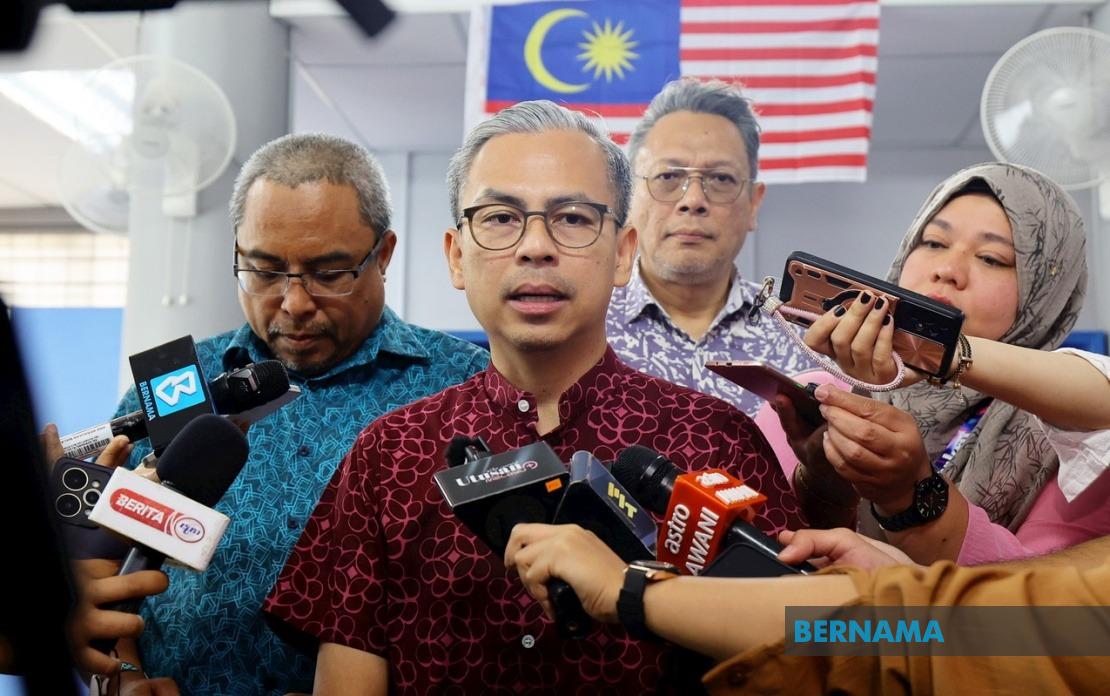
The Department of Islamic Development Malaysia released the comprehensive 211-page Royal Commission of Inquiry report into Tabung Haji's operations late last night, prompting immediate questions about the timing in relation to the upcoming Negeri Sembilan state election. Communications Minister Datuk Seri Fahmi Fadzil moved quickly to address these concerns, declaring that the publication followed proper governmental procedures and reflected unanimous Cabinet consensus rather than electoral calculations.
Fahmi's statement came during a media engagement at Felda Palong 2 in Jempol, where he had been attending a community carnival focused on internet safety. The minister emphasised that releasing the document represented only the first step in a broader accountability framework, with Parliament set to debate its findings and enforcement agencies tasked with investigating potential wrongdoing. This sequential approach, he suggested, demonstrated the government's commitment to transparency while ensuring that consequences would flow from the inquiry's revelations.
The decision to publish the report, which examines Tabung Haji's management and operational practices spanning 2014 to 2020, had previously been delayed following the appointment of Tan Sri Abdul Rashid Hussain as the institution's chairman in 2023. According to Fahmi's account of discussions with Abdul Rashid, who had served on the RCI itself, the deferral was intended to provide time for the fund to stabilise depositor confidence by implementing the commission's recommendations before facing public scrutiny of its failings. This considered approach contrasts sharply with the political pressure that periodically surrounds the release of high-profile investigative reports in Malaysia.
Progress on implementing the RCI's recommendations has been substantial, with Fahmi citing figures showing that approximately 75 per cent of suggested reforms have already been executed. However, significant gaps remain, particularly regarding enforcement actions and criminal investigations that fall outside the administrative purview of Tabung Haji itself. The minister indicated that the Prime Minister had briefed Cabinet members on coordinated follow-up action involving the police, the Malaysian Anti-Corruption Commission, Bank Negara Malaysia, and authorities responsible for enforcing the Anti-Money Laundering and Proceeds of Unlawful Activities Act.
One of the report's most damaging findings concerns alleged accounting irregularities that transformed a reported loss of RM1.4 billion in 2017 into an apparent profit of RM3.4 billion. Fahmi acknowledged these revelations while cautioning that forensic examination had traced the problematic practices back several years earlier, suggesting systemic rather than isolated lapses in financial governance. The discovery of such creative accounting methods has intensified scrutiny of how Tabung Haji, a sovereign wealth fund holding the savings of hundreds of thousands of Malaysian Muslims, manages one of the nation's largest pools of public capital.
Questions arose regarding the report's language and terminology, with some observers noting the absence of colloquial terms such as 'sakau' in describing the identified misconduct. Fahmi defended the RCI's choice to employ formal legal vocabulary including references to corruption, fraud, and misappropriation rather than informal expressions. He argued that an official government inquiry operating within constitutional mandates must maintain linguistic and conceptual consistency with the legal framework governing corruption investigations and prosecution.
The government's coordinated response underscores Malaysia's evolving approach to accountability mechanisms for significant public institutions. Rather than allowing the RCI report to gather dust in archives or become a vehicle for political point-scoring by opposition parties, the administration has moved to operationalise the inquiry's findings through parliamentary debate and enforcement agency action. This reflects international best practice in converting investigative recommendations into tangible institutional and legal consequences.
For Malaysian depositors, particularly the hundreds of thousands of Muslims who have entrusted their pilgrimage savings and retirement funds to Tabung Haji, the report's publication carries profound implications. The revelation of systematic accounting irregularities and potential financial mismanagement has already prompted anxiety about fund security, notwithstanding official assurances regarding the institution's current stability. The government's emphasis on the 75 per cent implementation rate for reforms appears designed to reassure stakeholders that corrective measures are underway, though enforcement actions remain pending.
The timing of the report's release, whatever the technical explanations offered, inevitably intersects with Negeri Sembilan's electoral cycle. Yet Fahmi's insistence on Cabinet unanimity and proper procedure suggests the government anticipated such scrutiny and sought to inoculate the decision against accusations of partisan manipulation. Whether this framing proves persuasive will depend partly on how swiftly enforcement agencies translate the RCI's findings into investigations and potential prosecutions.
Looking forward, the report's release establishes a critical test case for Malaysia's institutional capacity to investigate and address financial misconduct within government-linked entities. The success or failure of subsequent police inquiries, MACC investigations, and possible prosecutions will determine whether the Royal Commission process generates real accountability or merely symbolic gestures. For observers throughout Southeast Asia monitoring Malaysia's anti-corruption trajectory, the coming weeks and months will prove instructive.

