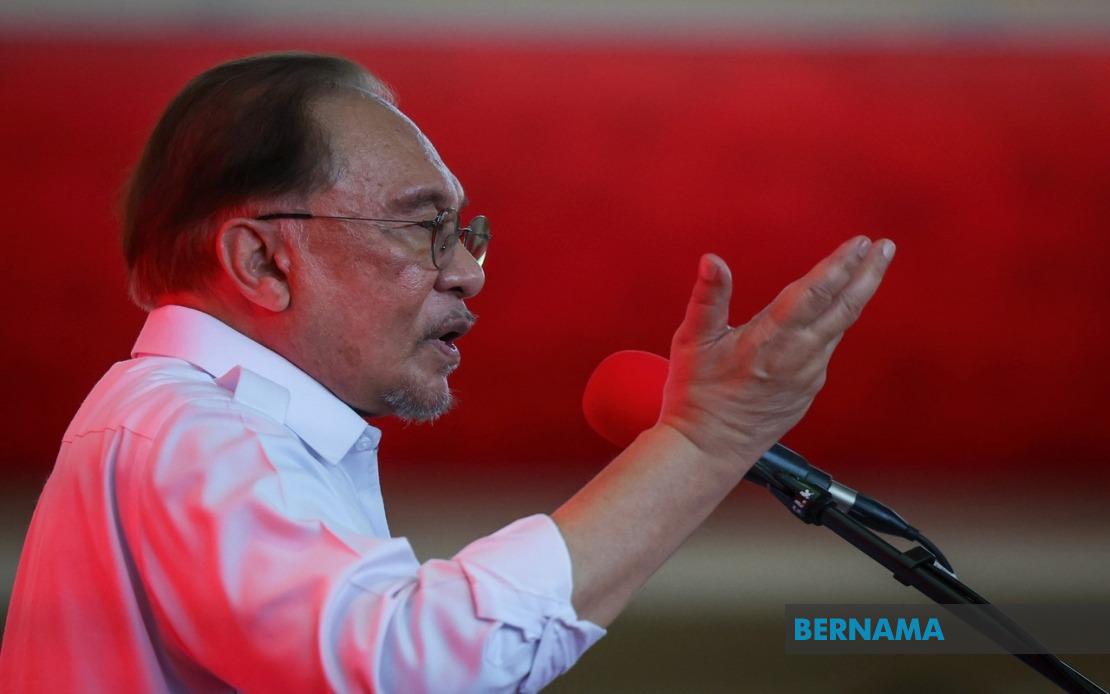
Prime Minister Datuk Seri Anwar Ibrahim has indicated that the Cabinet will reach a decision on Wednesday regarding the public release of the Royal Commission of Inquiry (RCI) report into Lembaga Tabung Haji (TH), marking a potential breakthrough in an issue that has sparked considerable public debate. The announcement was made in Tampin on July 27, with Anwar stating that the matter would be tabled and deliberated during the regular weekly Cabinet meeting before any final determination is communicated.
The RCI was established to investigate allegations surrounding Tabung Haji's strategic asset sales, a matter that has generated significant scrutiny given the institution's role as custodian of funds belonging to millions of Malaysian Muslims preparing for the Hajj pilgrimage. The inquiry's findings have been completed, but the government has faced mounting pressure to determine whether the comprehensive report should be made available to the public, a decision that carries implications for government transparency and public trust in state institutions managing citizen assets.
Anwar's position emphasises a principled approach to governance, framed around the separation of powers and institutional accountability. In his remarks, the Prime Minister underscored that his administration operates according to established constitutional frameworks, with distinct responsibilities assigned to investigating authorities, the Attorney General's office for prosecution decisions, and the courts for judicial determinations. This delineation reflects the government's commitment to rule of law, though it also suggests that any alleged wrongdoings uncovered by the RCI would be handled through conventional legal channels rather than executive intervention.
The Prime Minister's comments carry particular weight given the historical context of Tabung Haji's financial management. The fund, which holds billions of ringgit in savings from contributors across Malaysia and overseas, faced considerable scrutiny over previous years regarding investment decisions and asset disposals. An RCI investigation into these matters suggests that significant governance concerns warranted formal inquiry, making the transparency question especially relevant for the millions of account holders whose retirement savings and pilgrimage funds are at stake.
Anwar's earlier indication, made the previous Thursday, that the government was prepared to release the report soon underscores an apparent shift towards greater openness. However, the requirement for Cabinet deliberation suggests that release is not automatic and involves considerations beyond the report's completion. The Prime Minister indicated he would consult with Chief Secretary to the Government Tan Sri Shamsul Azri Abu Bakar on procedural matters, including whether Cabinet approval is a prerequisite for publication, a question that speaks to the governance mechanisms surrounding sensitive government inquiries.
The rhetoric employed by Anwar—that if nothing is wrong, the government should stand by the report, and if wrongdoings are identified, prosecutions should follow—frames the disclosure decision in terms of institutional confidence and systemic integrity. This approach suggests that a transparent report release would demonstrate government willingness to subject itself to public scrutiny and to allow independent inquiry findings to inform potential legal action. Conversely, withholding the report might invite speculation about potential cover-ups or politically motivated concealment, regardless of the actual findings.
For Malaysian citizens and particularly Tabung Haji contributors, the Cabinet's Wednesday decision carries practical implications. Access to the RCI's findings would enable informed assessment of how their pilgrimage savings have been managed and whether governance failures occurred in the disposition of the fund's assets. In an era of increasing demand for institutional accountability, especially regarding state bodies managing public or quasi-public funds, transparency in this matter aligns with broader governance expectations across Southeast Asia.
The composition of officials present during Anwar's announcement—including Chief Secretary Tan Sri Shamsul Azri Abu Bakar, Deputy Defence Minister Adly Zahari, Armed Forces Chief General Tan Sri Malek Razak Sulaiman, and Army Chief General Tan Sri Azhan Md Othman—suggests that the matter has engaged attention across multiple government levels, reflecting its significance within the administration's broader governance agenda. The presence of military leaders alongside civilian officials underscores the seriousness with which government leadership approaches decisions affecting national institutions and public confidence.
The timing of the decision is noteworthy in the context of the government's broader commitment to institutional reform and anti-corruption measures. Malaysia's trajectory towards stronger accountability frameworks has involved enhanced transparency requirements for government agencies and statutory bodies. The Tabung Haji RCI report release, if approved by Cabinet, would represent a practical manifestation of these commitments and could establish precedent for handling similar sensitive inquiries in future.
The Cabinet meeting scheduled for Wednesday will ultimately determine whether Malaysian society gains access to findings that could reshape understanding of how one of the country's most significant financial institutions has been managed. The decision carries symbolic weight beyond the specific findings involved, signalling either the government's confidence in submitting itself to public scrutiny or alternative calculations regarding disclosure. For stakeholders ranging from Tabung Haji contributors to observers of governance standards across the region, the outcome will offer clarity on the extent to which the current administration prioritises transparency in matters affecting citizen trust.

