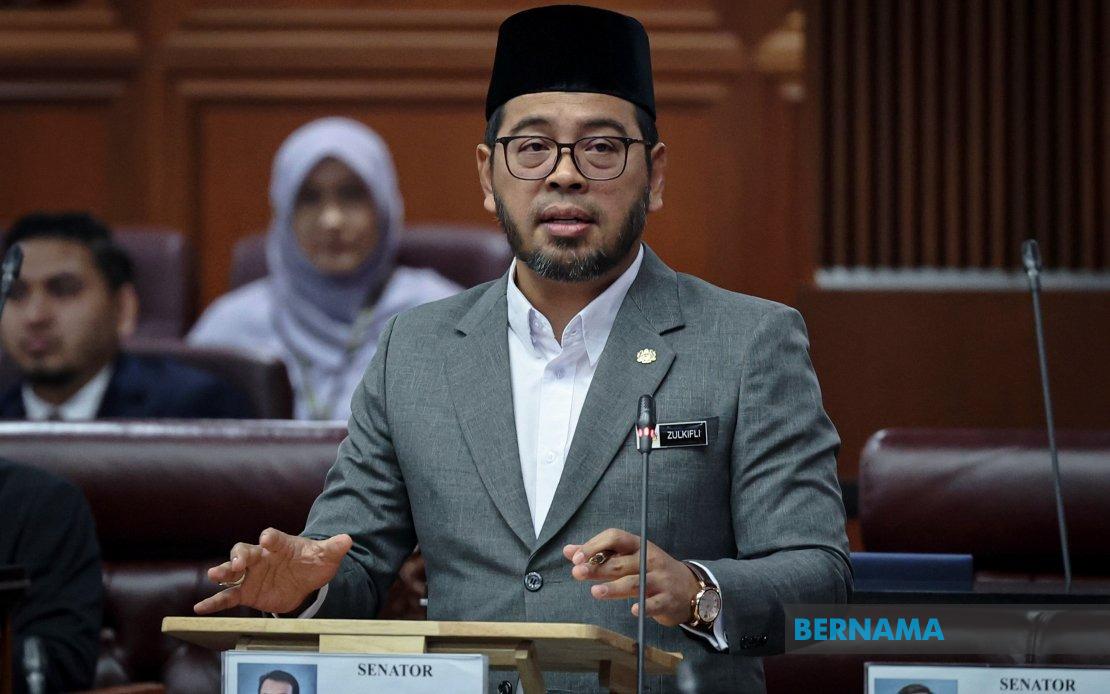
The Malaysian Cabinet will review a proposal to publicly release the Royal Commission of Inquiry report on Tabung Haji following mounting confusion and controversy surrounding the institution's financial restructuring, according to Minister in the Prime Minister's Department (Religious Affairs) Dr Zulkifli Hasan. The disclosure comes amid persistent allegations that the former Treasury secretary-general sold strategic assets belonging to the pilgrimage fund, claims the minister has categorically denied as misleading and without foundation.
In a forceful parliamentary clarification, Zulkifli emphasized that what critics characterise as asset sales was fundamentally a salvage operation designed to prevent the financial collapse of a critical institution serving Malaysia's Muslim population. The minister stressed that the operation addressed the consequences of severe financial mismanagement that had occurred years before the rescue commenced, specifically highlighting the period prior to 2018 when depositors' funds were diverted through what he characterised as reckless misappropriation.
The backdrop to this controversy involves Tabung Haji's severe financial distress at the beginning of 2018. According to findings by both the Auditor-General and Bank Negara Malaysia, the institution faced a catastrophic asset-liability gap totalling RM10.9 billion at that juncture. The situation deteriorated rapidly when approximately RM6 billion was withdrawn by account holders within weeks, reflecting a sharp erosion of public confidence in the institution's stability. Simultaneous efforts to secure emergency credit facilities from international sources yielded no results, leaving the government facing an unprecedented predicament.
The Cabinet's decision to engage Urusharta Jamaah Sdn Bhd, a government-controlled special purpose entity, to acquire underperforming and problematic assets from Tabung Haji was not unilateral but rather a coordinated governmental response, Zulkifli underscored. This operation represented a collective Cabinet resolution reached in 2018, reflecting the gravity with which policymakers viewed the existential threat confronting the institution. The undertaking was ostensibly designed to ringfence troublesome assets while preserving the core operations of the fund that manages hajj logistics and savings for Malaysian pilgrims.
The stakes of inaction were extraordinarily high for the government's finances and public confidence. Had Tabung Haji been permitted to collapse, the federal treasury would have faced direct exposure to approximately RM74.5 billion in liabilities, owing to the comprehensive government guarantee covering all deposits held within the institution. This potential liability represented a monumental fiscal burden that would have reverberated across Malaysia's budget framework and economic stability during a period when the nation was already navigating post-crisis recovery.
The rescue operation's outcomes suggest the intervention achieved its primary objectives. Since the 2018 intervention, deposit levels at Tabung Haji have experienced substantial recovery and expansion. Balances rose from approximately RM69.4 billion in 2019 to exceed RM95.1 billion by mid-2025, demonstrating that confidence has been progressively restored and that the institution is successfully attracting and retaining depositor funds. This trajectory is particularly significant given the competitive landscape of Islamic financial services in Malaysia, where alternatives abound.
Beyond deposit accumulation, the ministry has highlighted improvements in returns for savers. The profit distribution rate climbed from 1.25 percent in 2018 to 3.5 percent projected for 2025, representing the highest yield in an eight-year period. This improved return profile not only compensates depositors more generously but also demonstrates that the restructured institution is generating stronger underlying earnings. For Malaysians depending on Tabung Haji as a long-term savings vehicle for their pilgrimage aspirations, such returns constitute tangible benefit from the operation.
Tabung Haji has additionally maintained pricing stability for its core service—the facilitation of hajj pilgrimages—despite the macroeconomic headwinds of persistent inflation. The cost for Malaysian pilgrims undertaking the hajj has remained frozen for three consecutive years spanning 2024 through 2026. This price constancy is significant not merely for individual pilgrims but for broader accessibility considerations; a frozen hajj cost ensures that religious obligation remains economically achievable for middle and working-class Malaysian Muslims even as general price levels rise.
The decision to contemplate public release of the RCI report reflects broader imperatives toward transparency and public accountability in government decision-making. Malaysia has increasingly emphasised the importance of accessible public information, particularly regarding major financial interventions affecting national institutions. Transparency regarding how the rescue was structured, who benefited, and what assets were transferred could address lingering public scepticism and provide documented evidence supporting the minister's assertions regarding the operation's legitimacy and necessity.
The timing of this proposal appears connected to ongoing political and public discourse surrounding governance during the previous administration. As Malaysia continues transitioning between political eras, scrutiny of inherited institutional arrangements and financial commitments intensifies. The Tabung Haji rescue represents a sufficiently substantial intervention in the nation's financial architecture that sustained public curiosity regarding its mechanics remains understandable, particularly as depositor interests remain directly implicated.
For Malaysian pilgrims and account holders, the RCI report's public release might provide authoritative clarification about decisions affecting their savings and financial security. The report could address specific questions about asset valuations, transfer mechanisms, and the financial calculations supporting the decision to utilise the special purpose vehicle. Such documentation would constitute an official record that either validates or contradicts various narratives circulating regarding the operation's conduct and justification.

