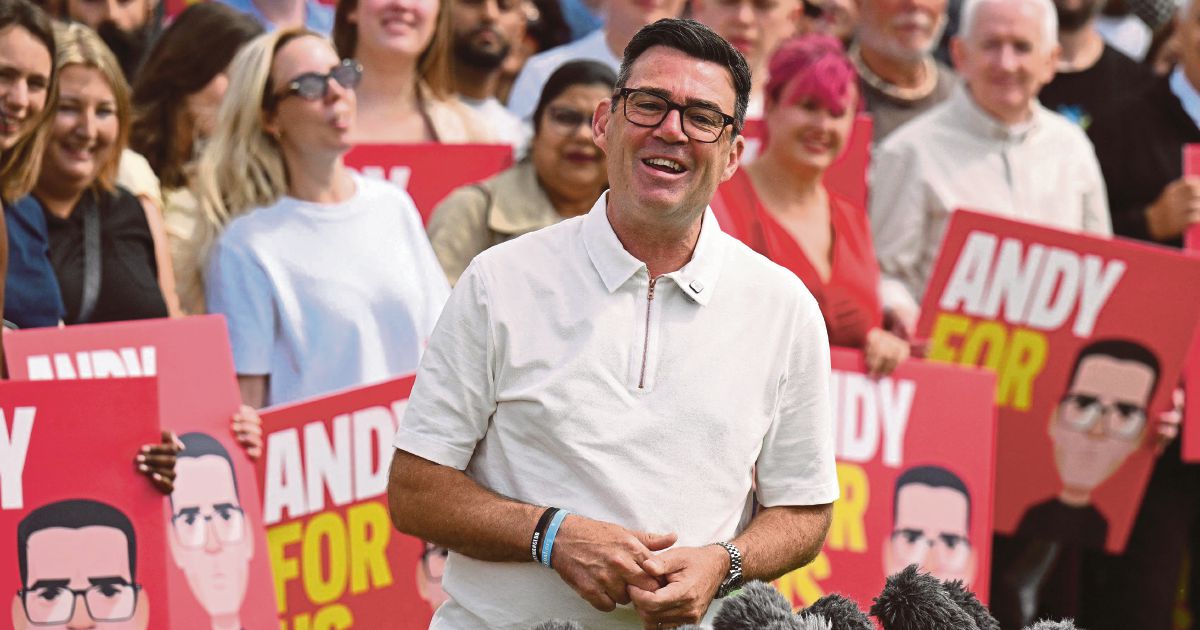
Andy Burnham assumed office as Britain's seventh prime minister in a single decade on Monday, bringing to an end an era of sustained political turbulence that has seen the country's leadership shuffle through an unprecedented succession of occupants. The Lancashire-born politician, who earned the nickname 'King of the North' for his tireless advocacy of regional interests beyond London and the southeast, now faces the formidable task of governing a nation weary from instability and beset by mounting challenges.
The backdrop to Burnham's arrival at Number 10 reflects a Britain in considerable flux. Over the past ten years, the office of prime minister has cycled through successive holders, each confronting inherited crises and leaving their successors with fresh complications. This turnover has created governance gaps and policy discontinuities that have compounded public frustration. Burnham's elevation represents a significant ideological shift, signalling a Labour administration's determination to reshape the national agenda after years of conservative stewardship.
Central to Burnham's pitch is a comprehensive recalibration of the state's priorities, a process he describes as 'rewiring' Britain. This framing is deliberately expansive, suggesting not merely incremental reform but rather structural transformation of how government approaches its core responsibilities. The emphasis on rewiring signals recognition that piecemeal adjustments have failed to arrest the nation's collective sense of decline and disarray.
The cost-of-living crisis stands foremost among the pressures confronting the new premier. For millions of British households, the mathematics of survival have become increasingly precarious as energy bills, grocery prices, and rental costs have surged beyond wage growth. This squeeze has persisted for years, creating a constituency of economically distressed voters who view politicians with deep scepticism. Burnham's emphasis on tackling this challenge frontally suggests awareness that legitimacy now depends upon demonstrable improvements in household finances.
Equally pressing are the failures plaguing Britain's public services. The National Health Service, long celebrated as a point of national pride, has deteriorated markedly, with waiting lists reaching historic lengths and staff morale reaching historic lows. Education, transport, and social care systems similarly display signs of systemic strain. These institutions, foundational to post-war British identity, have become symbols of decline rather than achievement. The new government will be judged heavily on whether it can reverse trajectories of underperformance that have accumulated across multiple administrations.
Burnham's personal trajectory has been shaped significantly by his tenure as Mayor of Greater Manchester, a role that allowed him to build a record of engagement with regional economic development and public service coordination. His 'King of the North' epithet emerged from consistent messaging that highlighted how London-centric policymaking had exacerbated regional inequality. This regional focus distinguishes him from recent predecessors and may signal a governmental intent to rebalance the spatial distribution of economic opportunity and public investment.
For Malaysian observers and regional analysts, Burnham's ascension merits attention not least because Britain remains a significant global actor whose domestic stability influences broader international dynamics. A Britain distracted by internal governance crises and economic instability is a Britain less capable of maintaining its diplomatic and trading relationships across Southeast Asia and beyond. The region's substantial British expatriate communities, plus Malaysia's ongoing commercial ties with the United Kingdom, mean that British political stability carries direct relevance.
The appointment also reflects broader patterns visible across Western democracies, where voters have demonstrated appetite for outsider candidates and figures who articulate grievances against established metropolitan elites. Burnham, whilst a long-serving politician, has positioned himself as someone whose career has been grounded in understanding working people's actual circumstances rather than in Westminster's cloistered traditions. This positioning resonates with contemporary anti-establishment sentiment, though whether it translates into effective governance remains an open question.
The incoming administration inherits debt burdens accumulated during pandemic spending, weakened growth projections, and international pressures ranging from tensions with Russia to navigating post-Brexit trading arrangements. Against this complex backdrop, Burnham's promise to rewire national priorities must translate into concrete policy achievements within a relatively constrained fiscal environment. The early weeks of his premiership will be crucial in establishing whether his administration can break the pattern of recent years, in which grand promises gave way to prosaic struggles with implementation.
Britain's repeated changes of leadership in recent years have created what some analysts describe as a governance legitimacy crisis. Voters increasingly perceive that successive governments lack either the competence or the will to address their material concerns meaningfully. Burnham's fresh administration will be expected to demonstrate that this latest change represents not merely another rotation of faces in power, but rather the beginning of genuine redirection. The coming months will determine whether his rewiring metaphor translates into genuine transformation or joins the long list of unfulfilled political promises.

