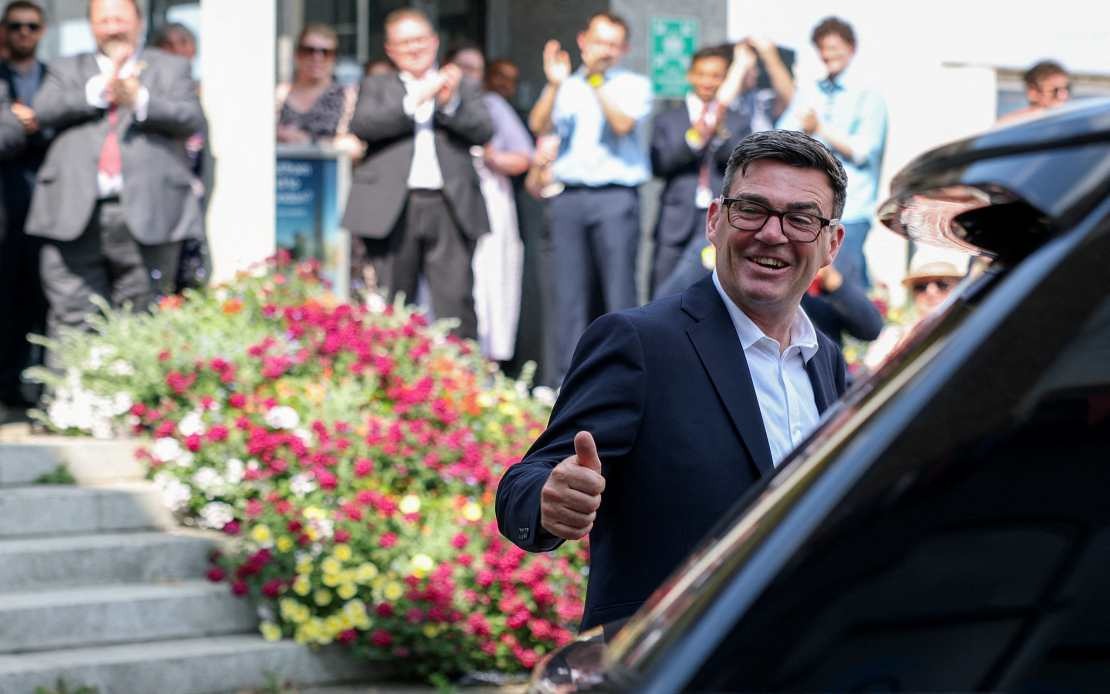
Andy Burnham will take the reins as Prime Minister of the United Kingdom on Monday, inheriting a government facing persistent public scepticism after a tumultuous period marked by rapid leadership changes. The Labour politician plans to deliver his first address to the nation from Downing Street following a formal audience with King Charles III, signalling a departure from the style and priorities of his predecessor Keir Starmer. His opening message will emphasise the need to rebuild institutional credibility whilst simultaneously offering tangible relief to households struggling with the cost of living—a theme that has defined his political career and resonates deeply with economically vulnerable voters across Britain and, by extension, developing economies in the Commonwealth.
The scale of political instability preceding Burnham's arrival cannot be overstated. Seven prime ministers in ten years represents a governance crisis that undermines investor confidence, complicates long-term policymaking, and erodes public trust in democratic institutions. For regional observers in Southeast Asia, where political continuity is often viewed as essential to economic growth, the UK's volatility offers a cautionary lesson about the dangers of narrow partisan divides and fragmented legislatures. Burnham has made clear his intention to reverse this trend, positioning himself as a stabilising figure committed to multi-year strategic direction rather than reactive crisis management. His allies indicate he will frame this moment as one demanding both honest appraisal of national challenges and demonstrated capacity to resolve them—a dual message designed to acknowledge public frustration whilst projecting competence.
Burnham's ascent to the Labour leadership remains noteworthy for its unusual speed and lack of internal contest. Less than a month after returning to Parliament, he secured the top job without facing significant opposition, suggesting broad party consensus on his ability to restore electoral viability. This condensed transition reflects Labour's desire to move past internal turbulence quickly and present a unified front. However, it has also meant he has had limited opportunity to articulate a comprehensive policy platform beyond broad commitments to devolution and cost-of-living support. His first week will therefore be crucial in establishing what his premiership actually stands for beyond stability rhetoric.
Devolution emerges as a defining priority for Burnham, rooted in his decade-long tenure as mayor of Greater Manchester and his conviction that London-centric governance has failed regions beyond the capital. He intends to devolve substantial powers away from Westminster, likely empowering regional bodies to shape economic policy, transport infrastructure, and social provision tailored to local conditions. For Malaysian policymakers familiar with debates over federal versus state authority, Burnham's approach offers relevant parallels—how central governments can retain strategic control whilst granting subordinate entities meaningful autonomy remains a perennial tension. His vision implies a wholesale reordering of British governance architecture, potentially delivering dividends in regional engagement and policy responsiveness, though implementation will test his political capital.
A cornerstone early decision involves scrapping the digital ID programme his predecessor championed. Burnham has determined that resources currently earmarked for digital identity infrastructure should be redirected toward immediate cost-of-living interventions—energy support, inflation relief, and targeted assistance for struggling households. This choice reflects a calculation that public anxieties about surveillance and digital government overreach, combined with more urgent material concerns, make the ID programme politically toxic. Environmental campaigners have already begun pressuring him on energy policy specifics, particularly regarding North Sea oil and gas exploration. Reports suggest his government may permit expanded drilling to reduce energy bills, a reversal of Labour's 2024 campaign promise to ban new North Sea licences.
The North Sea drilling question encapsulates a broader tension in Burnham's premiership between cost-of-living relief and climate commitments. Environmental advocates argue that new drilling licences will not materially reduce consumer energy bills in the near term and represent abandonment of climate leadership at a critical juncture. Conversely, political advisors likely contend that visible, immediate action on household energy costs is essential to rebuilding public confidence and winning re-election. This dilemma—sacrificing medium-term environmental goals for short-term economic relief—will recur across numerous policy domains and defines the trade-offs any government navigates when inheriting a crisis-damaged mandate.
Thames Water's financial distress presents another immediate challenge requiring Burnham's attention. The utility company carries a £20 billion debt burden and faces potential collapse into a special administration regime, which would effectively place it under state control during restructuring. Burnham has already signalled openness to temporary nationalisation and greater public ownership of essential services, a position aligned with his broader philosophy that strategic infrastructure should serve public rather than private interests. Thames Water's principal creditors have indicated willingness to discuss rescue arrangements with his incoming ministers, suggesting some window for negotiated solutions before formal insolvency proceedings. How he resolves this situation will signal his commitment to active state intervention in markets and his willingness to absorb fiscal costs for policy objectives.
Cabinet formation will dominate Burnham's opening weeks and will transmit signals about his priorities and management style. Particular attention has focused on the chancellorship contest between Ed Miliband, the Energy Secretary, and Shabana Mahmood, the Home Secretary. Miliband's appointment would emphasise energy policy and economic restructuring; Mahmood would signal priority on domestic security and social cohesion. Each choice carries implications for how aggressively Burnham pursues green energy transition versus pragmatic energy expansion, and whether economic policy emphasises redistribution and public intervention or market discipline and fiscal restraint. For Commonwealth observers and Southeast Asian governments monitoring UK policy directions, these staffing decisions will clarify whether Burnham represents genuine strategic reorientation or incremental adjustment within familiar frameworks.
Burnham's rise occurs against a backdrop of genuine public fatigue with political instability and visible material deterioration in living standards across Britain. Unlike previous leadership transitions, where factional differences dominated internal party narratives, his ascension carries an implicit contract with voters: deliver stability, relieve household hardship, and restore faith in governmental competence. Whether he can translate these broad commitments into sustained policy delivery—particularly when balancing immediate relief against long-term structural reform and environmental responsibility—will determine both his tenure's success and Labour's electoral prospects. For Malaysia and the region, the UK's current trajectory offers instructive parallels about the political costs of governance dysfunction and the complex choices leaders face when inheriting damaged institutions and stretched public budgets.

