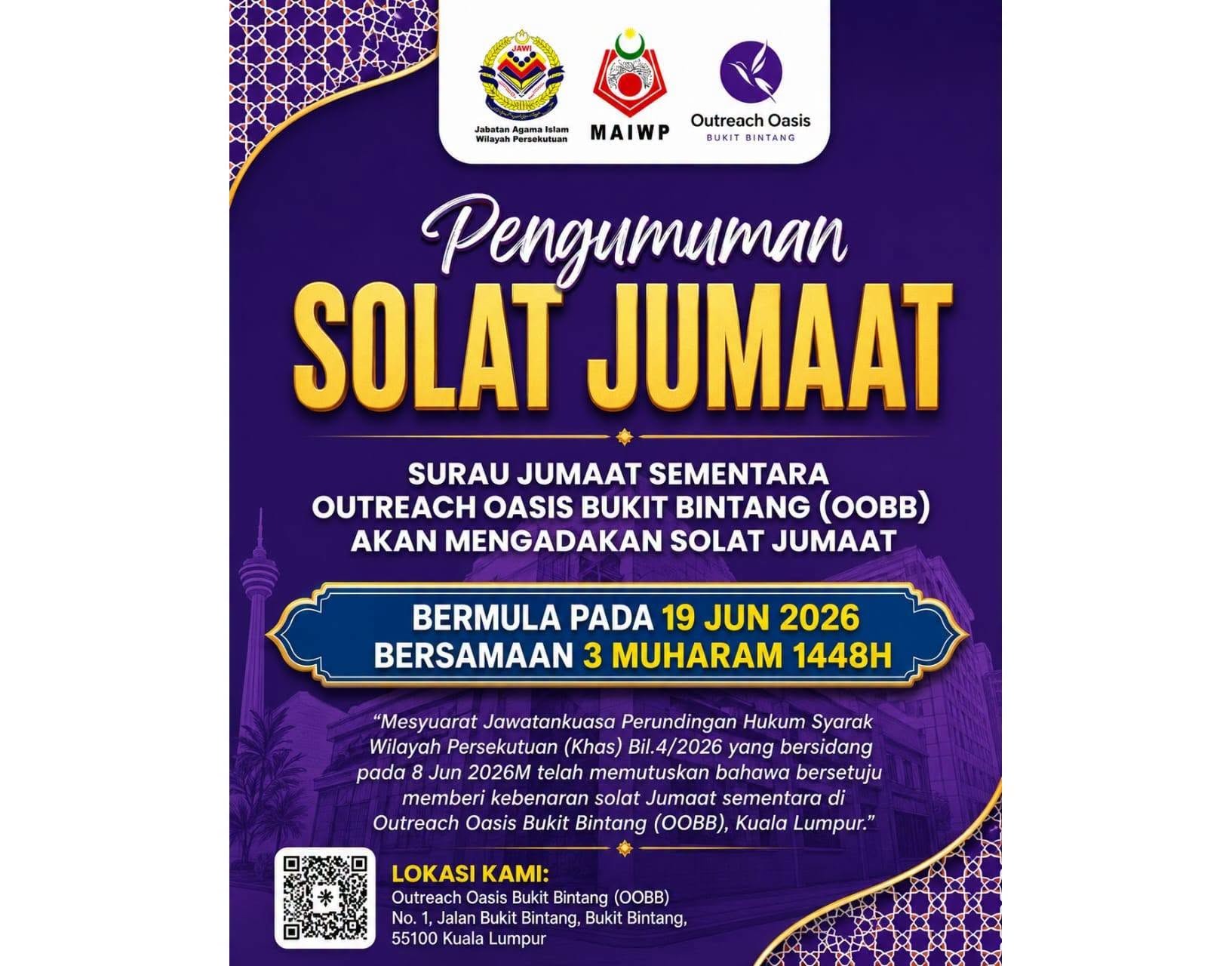
Starting June 19, Muslims in the Bukit Bintang area will have immediate access to Friday prayer facilities at the Bukit Bintang Outreach Oasis, marking a significant step forward for religious accommodation in one of Kuala Lumpur's busiest commercial districts. The temporary arrangement comes through special government approval and will remain in place while a permanent Friday surau is constructed at the location.
Dr. Zulkifli Hassan, Minister in the Prime Minister's Department (Religious Affairs), announced the development via Facebook, emphasizing that the provision addresses a genuine need among Muslims working, shopping, or conducting business in Bukit Bintang. The minister's language underscored the historical significance of expanding Islamic facilities in a major commercial and tourist hub, noting that the temporary measure will ease the burden on worshippers who previously had limited options for midday prayers in the vicinity.
For working professionals and visitors to Bukit Bintang, the new facility eliminates the previous necessity to travel considerable distances or navigate through crowds to reach prayer halls during Friday prayers. The convenience factor carries particular weight in Malaysia's multicultural urban environment, where religious accommodation in public spaces demonstrates governmental commitment to serving all communities. This approach aligns with Malaysia's constitutional recognition of Islam and the state's responsibility to facilitate religious observance.
The temporary arrangement represents a transitional solution while the permanent Friday surau undergoes construction. Construction timelines for such facilities typically span several months, making the interim provision crucial for uninterrupted religious practice. The government's decision to open the temporary space demonstrates responsiveness to community needs and an understanding that Muslim workers and visitors cannot defer their Friday prayer obligations during the construction period.
Dr. Zulkifli's public invitation to the community reflects a broader strategy of encouraging participation and fostering collective identity around religious spaces. His call for Muslims to "fill the rows as a sign of solidarity" extends beyond individual worship, positioning the facility as a community gathering point that demonstrates the visible presence of Islam in Bukit Bintang's commercial landscape. This framing carries symbolic importance in Malaysia's religious and social discourse.
The Bukit Bintang district, renowned as a premier shopping and entertainment destination, attracts thousands of daily visitors and houses numerous corporate offices. The absence of dedicated Friday prayer facilities in such a high-traffic area had been identified as a gap in religious infrastructure. This gap was particularly acute given Malaysia's Muslim-majority population and the government's stated commitment to providing adequate worship spaces across urban centres.
The establishment of this facility also reflects evolving approaches to religious pluralism in Malaysian cities. As urban centres become increasingly busy and diverse, providing religious accommodation becomes essential to maintaining social cohesion and ensuring that citizens of all faiths can practise their beliefs comfortably. The Bukit Bintang initiative demonstrates how government agencies can respond to such infrastructure needs without compromising commercial activity or public space usage.
The permanent Friday surau project represents a longer-term commitment to religious facilities in the district. Once completed, it will presumably offer enhanced capacity, improved amenities, and permanent status that reflects the area's importance. The design and specifications of the permanent facility remain under wraps, but such projects typically incorporate ablution areas, prayer spaces segregated by gender, and facilities that accommodate the prayer rituals central to Islamic practice.
From a practical standpoint, the temporary facility at Bukit Bintang Outreach Oasis should ease congestion at existing prayer halls in neighbouring areas. The Masjid Jamek, located in the old city centre, and other established mosques in central Kuala Lumpur have historically served the Bukit Bintang vicinity. The new facility provides an alternative that reduces travel time and operational pressure on existing infrastructure, potentially improving the prayer experience for all users across the district.
The timing of this announcement carries implications for how Malaysian authorities approach religious infrastructure in commercial zones. As shopping malls and office parks continue to proliferate across urban Malaysia, questions about prayer facilities have become increasingly pertinent. The Bukit Bintang model—combining temporary accommodation with permanent construction plans—may serve as a template for other commercial districts facing similar demands.
Community response to the announcement has centred on the practical benefits and the symbolic recognition that Islam remains a central consideration in Malaysia's urban development. The availability of prayer facilities in major commercial areas reassures Muslim citizens and workers that their religious obligations are accommodated in everyday urban life. This principle extends beyond Kuala Lumpur, as similar patterns of Muslim workplace and visitor accommodation are emerging across Malaysian cities.
For international visitors and foreign workers in Malaysia, the visible presence of prayer facilities in prominent commercial areas contributes to perceptions of Malaysia as a Muslim-friendly destination. Religious tourism and expatriate communities often factor in the availability of worship spaces when evaluating cities as residential or business destinations. The Bukit Bintang facility thus carries soft power dimensions beyond local community benefit.

