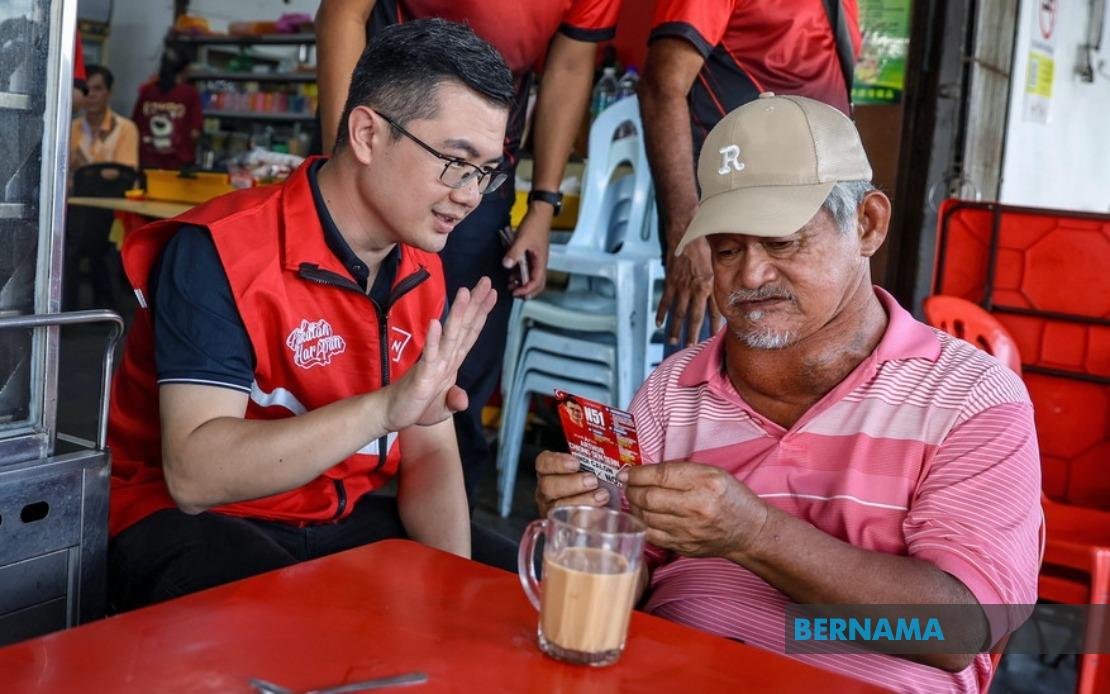
Pakatan Harapan's candidate for the Bukit Batu state constituency, Arthur Chiong Sen Sern, has lodged a formal complaint with police after discovering that his campaign materials were deliberately damaged in multiple locations across the electoral district. The incidents, which saw party flags discarded into drains and advertising billboards torn down, represent a troubling pattern of campaign interference as the Johor state election enters its final week. Chiong made his declaration at the Main Operations Room N.51 Bukit Batu in Kulai on July 5, emphasizing the seriousness of the matter by detailing the sequence of events that prompted the police report filed at Air Bemban police station.
The vandalism campaign extended across at least two neighbourhood areas within the constituency. In Kampung Sri Paya, Chiong's party flag was discovered in a drain, whilst several billboards promoting his candidacy were torn down. A subsequent incident occurred in Taman Putri, where similar destruction affected both his campaign billboard and party flag. The deliberate nature of these acts suggests coordinated action rather than isolated incidents of mischief, raising questions about the level of tension within the five-way contest for this seat.
Chiong expressed regret that unnamed individuals would resort to such measures, characterizing the acts as sabotage and treachery against his political campaign. His response, however, remained measured and focused on procedural remedies rather than accusations. By directing the matter to law enforcement authorities, he shifted responsibility for investigation and attribution away from political finger-pointing and towards the formal machinery of justice. This approach reflects an attempt to elevate the discourse above partisan recrimination, though it also acknowledges that the identity of perpetrators remains unknown.
The candidate's public statement carried an implicit message to the electorate: these disruptive tactics would not deter his commitment to contest the seat or weaken his resolve to campaign actively over the remaining days before polling. Chiong framed his determination to continue engaging voters despite the provocation as a demonstration of political maturity and dedication to democratic processes. This posture serves both as reassurance to his supporters and as a subtle rebuke to whoever orchestrated the damage, suggesting that intimidation tactics are ultimately ineffective in modern electoral contests.
Beyond the immediate incident, Chiong's experience highlights broader concerns about campaign conduct during the Johor state election. He issued an appeal to all competing parties and candidates to uphold standards of mature, respectful political engagement. His call for harmonious campaigning without elements of hostility or treachery suggests that such incidents may reflect wider systemic problems in Malaysian electoral culture, where passion for partisan victory sometimes overwhelms respect for democratic norms. The explicit plea for civility indicates that campaign sabotage, whilst perhaps not pandemic, remains sufficiently common to warrant public admonition.
The Bukit Batu constituency presents a particularly competitive electoral environment that may explain heightened tensions. Five candidates are vying for the seat, representing diverse political orientations: Arthur Chiong for Pakatan Harapan and its PKR component, R. Kumaran representing Barisan Nasional through the Malaysian Indian Congress, M. Premanand standing as a MUDA candidate, G. Tamili contesting for Bersama, and independent candidate Kamaruzaman Ali. This fragmented contest means that victory margins could prove decisive, potentially amplifying the stakes for each faction and encouraging aggressive tactics by overzealous supporters.
The Johor state election itself represents a significant political moment for Malaysia's southern industrial and commercial heartland. The state election encompasses 56 state assembly constituencies across the entire Johor region, with a total of 172 candidates competing for these seats. The sheer scale of this electoral exercise underscores how decentralized campaign operations become, making it difficult for party leadership to monitor and control the conduct of grassroots supporters. Lower-level operatives may feel emboldened to engage in aggressive tactics under the assumption that their activities will escape scrutiny or attribution.
Polling day is scheduled for July 11, with early voting scheduled for July 7, leaving campaigns relatively compressed timelines to make final appeals to voters. For a candidate like Chiong, vandalism incidents in the final week carry particular significance, as they consume limited campaign resources and media attention at a critical moment. Time that might be spent on door-to-door engagement or public forums instead becomes devoted to managing a security and reputation crisis. This timing aspect suggests that whoever conducted the sabotage understood campaign dynamics sufficiently to target the candidate when recovery would be most difficult.
From a broader Malaysian political perspective, the incident reflects persistent challenges in establishing and enforcing campaign code conduct across political parties and independent candidates. While electoral authorities and party leaders frequently call for civil campaigns, enforcement mechanisms remain weak, and penalties for violations inconsistent. Candidates who resort to vandalism or other forms of campaign interference often escape meaningful consequences, emboldening their adherents to believe such tactics carry acceptable risk. Without credible deterrence, appeals to civility and democratic values, though morally compelling, may prove insufficient to prevent similar incidents.
Chiong's decision to pursue legal remedies rather than engage in reciprocal mudslinging reflects maturity in political practice, yet it also highlights the limitations of reactive approaches to campaign misconduct. By the time a police investigation concludes and potential perpetrators are identified and prosecuted, the election will long since have concluded. True prevention of campaign sabotage would require proactive monitoring, swift intervention, and visible consequences—a substantial demand on already-stretched electoral authorities managing campaigns across dozens of constituencies simultaneously.
The incident also carries implications for voter trust and participation. When campaign environments become hostile or appear compromised by vandalism, casual voters may question whether their preferred candidate can effectively represent and protect their interests. The sense that electoral contests are marred by misconduct can dampen turnout and engagement, particularly among younger or less committed voters who view such behaviour as evidence of political dysfunction. Chiong's public response, by maintaining composure and appealing to better instincts, attempts to mitigate this corrosive effect.
Looking toward July 11, the Bukit Batu constituency will demonstrate whether campaign conduct influenced voting outcomes or whether electorate decisions remained primarily driven by policy platforms, personal connections, and established party loyalty. For Chiong and other candidates across the Johor state election, the final week presents an opportunity to demonstrate that dignified, substantive campaigns can succeed even when opponents resort to destructive tactics. The police investigation may ultimately illuminate the perpetrators' identities, but the conduct of candidates themselves will shape whether Johor's 2024 state election is remembered as an exercise in responsible democratic engagement or as an example of how Malaysian campaign culture continues to require significant reform.

